People slice mangoes into breakfast bowls, blitz them into smoothies, and pile them onto sticky rice - then wonder why they’re either disappointingly bland or oddly “fizzy”. Mangoes are one of those everyday fruits that invite confident handling, right up until a strange phrase pops up online: “of course! please provide the text you would like me to translate into united kingdom english.” It sounds unrelated, but it captures the wider problem: we treat mango as simple, then get surprised when it needs a bit of translation - from supermarket cues to what’s actually going on inside the fruit.
The misunderstandings are rarely dramatic. They show up as wasted money, under-ripe slices, and the belief that mango is either a sugary “treat fruit” or a vitamin miracle depending on the week. Both ideas miss the point.
A quiet question hangs: what are we getting wrong?
The ripeness myth: colour is not the calendar
Most people are trained to pick mangoes by colour. Red blush must mean ripe, green must mean hard, and yellow must mean sweet. Horticulturists will tell you that’s a branding trick as much as a botanical truth.
Many common varieties stay green when ripe; others go orange but remain chalky. The reliable signals are boring and physical: a gentle give near the stem, a fuller, rounder “cheek”, and a strong aroma that smells like the fruit, not the fridge. If it feels like a cricket ball, it’s not ready, no matter how pretty it looks.
There’s also the timing error. People refrigerate too early, locking a mango into “half-ready” mode. Let it ripen at room temperature first, then chill to slow it down once it’s where you want it. If you’ve ever had a mango that tasted of nothing but watery fibre, this is often why.
What to check instead of colour:
- Smell at the stem end: sweet, floral and distinctly mango-like is a good sign.
- Press gently: it should yield slightly, like a ripe avocado, not collapse.
- Look for fullness: plumper fruit tends to have more flesh and better texture.
“Too sugary” vs “superfood”: what nutrition experts actually mean
Dietitians get whiplash from mango’s reputation. One week it’s demonised as a sugar bomb; the next it’s sold as a glowing skin cure. The reality is more useful: mango is fruit - with natural sugars, fibre (more when eaten whole), and a decent hit of micronutrients like vitamin C and carotenoids.
The misunderstanding comes from context. A mango eaten as a snack is different from a mango blended into a smoothie with juice, yoghurt, and a drizzle of honey, where it becomes effortless to consume a large portion quickly. Chewing slows you down; drinking doesn’t. That’s not a moral judgement, it’s just how appetite works.
Portion matters, but so does what sits next to it. Pair mango with protein or fat - Greek yoghurt, cottage cheese, nuts, even tofu in a salad - and you blunt the “quick energy then hungry again” feeling many people blame on the fruit itself.
“Mango isn’t ‘bad’ fruit - it’s just easy to overdo when it’s been liquefied,” says Dr Hannah Lewis, a UK-registered dietitian. “Whole fruit is usually the smarter default.”
The “sting” and the “fizz”: two sensations people misread
Some people avoid mango after their lips tingle or the corners of their mouth feel sore. Others report a faint fizzing sensation and assume the fruit is fermenting or “gone off”. Both can have simple explanations.
The skin and sap near the peel contain compounds that can irritate sensitive skin, especially if you’re prone to contact dermatitis. Cutting the peel off cleanly, avoiding rubbing the skin against your lips, and washing the fruit can reduce this. If you have a known latex allergy, it’s worth being cautious, as cross-reactions can happen for some people.
That light “fizz” is often just flavour chemistry meeting expectation: very ripe mango plus acidity can read as effervescent, particularly if your mouth is dry or you’ve just brushed your teeth (mint can distort perception). True fermentation will smell boozy or sour and the flesh will taste noticeably sharp, not just perfumed.
When to skip it:
- Alcohol-like smell, visible bubbles in leaking juice, or a sharp, sour bite.
- Greyed flesh, mould, or a slimy texture.
- Mouth swelling, hives, or breathing symptoms (seek medical advice urgently).
The prep problem: we waste the best bits
Watch someone new to mango with a knife and you’ll see the same thing: they treat it like an apple. They fight the flat stone, lose half the flesh, and decide mango is “more hassle than it’s worth”.
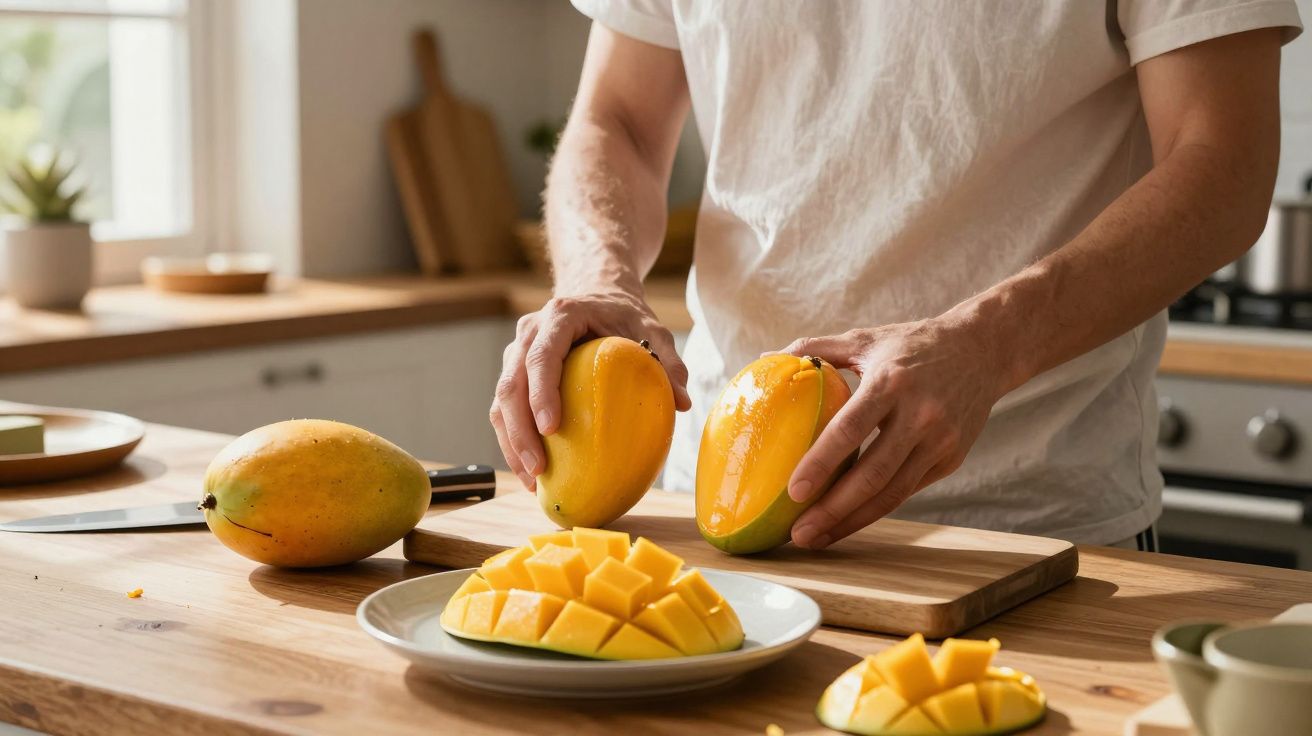
Chefs have a simpler approach. Slice down either side of the stone to make two “cheeks”, score the flesh in a grid without cutting through the skin, then invert to pop the cubes. Scrape what’s left around the stone for the most aromatic, messy spoonful - often the sweetest part.
If you’re using mango in savoury food, don’t chase maximum ripeness. Slightly under-ripe mango holds its shape, gives pleasant tartness, and doesn’t dissolve into a sauce unless you want it to. That’s the difference between a crisp mango salad and a sad, wet one.
Buying smarter: why “ready to eat” disappoints
“Ready to eat” labels are aspirational. Supply chains are long, ripening rooms vary, and your kitchen temperature isn’t the same as a warehouse. A mango can be ready in the shop and overripe by dinner, or rock-hard despite the sticker.
A more reliable strategy is to buy two: one that yields slightly for today, and one firmer for two or three days’ time. Keep them on the counter, out of direct sunlight, and only refrigerate when they’re actually ripe.
Here’s a small guide people stick to once it saves them a few bad mangoes.
| Goal | What to buy | What to do at home |
|---|---|---|
| Eat today | Slight give, strong aroma | Chill 30–60 mins for cleaner slicing |
| Eat in 2–3 days | Firm with faint scent | Ripen at room temp, check daily |
| Use in savoury dish | Firm, less perfumed | Dice small; add at the end for texture |
FAQ:
- How can I ripen mangoes faster? Put them in a paper bag at room temperature, ideally with a banana. Check daily so they don’t overshoot.
- Can I freeze mango? Yes. Peel, cube, freeze on a tray, then bag. It’s best for smoothies, sorbets, and sauces rather than neat fruit salad.
- Is it safe to eat mango if my lips tingle? Mild irritation can come from contact with the peel/sap, but any significant reaction needs medical advice. Avoid the skin and stop eating if symptoms escalate.
- Why does my mango taste like nothing? It’s usually under-ripe or was chilled too early. Let it ripen at room temperature until it smells strongly of mango and gives slightly near the stem.
- Which is better: fresh or dried mango? Fresh is easier to portion and usually has a better fibre-to-sugar balance. Dried can be fine, but it’s concentrated and often sweetened - check the label.





Comments (0)
No comments yet. Be the first to comment!
Leave a Comment