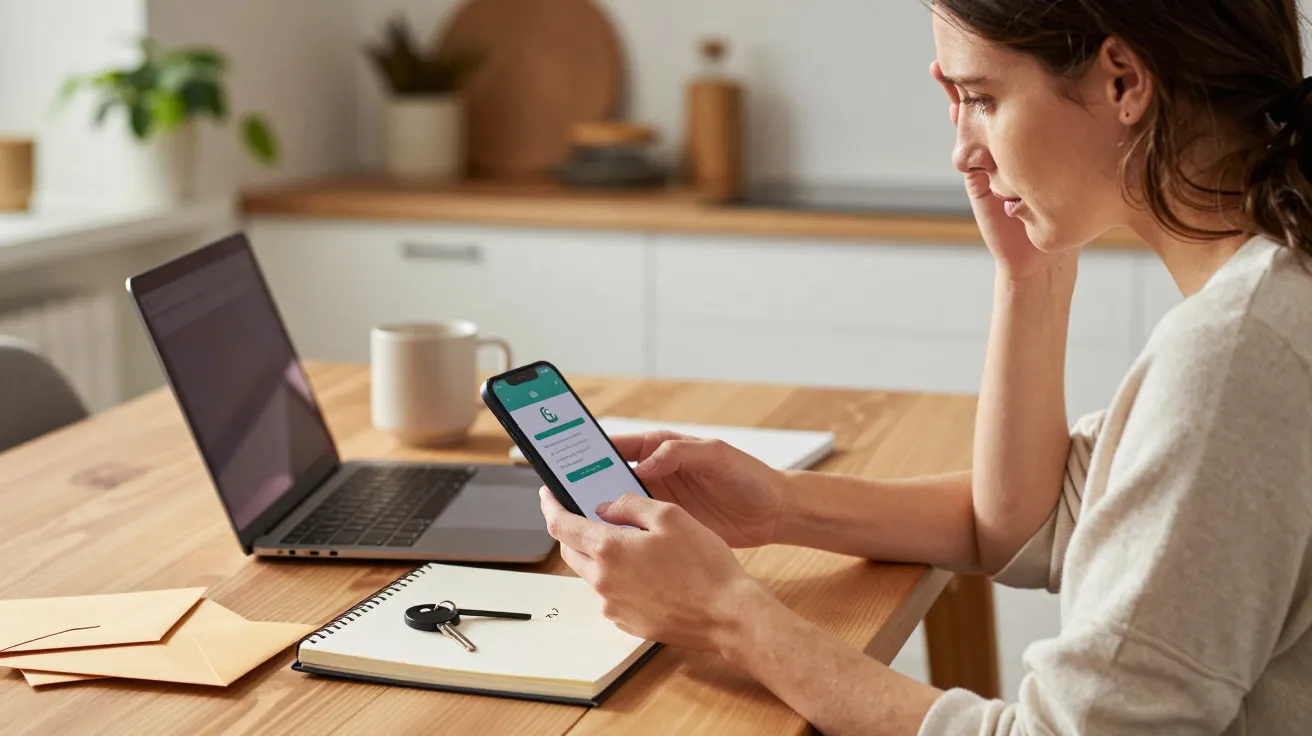
You don’t expect a security lesson from a pop-up that says “of course! please provide the text you would like translated.”, yet that’s the tone many scam pages use when they’re trying to look helpful and harmless. It often sits alongside lines like “certainly! please provide the text you would like me to translate.” to make a fake service feel familiar, and to coax you into reusing a password without thinking. That’s why password habits matter: they only feel like “IT stuff” right up until the day your bank, email, or social account stops being yours.
Most people don’t lose accounts because they’re careless. They lose them because their habits were designed for convenience in a world that quietly changed.
The password problem isn’t strength. It’s reuse.
A long password that you reuse is a strong lock on a door you’ve copied a thousand keys for. Once one site leaks, attackers don’t need to “hack you”; they log in elsewhere with the same email and password and see what opens. This is credential stuffing, and it works because humans are consistent.
The uncomfortable bit is that you usually won’t hear about the first breach in time. By the time you notice, the password has already been tried against your inbox, shopping accounts, and anything linked to saved cards.
The breach that hurts you most is rarely the one that hit the headlines. It’s the one you never saw, on a service you forgot you even used.
How it plays out in real life
- You sign up for a small tool, forum, or “free” service using your main email.
- Months later, that site is breached and the login list circulates.
- Your email + password combo is tested automatically on major platforms.
- If your email account falls, password resets become a weapon against you.
The punchline: the “small” account was never the risk. Your password habit was.
The first account you should protect isn’t your bank. It’s your email.
Email is the master key. It’s where password reset links land, where one-time codes are forwarded, and where account alerts arrive. If someone gets into your email, they can often take over everything else in a chain reaction.
People spend hours choosing a complex password for a current account and keep the same, older password on the inbox they opened at university. Attackers know this. They target the inbox because it collapses the rest of your defences.
Two upgrades that change the maths fast
- Turn on multi-factor authentication (MFA) for email, ideally using an authenticator app or a security key.
- Check your email “recovery” settings: alternate email, phone number, and recovery codes. Lock them down like you mean it.
If you do nothing else this month, do those.
“I can remember it” is not a security strategy
Memory-based passwords push people towards patterns: a base word, a year, and a predictable tweak per site. That feels unique, but attackers model those patterns easily. The more accounts you have, the more your pattern becomes a fingerprint.
Password managers aren’t just convenience tools; they’re pattern-breakers. They let you be inconsistent on purpose, which is exactly what security needs.
The goal isn’t to remember better. The goal is to stop being guessable.
A realistic minimum standard (that you’ll actually keep)
- Use a password manager to generate unique passwords for every account.
- Protect the manager with a strong passphrase (several random words) and MFA.
- Stop storing passwords in notes, emails to yourself, or browser autofill without a master lock.
Perfection is not required. Uniqueness is.
The thing no one tells you: old accounts are a liability
That photo-printing site from 2016. The fitness app you tried for two weeks. The newsletter platform you used once. These are “sleeping” accounts, and they’re attractive because they’re neglected.
Old accounts tend to have: - outdated passwords, - no MFA option (or you never enabled it), - stale personal data (addresses, DOB, old payment details), - and owners who won’t notice sign-in alerts.
A tidy digital life is a security control, not a personality trait.
A 20-minute clean-up that pays off
- Search your inbox for “welcome”, “verify”, “password reset”, and “receipt” to find forgotten accounts.
- Close accounts you don’t use, starting with anything that stored payment info.
- For accounts you keep, change the password to a unique one and enable MFA.
Do it once, then put a reminder in your calendar every six months.
Phishing doesn’t look like phishing anymore
Modern phishing often doesn’t scream “urgent bank alert”. It looks like a normal workflow: translation tools, document sharing, delivery re-scheduling, HR forms, even a “helpful” chat page. The job is to get you to type a password where you shouldn’t, or to approve an MFA prompt you didn’t initiate.
The real danger isn’t the fake page. It’s the moment you think, “I’ll just use my usual password quickly.”
Three checks before you type anything sensitive
- Check the address bar: not just the site name, the actual domain.
- Don’t follow links for logins: open a new tab and navigate to the site yourself.
- Treat unexpected MFA prompts as alarms: deny them and change the password immediately.
If a site pressures you to act fast, slow down on purpose.
A quick guide to what to prioritise
| Account type | Why it matters | First action |
|---|---|---|
| Resets everything else | MFA + unique password | |
| Password manager | Holds everything | Strong passphrase + MFA |
| Banking/shopping | Money and saved cards | Unique password + alerts |
You don’t need to rebuild your entire digital life in a day. You need to secure the keys that let someone else rebuild it without you.
What to do when you suspect it’s already gone wrong
Start with containment, not blame. If you act quickly, you can often stop the cascade.
- Change your email password first, then your password manager, then everything else.
- Sign out of other sessions (most services have “log out of all devices”).
- Check forwarding rules and “filters” in email-attackers use these to hide alerts.
- Review account recovery options and remove anything you don’t recognise.
- Freeze cards or contact your bank if payments look suspicious.
If you reuse passwords, assume more than one account is affected until proven otherwise.
FAQ:
- How long should a password be now? Long beats clever. Aim for a unique, manager-generated password for each site, and a passphrase (multiple random words) for anything you must memorise.
- Is SMS MFA good enough? It’s better than nothing, but authenticator apps or security keys are harder to hijack. Use SMS only if it’s the only option.
- What if I don’t trust password managers? Pick a reputable one, lock it with MFA, and keep it updated. The bigger risk for most people is reuse and predictable patterns, not the manager itself.
- How do I know if my password has been leaked? Use a trusted breach-check service and watch for sign-in alerts. Even without confirmation, changing reused passwords is still the right move.
- Do I really need unique passwords for “unimportant” accounts? Yes, because attackers don’t care which site leaked-only which password you reused somewhere that matters.

Comments (0)
No comments yet. Be the first to comment!
Leave a Comment