Most water damage doesn’t begin with a dramatic burst pipe. It starts as plumbing maintenance that didn’t happen, plus an early risk sign most people never notice because it’s quiet, hidden, and slow. Plumbers know this, which is why their first job on a “routine” visit is often to look for moisture patterns and pressure clues, not puddles.
If you only ever call someone when a ceiling stains or a floor bubbles, you’re paying for the end of the story. The cheaper part is the chapter before: small checks that spot movement, corrosion, and trapped humidity while the house still looks fine.
The tell-tale places plumbers check first
Plumbers follow the same logic in most UK homes: where water is under pressure, where it drains away, and where heat/cold cycles stress fittings. They start with the areas that fail silently and do the most damage when they do.
- Under sinks and behind pedestal basins (slow weeps, swollen chipboard, greened copper)
- Around toilets (pan connectors, isolation valves, hairline cracks in cistern fittings)
- Behind washing machines and dishwashers (hoses, taps, standpipes, vibration wear)
- At the boiler and hot water cylinder (pressure relief discharge, condensate route, valves)
- Under baths and shower trays (trap seals, waste compression joints, movement in trays)
- At external taps and pipe runs in cold spots (frost splits, poor insulation, UV perished plastic)
The “hidden” leak is usually a fitting that’s been slowly loosening, not a pipe that suddenly gave up.
1) They look for moisture, not just drips
A good plumber doesn’t rely on sight alone, because leaks don’t always drip where you can see them. They look for the damp’s signature: staining, musty odour, and the way materials change when they’ve been wet for weeks.
Typical early clues include paint that blisters near a skirting board, a cupboard back that’s gone wavy, or a faint tide mark under a valve even when it feels dry. In bathrooms, they’ll scan silicone edges and grout lines, but they’re really thinking about what’s happening behind the tiles.
Quick checks that reveal a slow leak
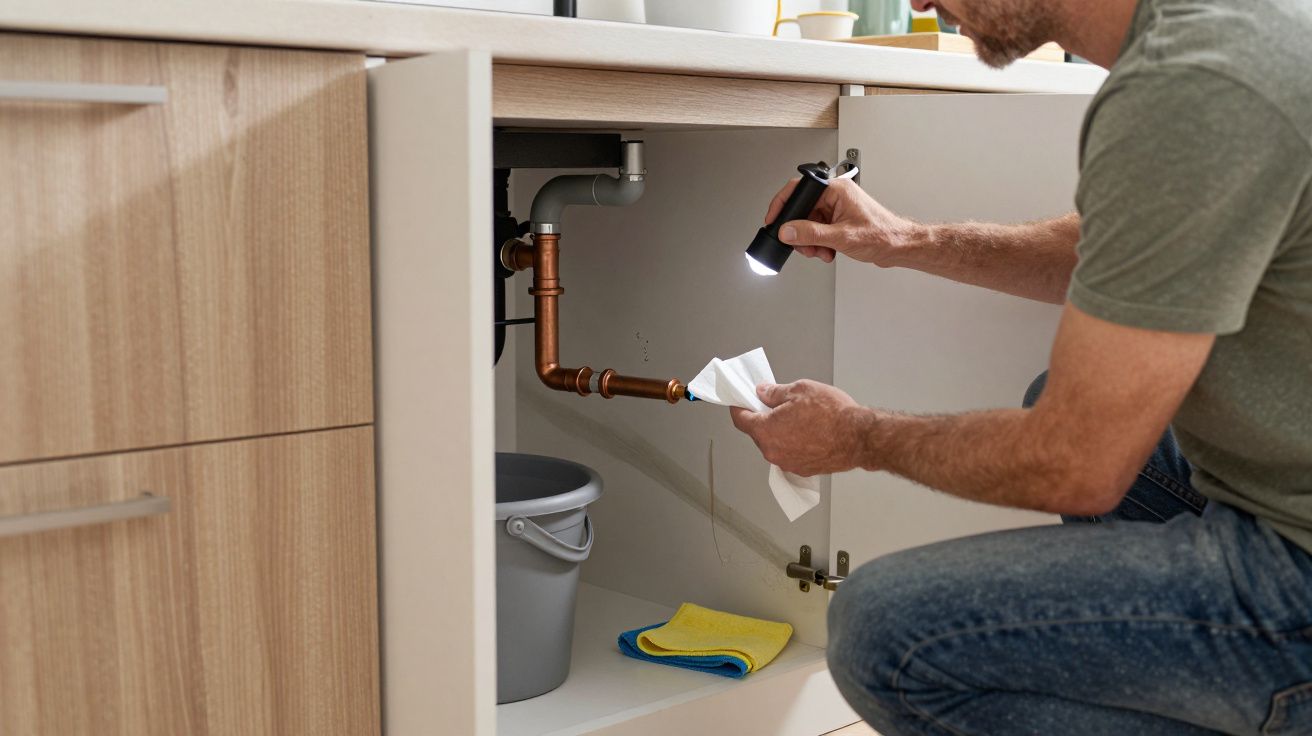
- Tissue test around compression joints and valve stems (it shows tiny weeps fast)
- Feeling pipework for “cold sweating” where insulation is missing
- Looking for limescale crusting at joints (a classic sign of intermittent seepage)
- Checking cabinet floors for swelling and darkening at screw holes and edges
2) They assess pressure and how the system behaves under it
Water damage often follows pressure problems: too high, too variable, or badly controlled. Plumbers will ask about banging pipes, noisy taps, or a boiler that needs topping up, because those are behaviour clues more than comfort complaints.
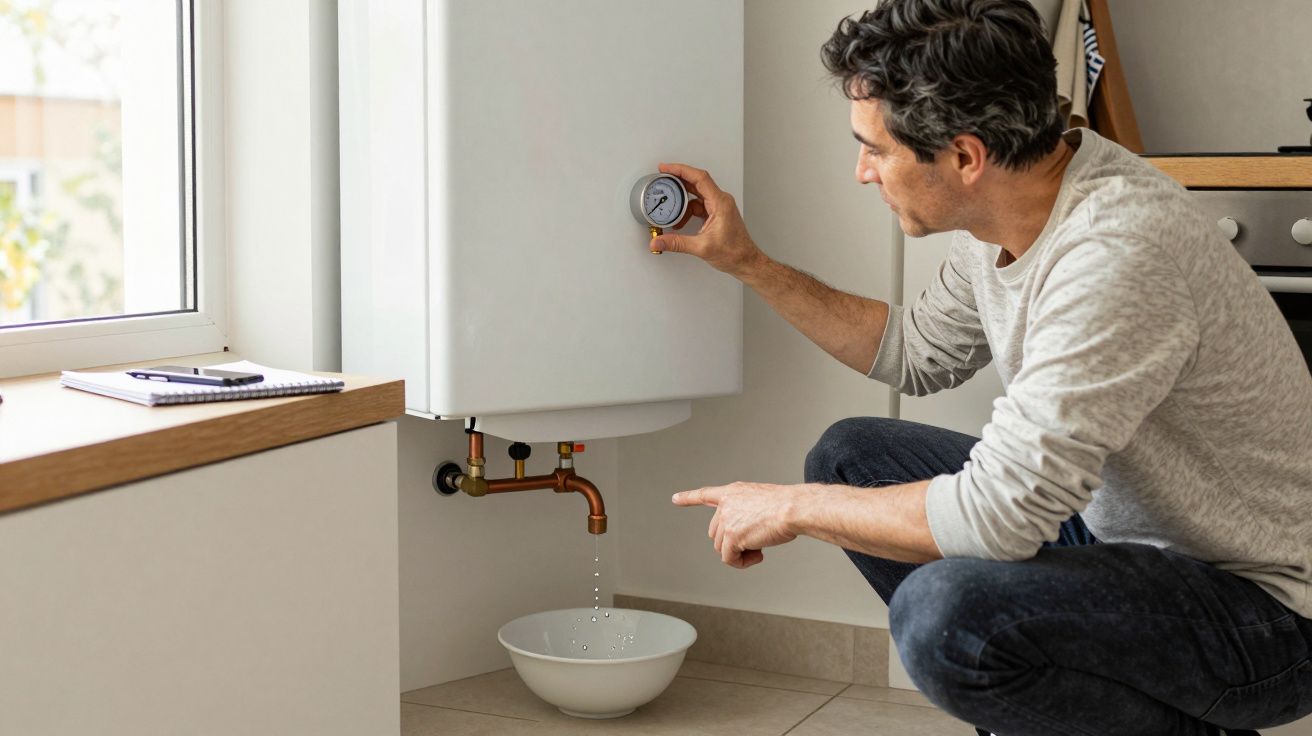
On combi systems, they pay attention to repeated pressure drops on the heating circuit. That can indicate a leak, but it can also point to a failing expansion vessel or pressure relief valve discharging-both of which can quietly dump water outside or into a drain without you noticing.
What they’re listening for
A short rattle when a tap shuts, radiators that gurgle after bleeding, or a “thump” in pipework can mean water hammer or poor pipe clipping. That movement stresses joints over time. You don’t need a flood for damage; repeated micro-movement does the work.
3) They check seals, trays, and “movement” in wet areas
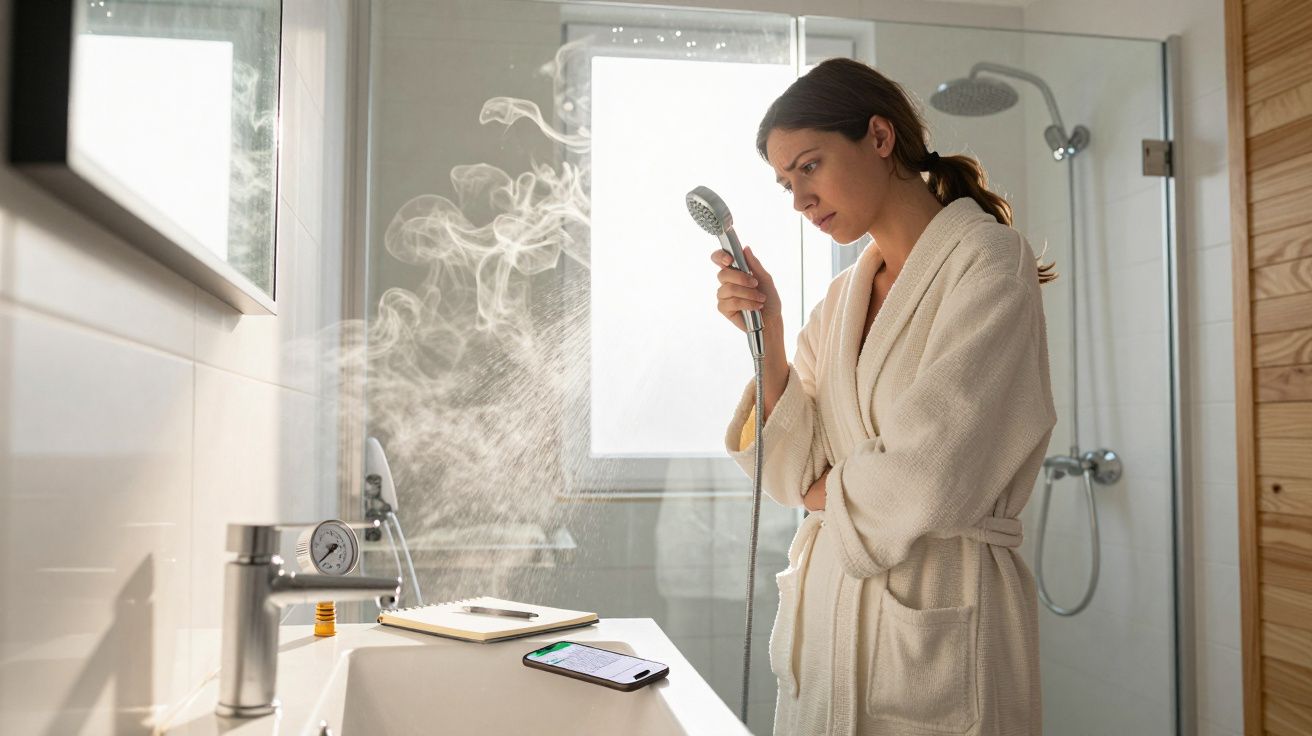
Bathrooms are where early risk hides in plain sight because water is expected there. Plumbers check whether the tray flexes when you stand on it, whether the bath edge has separated slightly from the wall, and whether silicone has started to peel or go porous.
The key isn’t the colour of the sealant. It’s whether water can track behind it and stay there. Once moisture is trapped, it spreads sideways into plasterboard, studs, and flooring. By the time a stain appears downstairs, the wet zone is usually bigger than you think.
A shower that “looks fine” can still be soaking the wall if the tray moves and the seal can’t stay bonded.
4) They inspect wastes and traps for slow, dirty leaks
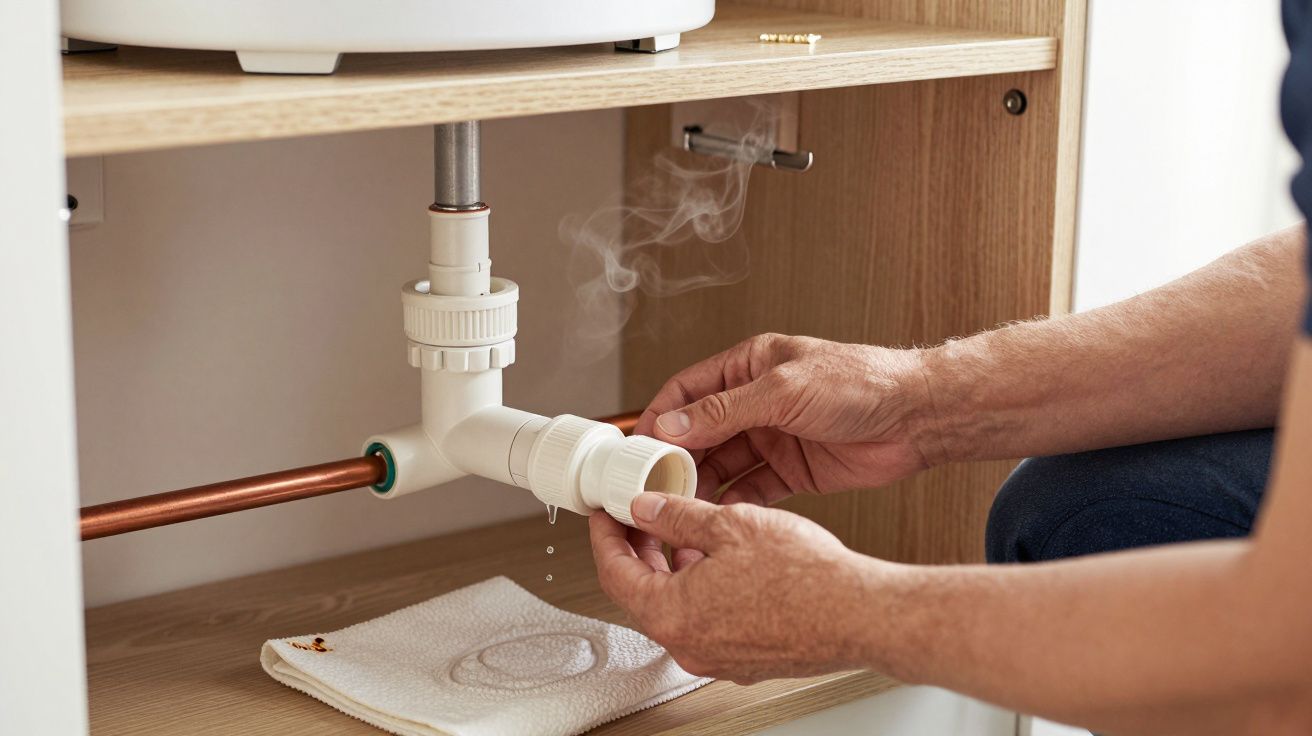
Supply leaks are obvious when they’re bad; waste leaks are sneaky because they often only leak during use. A compression joint on a trap might hold when the basin is idle, then weep when hot water runs and plastic expands.
Plumbers will also check for partial blockages that cause water to back up and overflow a joint. Hair, grease, and soap build-up don’t just create smells-they raise the waterline in places that were never meant to hold it.
Red flags on waste pipework
- Staining on the underside of a trap or the back of a cabinet panel
- A joint that’s been overtightened (white stress marks on plastic)
- Flexi waste pipes kinked or sagging (they trap water and loosen over time)
- Slow draining combined with a faint sewer smell (seal issues or venting problems)
5) They look at the “boring” valves everyone forgets
Isolation valves, stopcocks, and service valves matter because when they fail, you can’t control a leak quickly. Plumbers check whether valves turn smoothly, whether gland nuts are weeping, and whether the stopcock actually shuts off water fully.
In older properties, seized valves are common. In newer ones, cheap quarter-turn valves can drip from the spindle. Neither seems urgent-until you need to isolate a supply in a hurry.
A simple homeowner routine that mirrors a plumber’s visit
You don’t need to dismantle anything to catch most problems early. You just need a repeatable pattern and a torch.
- Once a month, open under-sink cupboards and look/feel along the back edges and pipe joints.
- After using a bath or shower, check the ceiling below (if there is one) for any new marks.
- Twice a year, test your stopcock and isolation valves so they don’t seize.
- If your boiler pressure keeps dropping, don’t just top it up and forget it-note how often it happens.
If something smells damp, don’t mask it with cleaners. Dry the area, then look for the source. Persistent humidity is often the clue that a slow leak is feeding mould somewhere out of sight.
When “small” signs deserve a call-out
Some warning signs are cheap to deal with early and expensive later. If you notice any of these, it’s usually worth getting a plumber in before you redecorate or replace flooring.
- A musty smell that returns after cleaning and airing
- A new stain that grows by millimetres each week
- Warped laminate near a bathroom wall or kitchen units
- Boiler pressure dropping repeatedly, or a constant drip from an external overflow pipe
- Silicone that keeps peeling at the same edge (often movement, not poor DIY)
Fixing the cause is the point. Water damage isn’t just water; it’s time, trapped moisture, and materials slowly giving way. The plumber’s inspections are really about stopping that clock before it starts showing on your ceiling.



Comments (0)
No comments yet. Be the first to comment!
Leave a Comment