
The phrase lands like a shrug: “the system is fine.” In heating system diagnostics, it usually means someone has looked at the numbers, done a basic risk assessment, and decided nothing is screaming loudly enough to justify a shutdown. That’s reassuring-until you realise “fine” can hide a dozen different truths, from “safe for now” to “we can’t reproduce your fault”.
I learned this in a draughty office where the radiators clanked like cutlery in a sink. The building manager wanted a simple answer: is it broken or not? The engineer wanted a precise one: what is it doing, when, and under what conditions. “Fine” was the bridge word between those two worlds.
“Fine” is a status, not a promise
Engineers tend to talk in thresholds. Temperatures, pressures, flow rates, flame signal, pump current, delta-T, lockout counts-if those sit inside expected bands, the system earns a “fine” even if it still feels wrong to you. Comfort is subjective; safety limits and control logic are not.
“Fine” also means: no evidence of immediate danger. Gas safety checks passed, flue readings acceptable, no obvious leaks, no overheat trips. That’s not dismissal-it’s triage.
But “fine” rarely means “optimal”. It can mean “operating within tolerance while wasting energy,” or “stable today but trending the wrong way,” or “the fault is intermittent and we didn’t catch it in the act.”
The quiet translation guide: what they’re really saying
There’s a small dictionary behind the word. You can hear it if you listen for what comes next-what they measured, what they didn’t, and what they want you to monitor.
Here are the most common translations:
- “The system is fine” = It’s running within expected parameters right now; I’m not seeing a safety issue.
- “It’s fine at the moment” = Intermittent fault. Come back with evidence, timing, patterns.
- “Nothing’s showing on the boiler” = No active error codes; the issue may be external (controls, wiring, valves, emitters).
- “It’s probably the thermostat” = The heat source looks okay; the demand signal or control strategy may be wrong.
- “Your pressures are okay” = The sealed system isn’t obviously losing water today; slow losses still possible.
- “We’ve cleaned/checked it and it’s fine” = Maintenance done; if symptoms persist, we need deeper diagnostics or a different hypothesis.
Notice how often “fine” is about today. Heating faults love tomorrow.
Why heating systems feel “not fine” when the readings look normal
Heating is a chain, not a box. A boiler can fire perfectly while your home stays cold because the heat can’t get out, can’t circulate, or is being told not to.
Common examples that don’t always show up as a neat fault code:
- A sticking zone valve: it works when tapped, fails when hot, behaves impeccably during the visit.
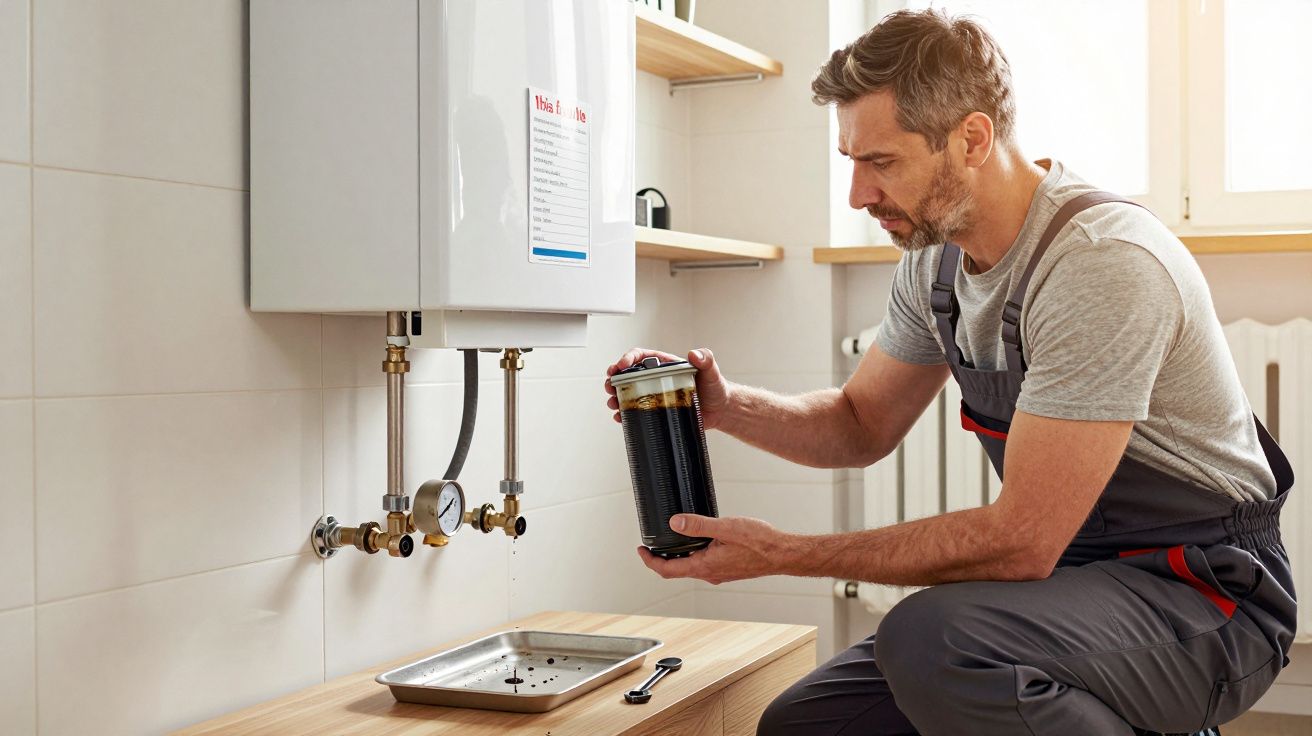
- Air or sludge in a circuit: flow exists, but not enough where you need it.
- A pump that spins but can’t deliver under load: it “runs”, yet rooms lag.
- Weather compensation set too low: system “stable” but underheating in cold snaps.
- A cylinder stat drifting: hot water either lukewarm or overheating without a clear alarm.
- Wireless controls dropping signal: the boiler looks innocent; the demand disappears.
From the engineer’s side, “fine” can be the honest conclusion of limited visibility. From your side, it can feel like you’re being told the cold is imaginary.
What a real diagnostic looks like (and why it takes longer)
Good heating system diagnostics is less about the first glance and more about narrowing the story. The best engineers behave a bit like patient burglars in reverse: they read patterns, timings, and predictability, then test the weak points.
A solid approach often includes:
- Establish the symptom in measurable terms (room temperatures, recovery time, hot water reheat time).
- Check safety and basic health first (gas/flue, leaks, electrical connections, expansion vessel/pressure behaviour).
- Confirm control intent (programmer schedules, thermostat setpoints, zoning logic, smart-home overrides).
- Verify heat transfer and circulation (flow/return temps, radiator balance, pump performance, valve positions).
- Recreate conditions where the fault happens (morning start-up, simultaneous hot water demand, cold weather).
If the visit ends after step 2, “fine” may be true-and still not helpful.
Risk assessment: the part you don’t see, but should ask about
Even when an engineer sounds casual, they’re usually doing a mental risk assessment. Not formal paperwork every time, but a constant sorting: what could hurt people, what could damage property, what can wait, what needs isolating now.
If you want clarity, ask for the risk in plain language:
- Is there any safety concern if we keep running it this week?
- What failure mode are you worried about most?
- If it gets worse, what’s the “stop and call” sign? Smell, noise, pressure drop, error code?
- What’s the next test that would change your conclusion?
You’re not being difficult. You’re helping turn “fine” into a decision you can live with.
How to get a better answer next time (without becoming a heating nerd)
You don’t need to learn hydronics. You just need to bring the kind of evidence engineers can use: timing, repeatability, and context.
Keep it simple:
- Note the pattern: time of day, outside temperature, whether hot water was used, which zones were on.
- Take two photos: boiler pressure gauge and any controls/screens when it’s misbehaving.
- Log one number: how long it takes to reach setpoint, or how quickly it cools down after cycling off.
- Describe the sound: gurgling (air), banging (expansion/flow issues), buzzing (valve/relay), whirring (pump).
- Don’t “fix” it before the visit if you can help it. The perfect system at 10:00 is useless when it fails at 06:30.
Let’s be honest: nobody wants homework from their boiler. But this is the difference between “fine” and a targeted repair.
The small, practical meanings of “fine” you can trust
Sometimes “fine” is genuinely good news. No hidden drama, just normal operation and an expectation gap: you want it warmer, faster, quieter, cheaper. Those are solvable, but they’re not always faults.
If the engineer can tell you what “fine” is based on-readings, observations, tests performed-you’ve got a solid answer, even if it’s not the one you hoped for. If they can’t, you don’t have “fine”. You have uncertainty dressed up as reassurance.
| What you heard | What it often means | What to ask next |
|---|---|---|
| “It’s fine” | Safe and within tolerance right now | “Fine based on which checks?” |
| “No fault codes” | No active errors; issue may be elsewhere | “What could still cause the symptom?” |
| “Monitor it” | Intermittent; needs evidence to pin down | “What exactly should I watch for?” |
FAQ:
- Why do engineers say “fine” when I’m still cold? Because the boiler can be operating correctly while controls, circulation, balancing, or zoning stops heat reaching the rooms you care about.
- Is “fine” the same as “safe”? Not always, but it often implies “no immediate safety red flags”. Ask directly whether there’s any reason to stop using the system.
- What’s the quickest thing I can check myself? Note boiler pressure (if sealed), thermostat setpoints/schedules, and whether the issue correlates with hot water use or specific zones.
- When should I insist on deeper heating system diagnostics? When the problem is repeatable, costs are climbing, or comfort is consistently poor despite basic checks-and especially if you’ve had multiple “fine” visits with no change.
- What’s the biggest red flag during a visit? Vague reassurance without stating what was measured or tested. A good “fine” comes with evidence and a next step if symptoms return.




Comments (0)
No comments yet. Be the first to comment!
Leave a Comment