That shock high bill rarely arrives with a dramatic puddle in the kitchen. More often it lands quietly on the doormat, and you’re left replaying the month: fewer showers, no guests, nothing obvious. This is exactly where water usage monitoring and leak detection earn their keep in UK homes-because the earlier you spot an abnormal pattern, the less time a hidden fault has to chew through money and plasterboard.
Professionals see the same storyline again and again: an unexplained rise that looks like “general usage” until you put numbers against it. The bill is the clue, not the diagnosis, and the fastest path to answers is to treat your water use like a simple timeline rather than a mystery.
The bill isn’t the problem - it’s the symptom
When a plumber or water engineer hears “the bill doubled”, they don’t start with the boiler or the dishwasher. They start with what changed, when it changed, and whether the increase is constant or spiky. That’s because most costly faults behave in a predictable way: they either run all the time, or they run every time a specific thing runs.
A steady, round-the-clock leak can be small enough to hide for weeks. A running toilet can be loud, but it can also be quiet-refilling in tiny bursts you stop noticing after day two. The bill simply adds up the hours you weren’t watching.
What pros notice early: the one fault that keeps turning up
If you asked ten tradespeople what they find most often behind “nothing’s wrong but the bill is mad”, a large share would point to the toilet cistern. Not the bowl. Not the flush button. The quiet internal parts: a worn flush valve, a tired seal, or a fill valve that never quite shuts off.
Why this one? Because it’s common, it’s continuous, and it doesn’t need you to be home to waste water. It can also look “fine” at a glance: no visible leak, no damp patch, no obvious noise, just a faint trickle down the back of the pan that you only notice when the bathroom is silent.
Typical early tells professionals look for:
- A cistern that refills briefly every few minutes without anyone flushing.
- Ripples in the bowl water when everything should be still.
- A faint hiss that comes and goes, especially at night.
- Limescale staining that appears “too quickly” in the pan.
A simple way to confirm it with water usage monitoring
You don’t need a lab to do meaningful water usage monitoring. You need two calm checks: one when nothing is being used, and one overnight. The goal is to prove whether water is moving through the system when it shouldn’t be.
1) Do a “no-use” meter check
If you have a water meter (common in many UK properties), pick a time when no taps, appliances, or showers will run for 15–30 minutes.
- Take a photo of the meter reading (or write down the digits and note any moving dial/triangle).
- Don’t use any water at all.
- Check again after 15–30 minutes.
If the meter moved, you’ve got flow somewhere. That doesn’t tell you where yet, but it tells you this isn’t “just higher usage”.
2) Do an overnight baseline
This is the professional trick that cuts through the noise. Take a meter reading before bed, then again first thing-before anyone flushes or runs a tap. A change overnight strongly suggests a continuous leak, and toilets sit right at the top of the suspect list.
If you don’t have a meter, you can still do a version of this: mark the cistern waterline with a pencil, wait 30–60 minutes without flushing, and see if it drops. A slow drop often means water is escaping into the bowl.
Where leak detection fits (and where it doesn’t)
Leak detection can sound like a big, expensive call-out, but it’s really a toolbox of methods. The good work is targeted: confirm there’s abnormal flow first, then locate it with the lightest-touch method that makes sense.
Common approaches include:
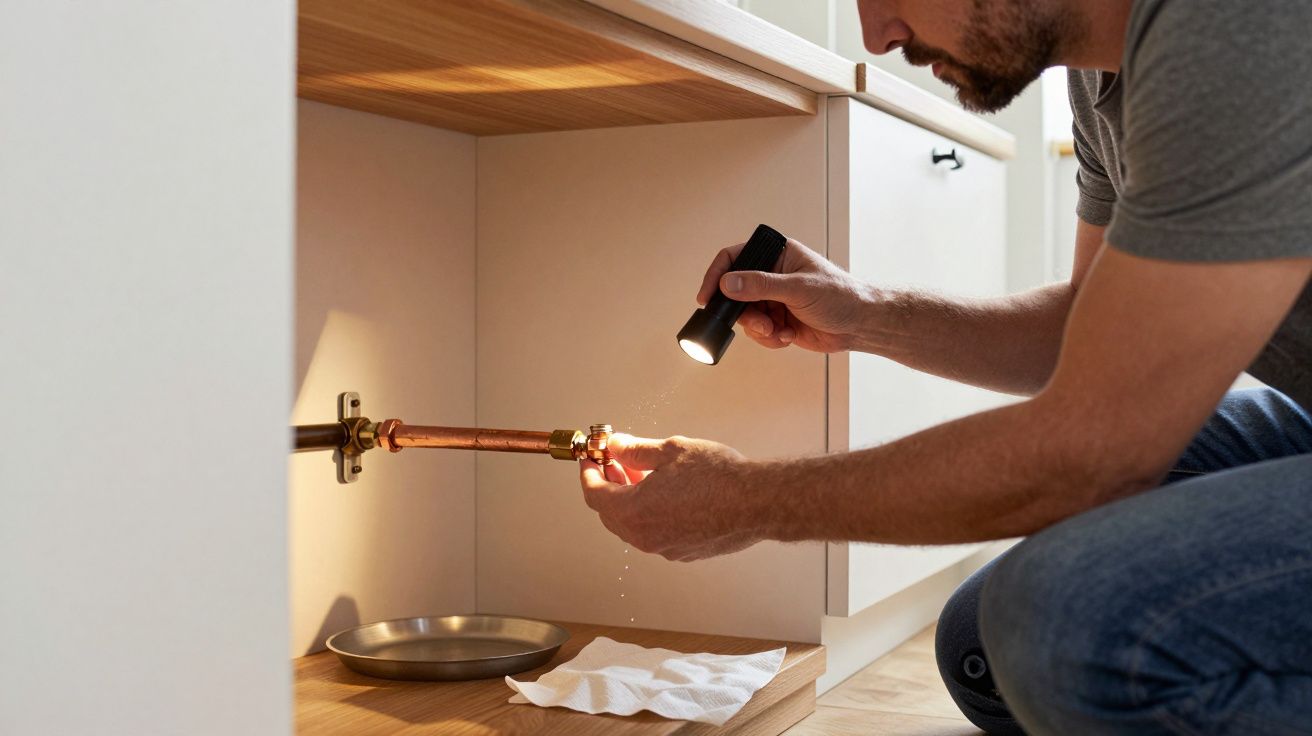
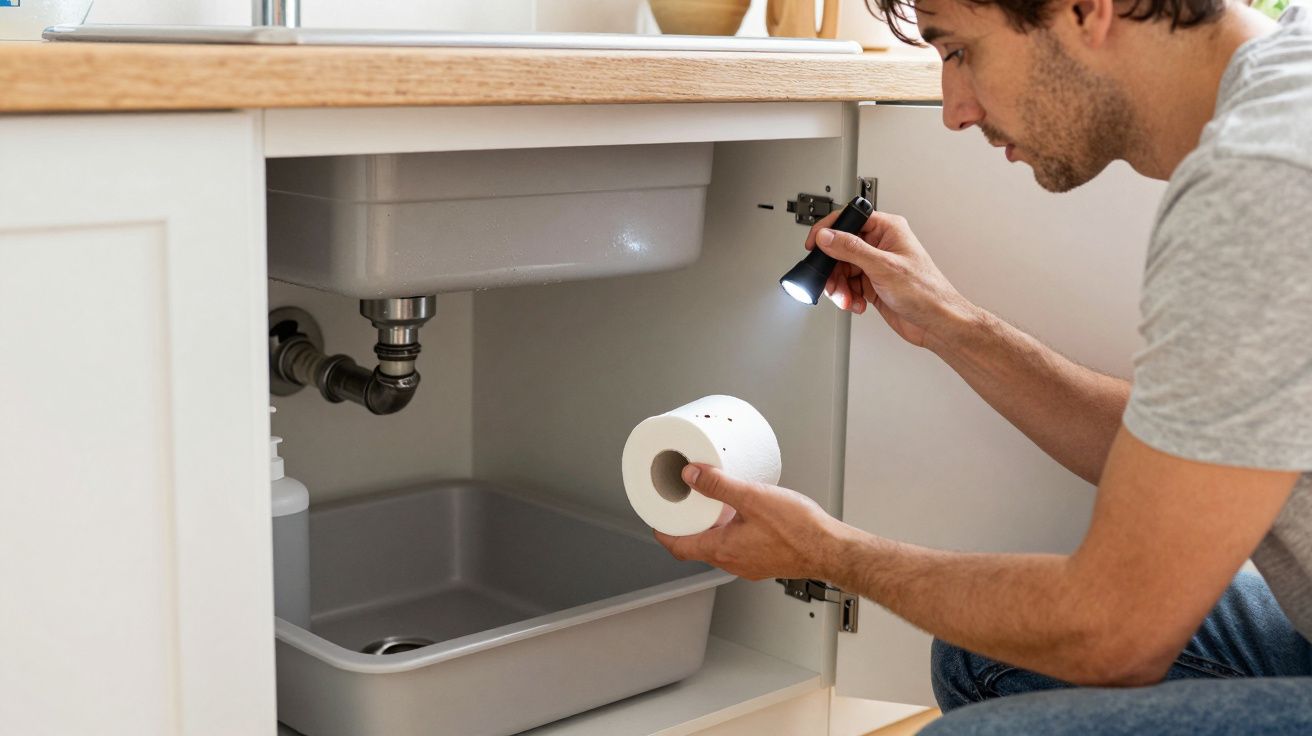
- Visual and acoustic checks around toilets, stopcocks, and accessible pipework.
- Isolation testing, where sections are turned off to see when the meter stops.
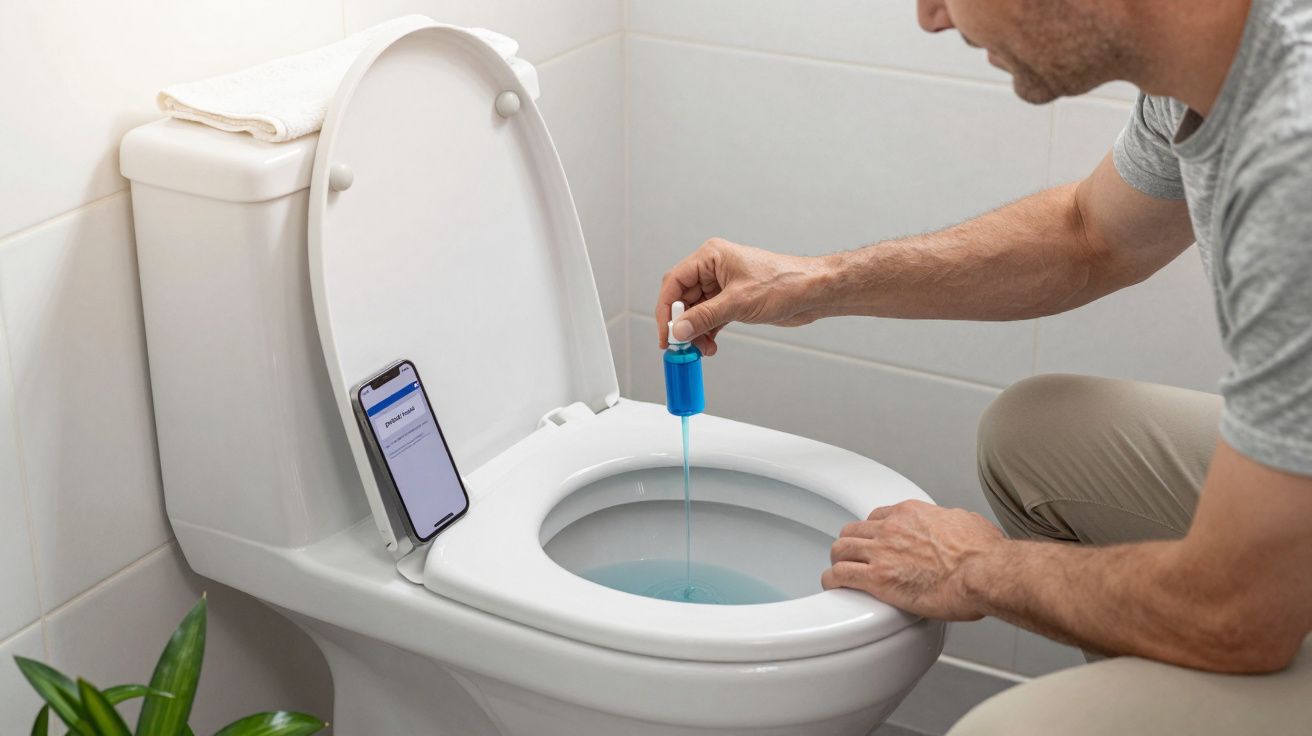
- Tracer and dye tests for toilets (simple, fast, very telling).
- Thermal or moisture mapping when a hidden pipe leak is suspected in walls or floors.
A good professional won’t jump straight to ripping out tiles. They’ll try to “prove” the leak in a way that survives common distractions-someone running an ice maker, a combi boiler topping up, or a family member forgetting and flushing mid-test.
The 15-minute triage a plumber does in their head
This is the rough decision tree many pros follow, even if they don’t say it out loud. You can copy it at home.
- Is the increase constant? (Meter moves when nothing is on)
Think toilets, outside taps, underground supply pipe leaks. - Does it spike with certain activities? (Washing machine days, long showers)
Think appliance faults, stuck valves, unusual usage patterns. - Any signs of damp, mould, or warm patches?
Think hidden pipework, heating system issues (though heating leaks don’t usually hit the water bill unless there’s regular top-up).
Most households with a sudden, steady rise and no visible damp end up back at the bathroom.
What to do next if you suspect the toilet
If the no-use check points to continuous flow, start with the cheapest, highest-probability fix. Toilets are often a parts-and-adjustment job, not a full replacement.
Practical next steps:
- Put a few drops of food colouring in the cistern, don’t flush, and wait 10–15 minutes. Colour in the bowl suggests a leak past the flush valve.
- Check the overflow route (internal overflows can send water straight into the pan with little drama).
- Look for limescale on the valve seat and seals-hard water areas make this more likely.
- If you’re not confident, book a plumber and tell them: “Meter moves when nothing’s on; likely cistern leak.” That single sentence saves time.
A quick “what it probably is” guide
| What you observe | Most likely cause | Best first check |
|---|---|---|
| Meter moves during no-use test | Continuous leak (often toilet) | Dye test + listen for refills |
| Cistern refills by itself | Fill valve not sealing | Watch float action; check debris/limescale |
| Bowl water has constant ripples | Flush valve seal leaking | Dye test; inspect flush valve seal |
The calm payoff: you stop paying for invisible water
High bills create a particular kind of stress because they feel like a personal failure: “We must be using loads.” In reality, many of the worst culprits are boring mechanical parts doing a tiny wrong thing for a long time. Water usage monitoring turns that anxiety into evidence, and leak detection turns evidence into a fix-ideally before the next bill, and definitely before water finds its way into places it shouldn’t.
FAQ:
- Can a running toilet really add that much to a bill? Yes. A small, continuous leak adds up fast because it runs 24/7, even when you’re out or asleep.
- What if the meter doesn’t move, but the bill still rose? Then it’s more likely a genuine usage change (guests, a new appliance, longer showers) or an estimated-to-actual reading correction. Compare meter readings month to month if you can.
- Do I need specialist leak detection straight away? Not always. Start with a no-use meter check and a toilet dye test. If the meter still moves after you rule out toilets and obvious points, then specialist leak detection becomes worth it.
- Will a combi boiler cause a higher water bill? Not directly through the heating loop (that’s sealed), but frequent pressure drops can indicate a heating leak that leads to repeated top-ups, which uses mains water. It’s a different pattern, but worth mentioning to an engineer.
- Is it safe to try fixes myself? Basic checks are safe. If you’re replacing internal cistern parts and you’re unsure, turn off the supply and call a plumber-small mistakes can create bigger leaks quickly.



Comments (0)
No comments yet. Be the first to comment!
Leave a Comment