The first hard cold snap is rarely dramatic inside the house. It’s usually outdoor taps that give the game away - the ones you use for garden hoses, washing muddy boots, or topping up a paddling pool - and the burst pipes that follow are often the expensive surprise. The risk isn’t just “frozen water”; it’s the slow, hidden pressure that builds in a line you don’t think about until you hear it: a drip where there shouldn’t be one, a hiss behind plaster, a boiler losing pressure overnight.
A plumber will tell you winter damage has a tone. It’s the tap that feels stiff, the wall that looks slightly darker around a pipe run, the “it only happens when it’s really cold” call that comes in too late. The good news is most of the early signs are easy to spot if you know what to look for, and easier still to prevent.
Why outdoor taps go from useful to risky in winter
Outdoor taps sit at the edge of the heated envelope of your home, which means they get the worst of both worlds. They’re connected to warm internal pipework, but the business end lives in freezing air, wind, and overnight temperature swings. That contrast is exactly what turns a normal line of water into a stress point.
Professionals tend to focus less on the tap itself and more on what’s attached to it. A hose left on, a spray gun with a closed nozzle, even a “quick connector” that traps a little water can create a sealed section that freezes first. When water turns to ice it expands, and it doesn’t need much room to start cracking fittings or forcing joints apart.
What catches people out is the delay. The pipe can split during a freeze, but you often don’t see the leak until it thaws and the line re-pressurises. That’s when a small weakness becomes a steady flow into a cavity wall or under a suspended floor.
What professionals notice early (and why it matters)
Most winter call-outs have a familiar prequel: small, ignorable weirdness. If you catch it at that stage, you’re usually dealing with an outdoor tap issue, not a full burst pipe clean-up with wet plaster and warped skirting.
The “behaviour changes” that matter
Plumbers pay attention to how the tap behaves, because it reflects what’s happening upstream.
- Lower flow than usual, especially on a mild day after a freeze: ice may still be restricting the pipe, or a washer may have shifted.
- A tap that won’t fully shut off: freezing can distort seals, and a slow drip outside is a fast freeze when temperatures drop again.
- A stiff handle or crunchy turning feel: can indicate a stressed valve or trapped ice in the body.
- Water hammer or banging when turning it on: sometimes a sign of partial blockage or a damaged fitting moving under pressure.
None of these guarantees a disaster, but they’re the early “tell” professionals don’t ignore. They treat them as reasons to inspect, not reasons to wait.
The quiet visual clues indoors
Winter water damage rarely stays politely outside. If the pipe feeding the outdoor tap runs through a kitchen unit, downstairs loo, garage, or utility room, the first evidence can be inside.
Look for:
- A faint tide mark or slightly bubbling paint near external walls
- Musty smells in a cupboard that normally smells like cleaning products
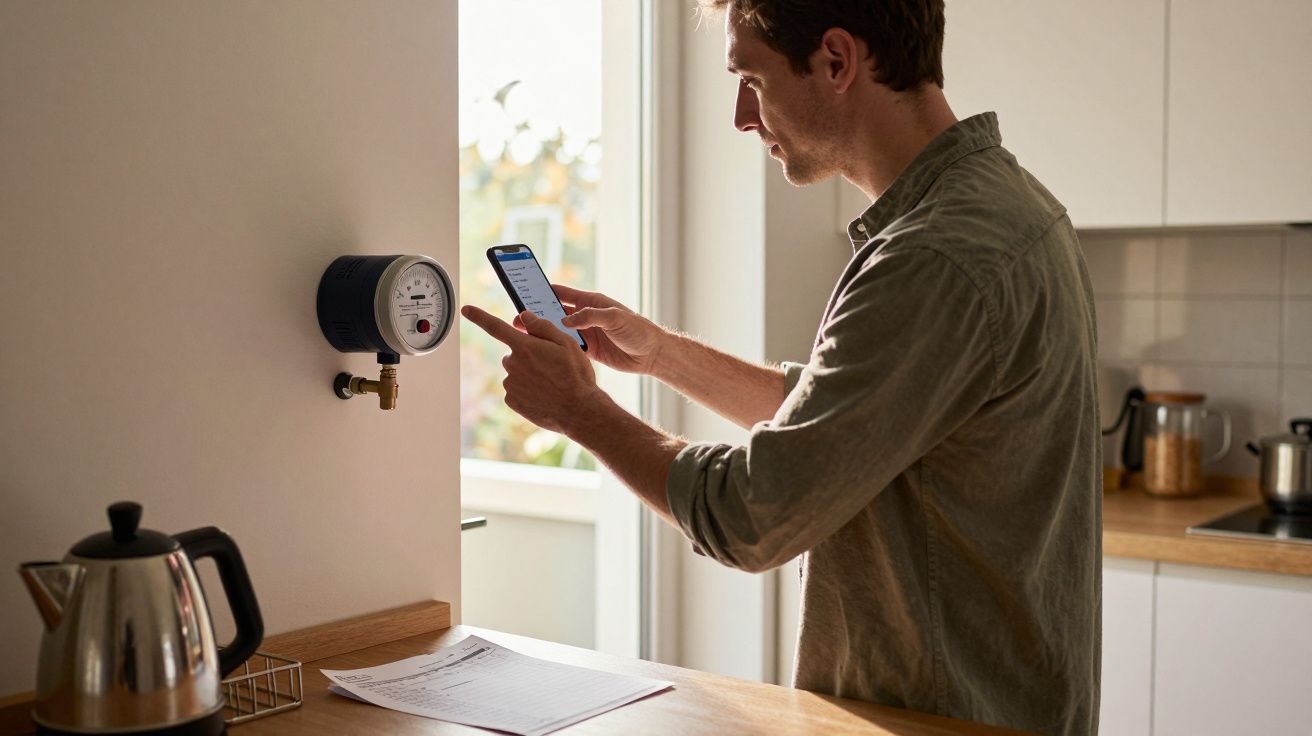
- Boiler pressure dropping without an obvious radiator leak
- Cold patches on a wall where you know the pipe runs
One tradesperson described it as “listening with your eyes”. A tiny change in the house’s surfaces can be the only warning before water shows itself properly.
The simple mistakes that set winter damage in motion
Most burst-pipe stories around outdoor taps aren’t about neglect in a moral sense. They’re about one small assumption: “It’ll be fine.”
Common set-ups professionals see again and again:
- Hose left connected all winter (even if the tap is “off”).
- Tap is inside an unheated garage where the air temperature matches outside.
- Pipework is shallow in a wall with minimal insulation.
- Outdoor tap fitted without an internal isolation valve (or no one knows where it is).
- A dripping tap that turns an overnight freeze into a solid ice plug.
There’s also the classic: someone wraps the tap in a bit of cloth, feels pleased, and forgets it gets soaked in rain. Wet fabric conducts cold beautifully. It’s the opposite of insulation when it matters.
A winter check you can do in ten minutes
You don’t need to be technical to reduce risk. You just need to treat the outdoor tap like a seasonal fixture, the way you treat a boiler service reminder or a smoke alarm battery.
Here’s a quick, practical routine:
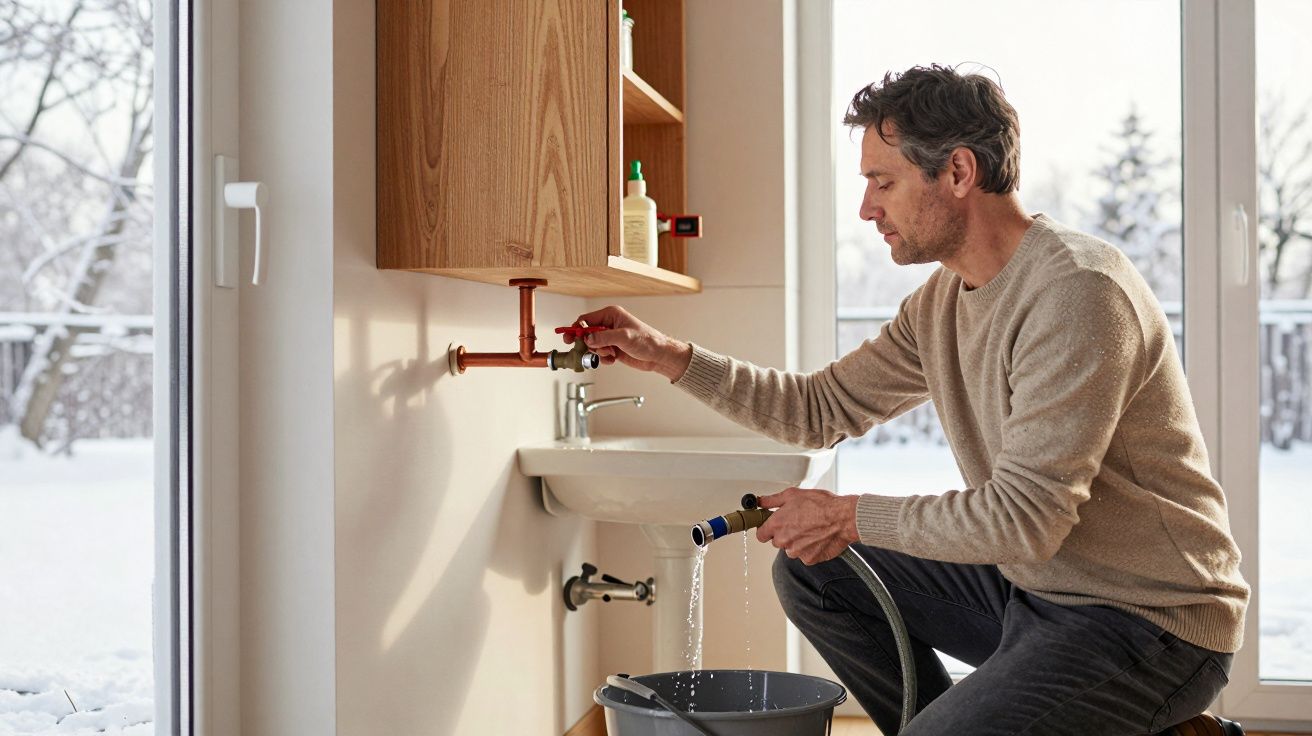
- Disconnect hoses and accessories. Drain them, store them, and leave the outlet free.
- Find and test the internal isolation valve feeding the outdoor tap. Turn it off and on so you know it moves.
- If there’s a drain-off valve, use it. Let any water in the spur drain out after isolating.
- Fit a proper tap cover (the foam dome type) if the tap is exposed to wind.
- Check the area inside where the pipe passes through. Look for damp, staining, or mildew.
If you can’t isolate and drain it, that’s not a reason to panic. It is a reason to consider an upgrade, because the best prevention is built into the pipework, not improvised on the coldest night of the year.
When to call someone (before it turns into a bigger job)
There’s a point where “keep an eye on it” becomes “get it looked at”. Professionals would rather you call when the problem is small, because small is cheap and dry.
Call a plumber if you notice:
- Water appearing indoors after a freeze, even if it stops later
- The outdoor tap body looks cracked, bulged, or misshapen
- The tap won’t shut off properly, or the handle spins oddly
- You can’t find an isolation valve and the pipe route is unknown
- Repeated freezing in the same spot each winter
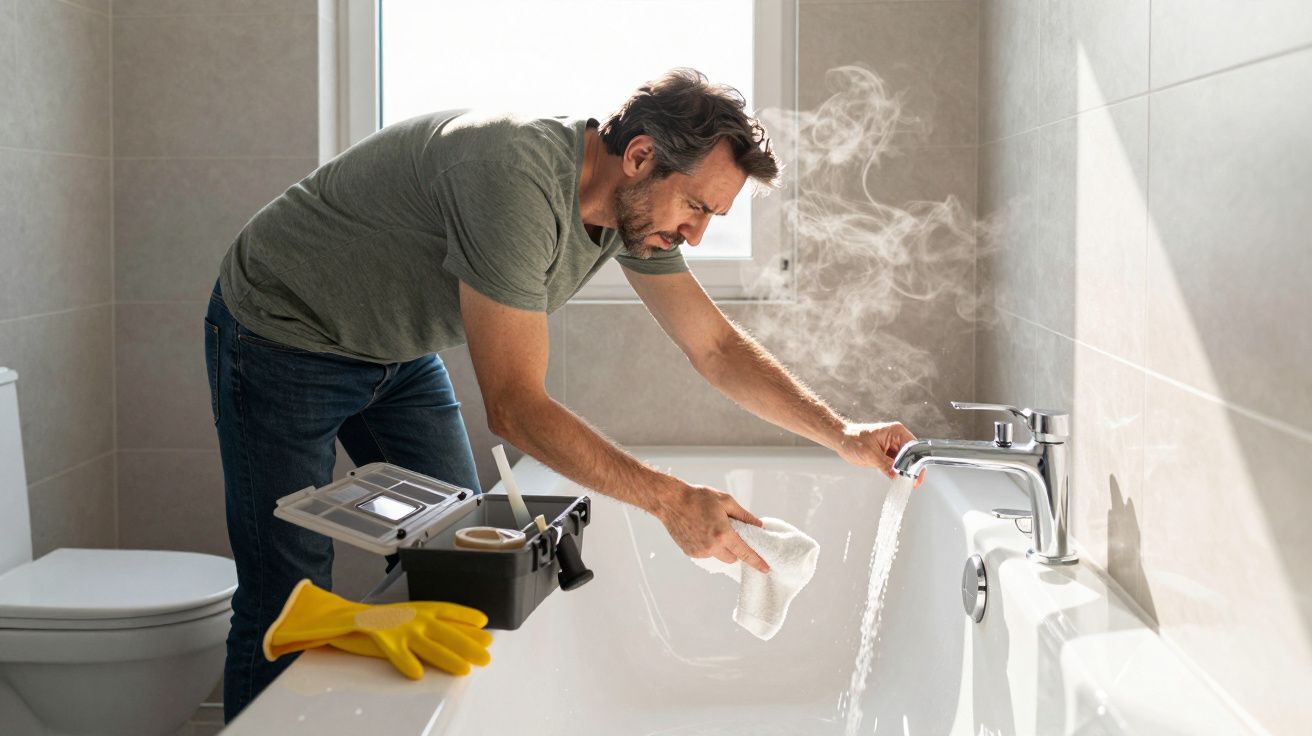
If you suspect a frozen pipe, don’t blast it with boiling water or a blowtorch. Gentle warming (a warm room, a hairdryer at a safe distance, or warm towels) is safer, but if you’re unsure, it’s a job worth handing over.
What a “better” outdoor tap set-up looks like
Professionals aren’t chasing fancy hardware; they’re chasing predictability. A winter-resilient installation is one where water can be shut off, drained, and kept out of exposed sections.
A solid set-up usually includes:
- An internal isolation valve in an accessible place
- A drain-off point so the spur can be emptied
- Pipe insulation where the feed runs through cold spaces
- A frost-proof (self-draining) bib tap, where appropriate
- A clear label (even a bit of tape) so anyone in the house can isolate it quickly
Small upgrades like these are the difference between “we caught it” and “we’re pulling up the floor”.
| Early sign | What it can suggest | What to do next |
|---|---|---|
| Stiff tap / poor flow after a freeze | Partial freeze or valve damage | Isolate, inspect, consider replacement |
| Damp patch near external wall | Leak on feed pipe | Stop using tap, call plumber |
| Hose left on over winter | Trapped water freezes first | Disconnect and drain immediately |
FAQ:
- Should I leave outdoor taps dripping in freezing weather? Generally no. A slow drip can still freeze at the outlet and build an ice plug. Proper isolation and draining is more reliable.
- Do tap covers actually work? They help reduce wind chill and rapid temperature swings, especially on exposed walls. They’re not a substitute for an isolation valve and drain-off.
- What’s the biggest single mistake with outdoor taps? Leaving a hose or spray gun connected. It traps water and creates the perfect section to freeze and crack.
- How do I know if a pipe has burst if I can’t see it? Watch for boiler pressure drops, unexplained damp smells, staining near external walls, or water noise when everything is off.
- Is a frost-proof tap worth it in the UK? Often, yes-particularly on very exposed properties or where the feed runs through unheated spaces. It’s best paired with an internal isolation valve so you can still shut it off for maintenance.


Comments (0)
No comments yet. Be the first to comment!
Leave a Comment