You don’t need a flood to get into trouble. Water leaks can start as a polite little drip under the sink and end as property damage that creeps into floors, walls and-eventually-the bones of the building. They matter because the earlier you catch them, the more likely you are to avoid the kind of repair that involves lifting boards, opening ceilings, and discovering your house has been quietly rotting.
Most people spot the obvious stuff: a wet patch, a swelling cupboard base, a tap that won’t stop. What’s harder is realising that plumbing failures don’t always stay “plumbing”. Given time, moisture turns joinery soft, corrosion spreads, and small movement becomes structural.
The drip that doesn’t look dramatic (until it is)
A slow leak is the most convincing liar in the home. It doesn’t make a scene, it just stays busy-behind a washing machine, under a bath panel, along a pipe boxed into a stud wall-feeding timber and plasterboard with damp.
At first, it feels cosmetic. A stain you paint over. A musty smell you blame on the weather. A bit of silicone you redo on a Sunday. Then one day a tile sounds hollow, a floor starts to “bounce”, or a skirting board crumbles when you brush it with the hoover. That’s not bad luck. That’s moisture doing what it always does when it has enough time.
Where water actually travels (and why the damage looks “random”)
Water doesn’t politely sit under the leak and wait for you to notice it. It follows gravity, capillary action and whatever gaps your house has to offer, which is why the visible mark is often nowhere near the source.
Common routes include:
- Along joists and pipes, then dripping off a fixing point like a little tap you never installed
- Through plasterboard until it finds a seam, a socket back box, or the edge of a ceiling rose
- Under vinyl or laminate, spreading in a thin film that keeps the subfloor permanently damp
- Into insulation, where it holds moisture against timber like a sponge with a grudge
If you’re thinking, “But the stain is in the hallway and the bathroom is upstairs,” yes. That’s exactly how this works.
The moment plumbing becomes structural
Structural problems aren’t always dramatic cracks and sinking foundations. Often they’re the quiet loss of strength in materials that were never meant to stay wet.
Timber: strong, until it’s fed damp for months
Floor joists, roof timbers, stud walls-wood can tolerate a brief wetting if it dries properly. The trouble starts when a leak keeps it in the “never quite dry” zone. That’s when you see:
- Spongy floors around toilets, baths and showers
- Skirting boards swelling, splitting, or pulling away
- Door frames twisting because the surrounding structure has moved
And if rot sets in, it doesn’t care that you’re busy this week. It will keep going.
Masonry and plaster: the salt-and-crumble cycle
Moisture moving through brick and plaster brings salts to the surface. You notice it as powdery “bloom”, flaking paint, and plaster that turns soft and hollow. In older homes, repeated wetting can also accelerate decay in lime mortar, especially where gutters and downpipes are involved.
It’s not just ugly. Once finishes fail, the wall breathes differently, and damp can spread more easily-like taking the lid off a problem you were containing by accident.
Metal fixings: corrosion that loosens what you rely on
Hidden metalwork-nails, screws, brackets, joist hangers-doesn’t announce itself. But persistent damp speeds up corrosion, and corroded fixings stop behaving like fixings. Floors start to squeak and move. Stairs feel less solid. In extreme cases, sections of structure need replacement because the “supporting cast” has quietly given up.
The red flags people talk themselves out of
Most structural leak stories begin with someone deciding it’s “probably nothing”. If any of these are new, persistent, or getting worse, treat them as a prompt to investigate-not a personality flaw in your house.
- A musty smell that returns after cleaning and airing
- Paint bubbling or wallpaper lifting in one consistent area
- Tiles that feel loose, hollow, or suddenly crack without impact
- Floors that cup, bow, or feel springy near bathrooms and kitchens
- A ceiling stain that grows after showers, washing machine cycles, or rain
- Mould that keeps coming back in the same corner, no matter what you spray
If you only remember one rule: recurring damp is data. Your home is trying to show you where the water is.
Quick triage: what to do in the first 24 hours
You don’t need to be dramatic, but you do need to be brisk. The goal is to stop the water, limit spread, and create enough clarity to find the source.
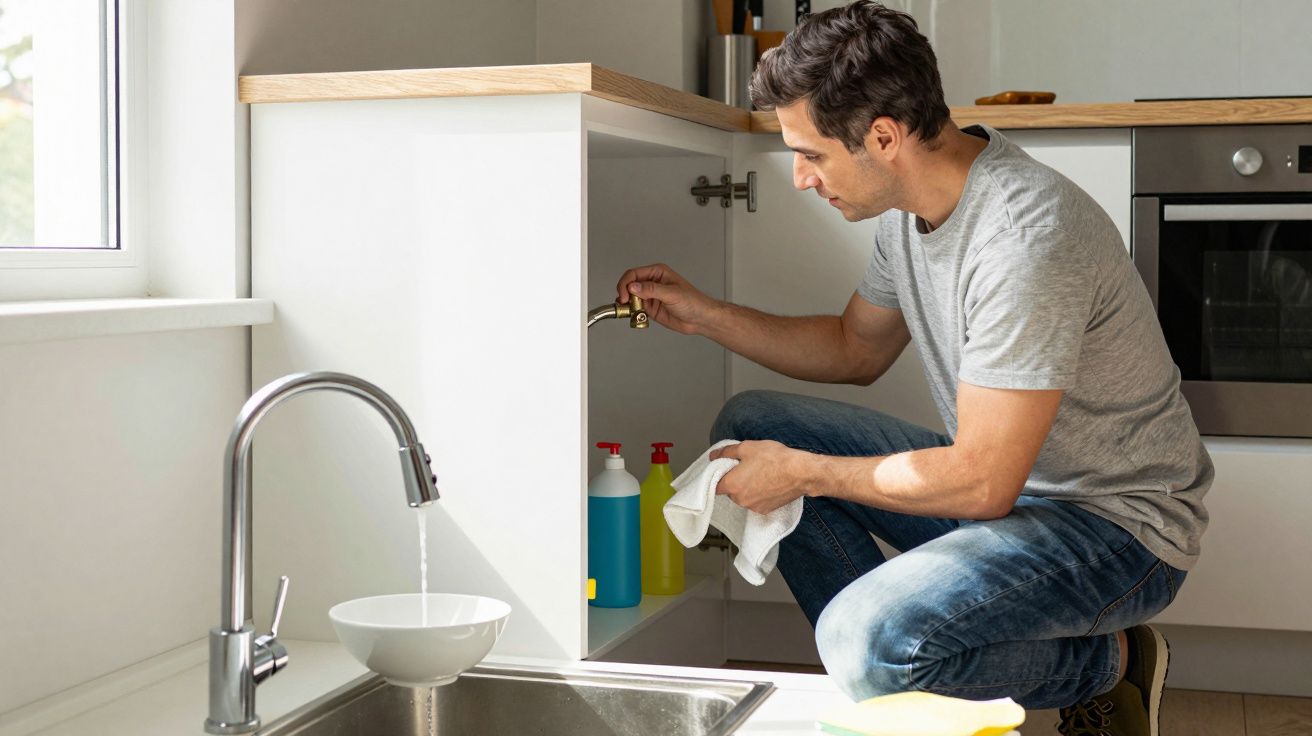
- Stop the supply if you can. Isolate the appliance or close the stopcock if the leak is active.
- Document everything. Photos, videos, dates, and where you first noticed it-useful for insurers and trades.
- Dry, don’t just wipe. Towels remove surface water; you may need dehumidifiers and airflow for days.
- Lift or open what traps moisture. If safe: pop off a bath panel, pull out a toe-kick, open an access hatch.
- Don’t seal wet materials in. Painting over a stain or sealing a wet gap is the home equivalent of “ignore it and hope”.
This isn’t about DIY heroics. It’s about preventing a small, repairable leak becoming a longer, pricier drying and rebuild.
The “hidden leak” hotspots that deserve regular suspicion
Some places fail so predictably it’s almost unfair. If your home has had any work done recently-new bathroom, new kitchen, moved appliances-pay extra attention here for a few weeks afterwards.
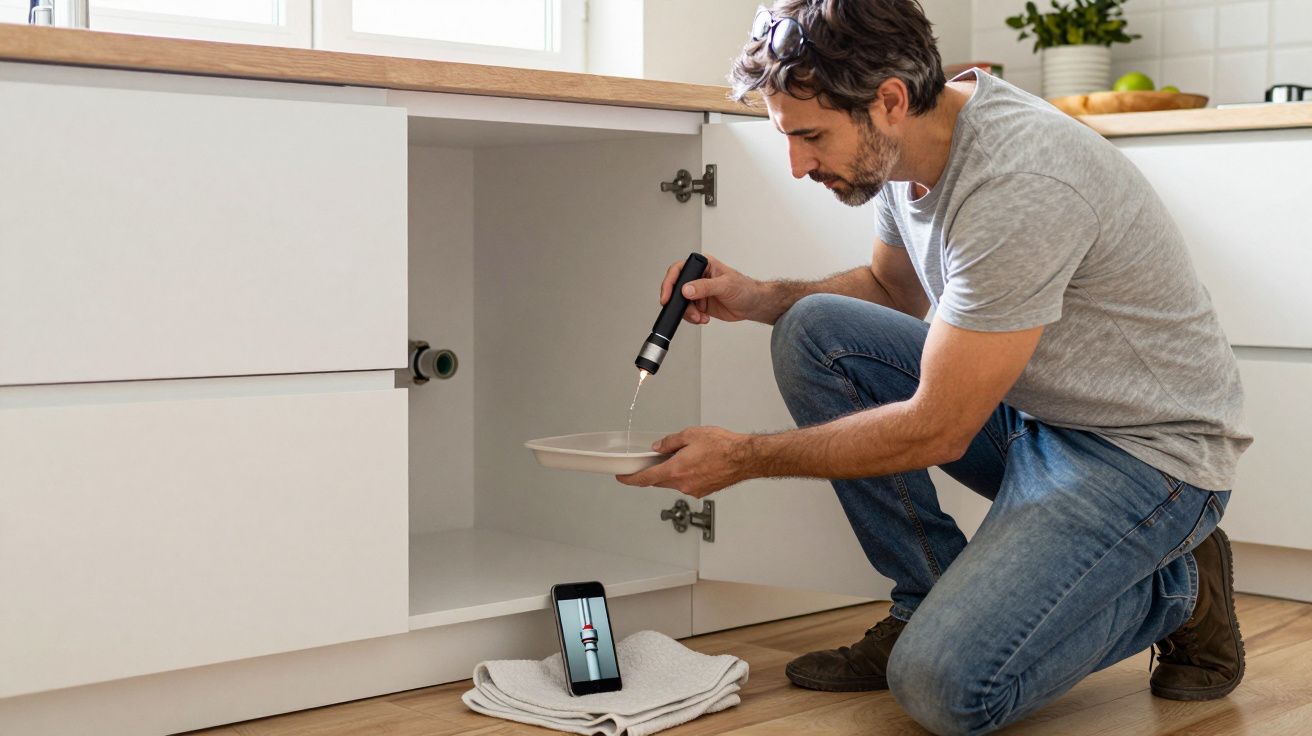
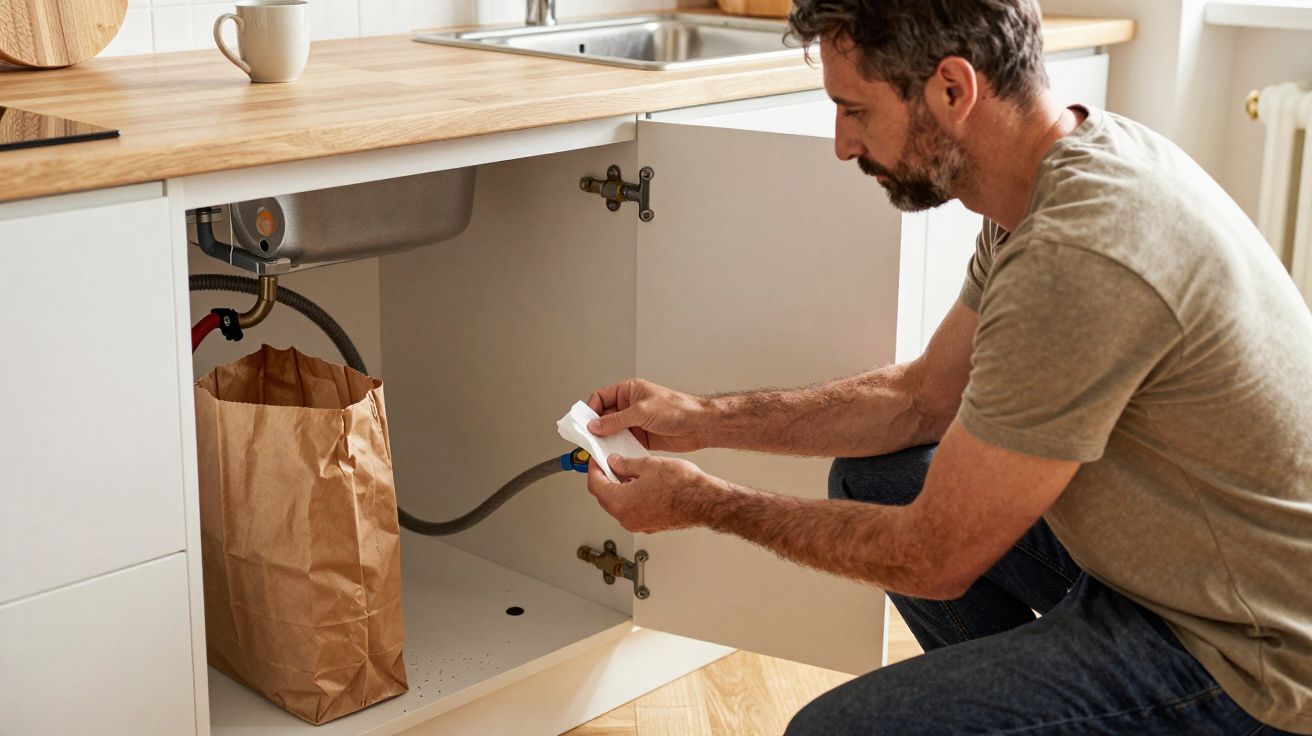
- Under sinks: waste traps, compression fittings, dishwasher connections
- Behind washing machines: supply hoses, valves, pinched drains
- Around toilets: failed pan connectors, loose cistern bolts, hairline cracks
- Showers and baths: failed grout/silicone, cracked trays, leaking wastes
- Boilers and heating: pressure relief discharge, condensate pipes, weeping joints
- Gutters and downpipes: blocked runs dumping water onto walls for months
A five-minute peek with a torch beats a five-week repair schedule.
When to bring in help (and which help)
If you suspect the structure has been affected, don’t wait for it to become “obvious”. The right person depends on what you’re seeing.
- Plumber: to locate and stop the leak, pressure test, replace failed fittings
- Leak detection specialist: if it’s concealed and you’re stuck (thermal imaging, acoustic tracing)
- Builder/joiner: if floors are soft, joists may be compromised, or finishes need opening up
- Surveyor (especially for older homes): if there’s movement, widespread damp, or repeated recurrence
One practical tip: ask whoever attends to tell you what must dry before it’s covered again. A neat patch-up over damp materials is how leaks become repeat customers.
The boring truth: prevention is cheaper than bravery
A lot of property damage comes from delay, not disaster. Checking sealant, keeping gutters clear, replacing old flexi hoses, and not ignoring the first stain are unglamorous habits. They’re also the difference between “tighten a fitting” and “replace a section of floor”.
Water is patient. If your house is giving you hints, take them while they’re still small enough to be solved with a torch and a phone call, rather than a skip and a schedule.




Comments (0)
No comments yet. Be the first to comment!
Leave a Comment