
The first time I noticed it, it wasn’t a bang or a leak. It was the absence of the usual hush-and-sigh that water supply systems make when you turn a tap and the line “wakes up”. Airlocks can be part of that story, and they matter because a quiet pipe can be an early warning-weeks before pressure drops, pumps complain, or someone gets a surprise brown burst in the sink.
Most of us only listen when something is wrong: hammering, whistling, rattling. But silence-new silence-can mean flow has changed, air has collected where it shouldn’t, or a valve is partly shut and masking a bigger issue. The trick is to notice the pattern you normally have, then treat a change in that pattern like a check-engine light, not a vibe.
The “normal” noises you stop hearing (and why that matters)
In a healthy system you get small, boring sounds: a faint rush, a brief hiss as air clears, maybe a soft thump as a valve closes. It’s not dramatic. It’s just water moving through a pressurised network that was designed to move it.
When those background cues disappear, it can mean the water isn’t moving the way it used to. Lower flow can be quieter. A closed or failing isolation valve can be quiet. A slow-building blockage can be quiet. Even a pump that’s lost its prime can be-briefly-quiet right up until it isn’t.
A useful mental shift is this: don’t listen for “bad noises”. Listen for missing noises you used to get every day.
Why quiet often shows up before obvious symptoms
Water problems tend to announce themselves late. By the time pressure is visibly down, something has usually been off for a while: sediment has been accumulating, a float valve has been sticking, a filter has been clogging, or air has been creeping into a high point of the pipework.
Noise is basically energy and turbulence. If turbulence drops because flow is restricted, the system can sound calmer while becoming less healthy. You can still get water at the tap, you can still shower, and yet the system is slowly drifting towards the sort of failure that arrives on a weekend.
This is why “it’s been strangely quiet lately” is worth taking seriously-especially in properties where the supply runs through loft spaces, long branches, or any pumped set-up.
Airlocks: the quiet culprit that likes high points
Airlocks don’t always show up as spitting and spluttering. Sometimes they present as a tap that takes longer to respond, a shower that feels oddly soft at first, or a pipe run that simply doesn’t “sound alive” anymore.
Air collects at high points because it’s lighter than water. In many homes that’s upstairs pipe runs, loft feeds, or the top of a vertical riser. Once air sits there, it can reduce effective pipe area and dampen the noise you’d usually hear when flow starts. It’s like trying to drink through a straw with a bubble trapped in it: not impossible, just wrong.
Common situations that invite air in:
- Recent plumbing work (draining, refilling, changing a tap, fitting a new appliance).
- A water main interruption or stop-tap being shut and reopened.
- A small leak on the suction side of a pump (tiny leak, big air problem).
- Long pipe runs with gentle slopes that create “air pockets”.
A quick, low-drama check you can do in five minutes
You’re not trying to diagnose the entire house. You’re trying to answer one question: is flow behaving consistently across outlets, and does it clear when purged?
- Start upstairs. Open the highest cold tap fully for 30–60 seconds. Listen for hissing, gurgling, or a delayed surge.
- Run the nearest hot tap (if you have a combi or pressurised hot system) for another 30–60 seconds. You’re looking for pulsing or a soft “catching up”.
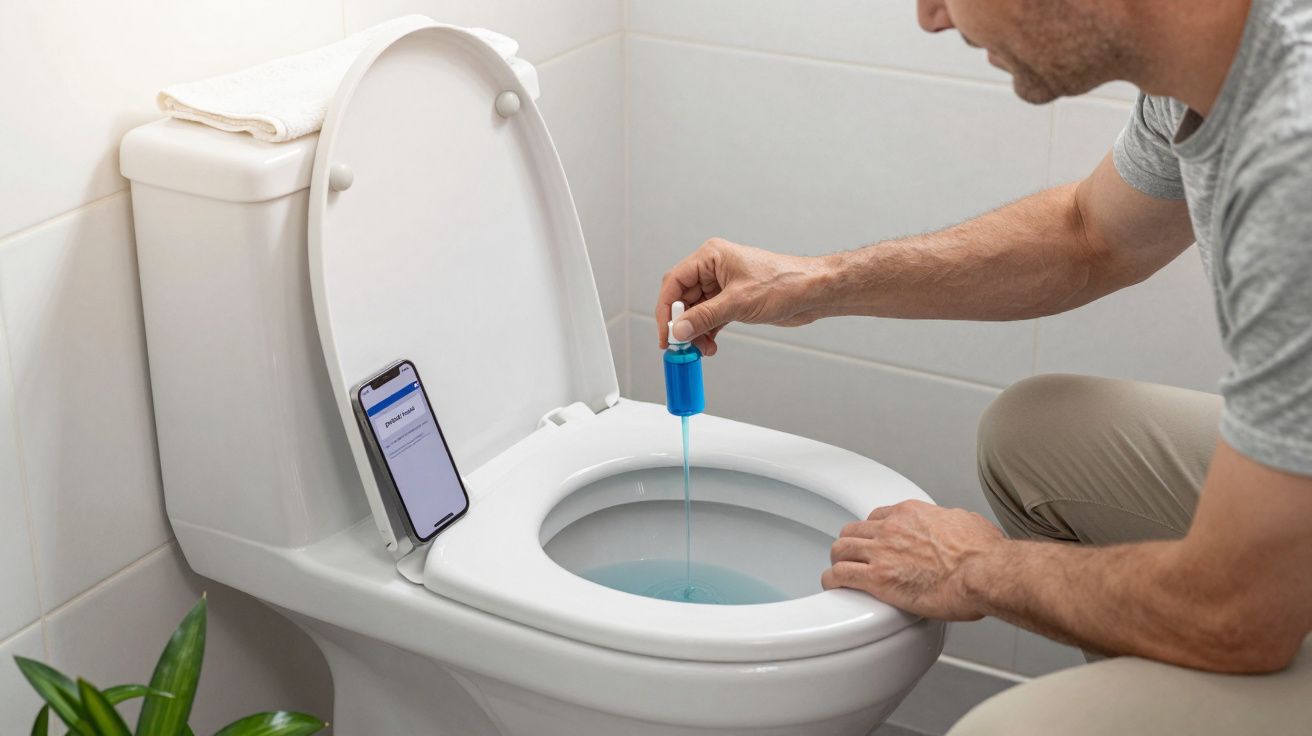
- Flush a toilet once and listen at the cistern: does it fill smoothly, or in hesitant bursts?
- Go downstairs and run the kitchen cold tap full bore for 30 seconds. Compare how quickly it reaches full flow versus upstairs.
If the upstairs taps improve after that purge-stronger, smoother, faster-you’ve just learned something: air or partial restriction was affecting the high points.
The “silent restriction” shortlist (what else mimics an airlock)
Airlocks are common, but not the only reason things go oddly quiet. A few sneaky ones:
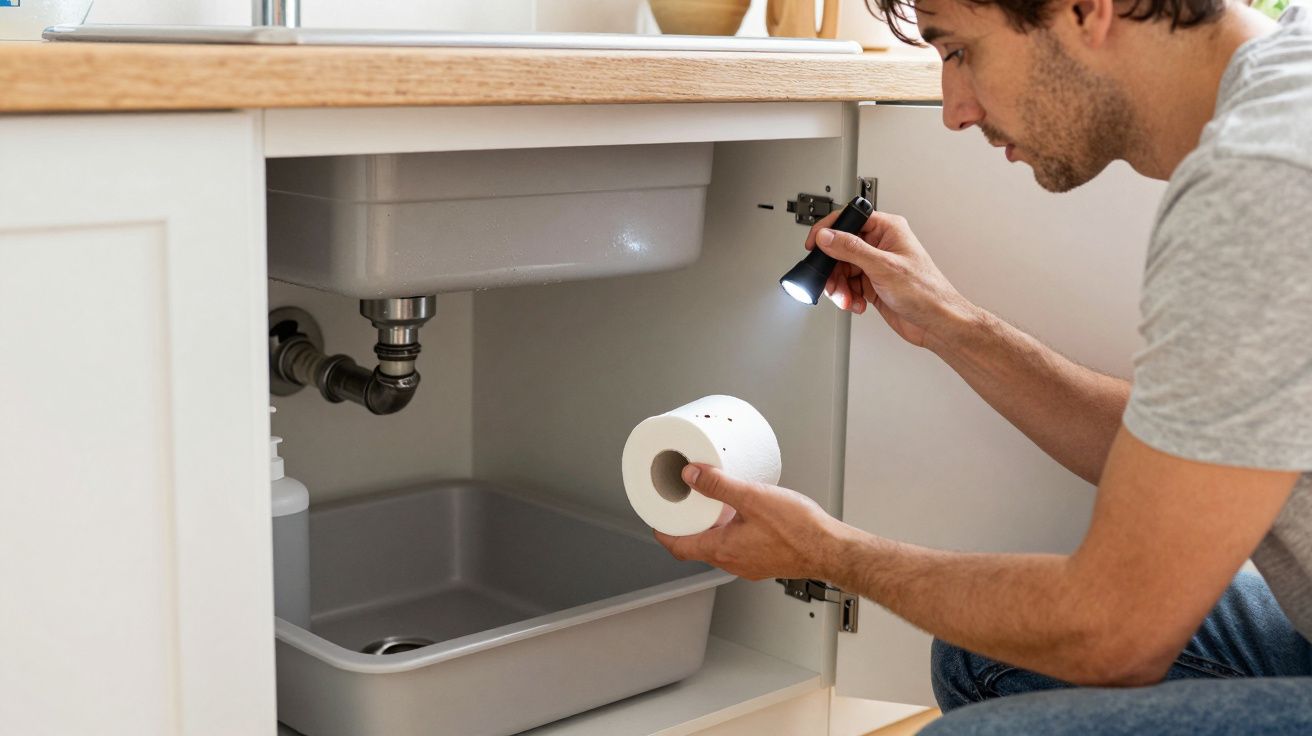
- Partially shut stop tap or isolation valve. It can deliver “enough” water while choking flow and reducing the usual rush sound.
- Blocked tap aerators and shower heads. They reduce turbulence and can make a tap feel oddly gentle rather than obviously faulty.
- A clogged pressure-reducing valve (PRV) strainer if fitted. Flow becomes smooth-but-weak, and the system can sound subdued.
- Sediment in a ball valve (toilet or tank). Filling becomes quieter and slower, often dismissed as “fine”.
If you’ve recently had work done, start with valves. People leave them not-quite-open more often than you’d think.
When silence is the wrong kind of calm (signs to stop DIY)
A calm system is great-until it’s hiding an unstable condition. Stop experimenting and call a plumber (or your water supplier, depending on where the boundary is) if you notice any of the following alongside the silence:
- Pressure drops that come and go, especially at peak times.
- Discoloured water after taps have been off for a while.
- Pump cycling (on/off) more frequently than usual.
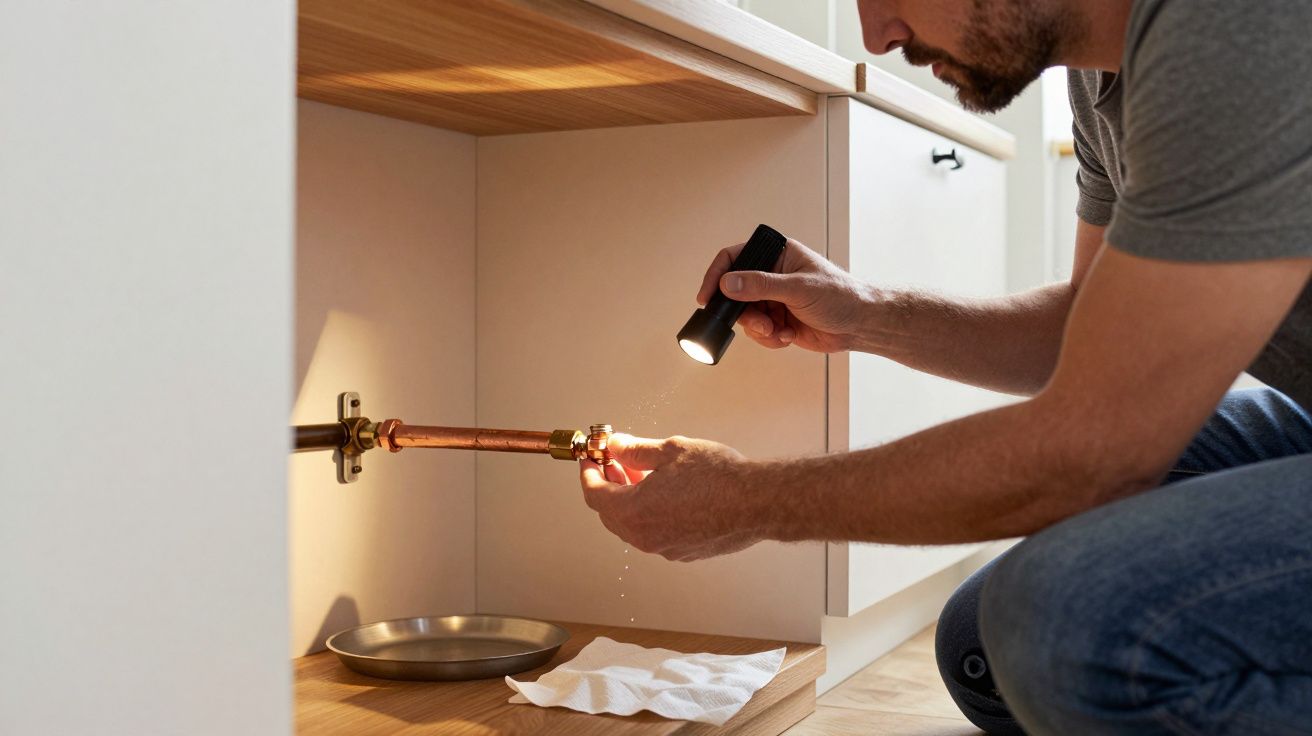
- Any sign of moisture around joints, the stop tap, or near a cylinder/pump.
A big one: if you have a pumped shower and it’s suddenly quiet, don’t keep “testing it” repeatedly. Pumps don’t enjoy running with air in the line.
Keep it simple: the habits that prevent repeat air problems
You don’t need a toolkit to reduce airlock drama. You need two habits: purge high points after disruptions, and don’t ignore small changes.
- After a planned shut-off, open the highest taps first, then work down. Let them run until flow is steady.
- If you’ve replaced a tap or appliance, clean aerators and flush lines before assuming pressure has changed.
- Learn where your key valves are and make sure they’re either fully open or fully shut-not in-between.
- If your system includes a cylinder, PRV, or pump, note what “normal” sounds like when it’s healthy. That baseline is your best diagnostic tool.
Silence can be a gift. It can also be the system telling you it’s no longer moving water the way it was designed to. Catch it early and it stays a five-minute purge; ignore it and it tends to become an appointment.
FAQ:
- Can an airlock clear on its own? Sometimes, especially with normal daily use, but it can also sit in a high point for ages and keep performance subtly worse. A deliberate purge is faster and more reliable.
- Is it safe to keep turning taps on and off to “force” it through? Gentle, continuous running is better than rapid cycling. Repeated on/off can stress pumps and valves, and it rarely clears trapped air faster.
- What’s the quickest place to check for a partially shut valve? Start at the main stop tap and any isolation valves near the affected bathroom/kitchen. A valve that’s even slightly closed can change flow and sound across the house.
- Does quieter flow always mean lower pressure? Not always. A clogged aerator can make a tap quieter without a true pressure issue, and a PRV can smooth noise while limiting flow. Compare multiple outlets to separate local restrictions from supply-wide changes.



Comments (0)
No comments yet. Be the first to comment!
Leave a Comment