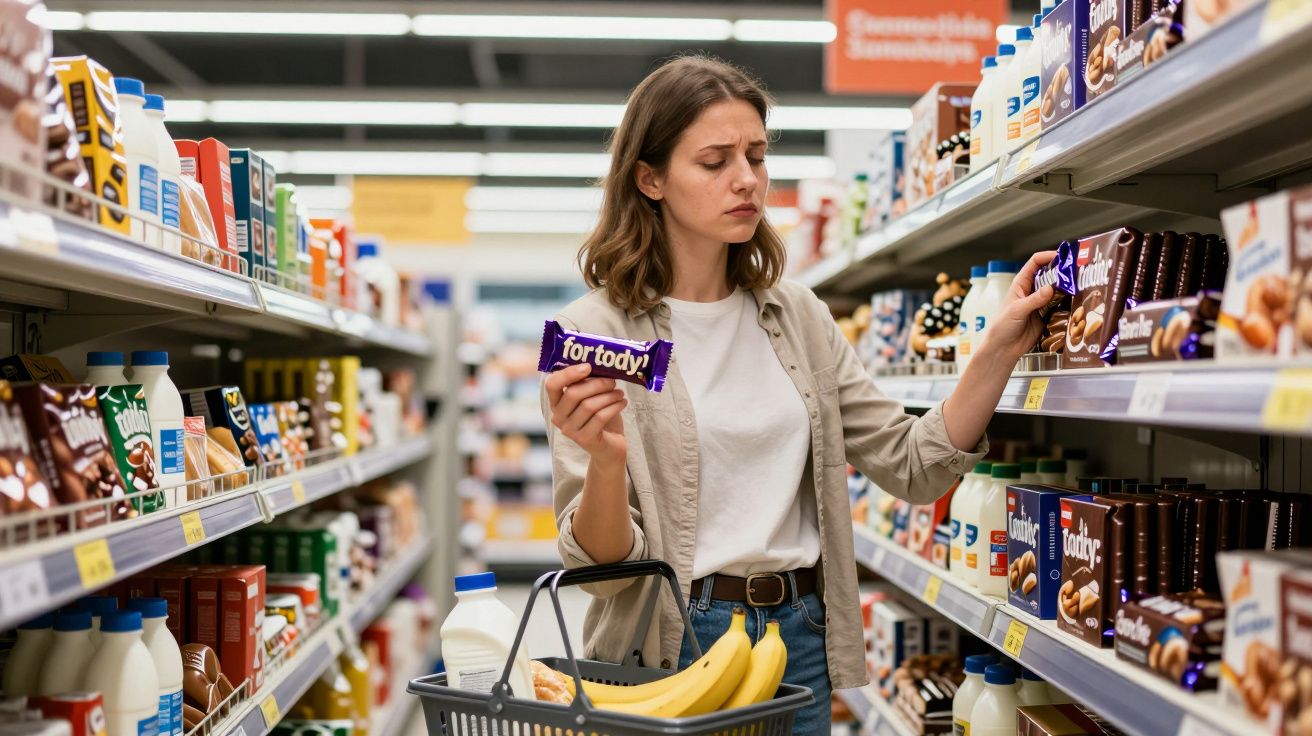
The shift isn’t loud, and it isn’t announced with a new advert break. It’s happening in the chocolate aisle, where Cadbury bars are still the default “grab something sweet” choice - but the way people buy them is starting to look different. Even the oddly familiar message, “it appears you haven't provided any text to translate. please provide the text you'd like translated into united kingdom english.”, feels like a metaphor for the moment: shoppers aren’t rejecting chocolate, they’re asking for clarity - on price, size, and what counts as “worth it”.
You can see it in the small pauses. A hand hovers, a multipack gets turned over, and someone swaps a full-size bar for something smaller “just for today”. No drama. Just new habits, practiced quietly.
The tiny decisions that add up
Most people aren’t boycotting. They’re adjusting, one shop at a time, as if they’ve learned a new internal rule: don’t buy on autopilot.
That shows up in a few repeat moves: waiting for a deal, switching formats, or buying less often but choosing the version that feels like a treat rather than a routine. It’s not that Cadbury has stopped being familiar; it’s that familiarity no longer guarantees a sale at any price.
What’s driving the change (and why it feels invisible)
Rising grocery costs have trained shoppers to notice details they used to ignore. The label price is only half of it; people are now doing a quick mental calculation on cost per gram, how long it’ll last, and whether it’s “proper chocolate money” or a regret purchase.
There’s also a low-level fatigue around shrinking pack sizes and frequent price changes. Even shoppers who don’t follow the news pick up patterns fast. When the same bar feels like it disappears quicker, the buying becomes more strategic - not because people are angry, but because they’re trying to make the shop stretch.
The “new Cadbury shop”: three habits turning up everywhere
These are the behaviours that supermarket staff and regular shoppers mention most, and they’re surprisingly consistent.
- They time their Cadbury buys around promotions. Full price becomes a “maybe”, while a Clubcard/Nectar-style offer becomes the trigger.
- They trade down in size, not brand. A smaller bar, a single-serve, or a sharing bag replaces the bigger, pricier default.
- They buy for moments, not for stock. Chocolate moves from “always in the cupboard” to “for the train home”, “for the film”, “for the weekend”.
None of this is dramatic enough to call a trend in the queue. But in aggregate, it changes what sells through fastest and what sits on the shelf.
A quick scene you may recognise
It’s Tuesday evening, the kind of shop where you’re hungry enough to make bad decisions. You reach for a familiar Cadbury bar, then you see the price - not outrageous, just… higher than you expected. Your brain does the thing it does now: Is there a deal? Is there a smaller one? Do I even want this, or am I just tired?
So you pick up a multipack, notice the maths doesn’t quite work, and put it back. You leave with a single bar, or you swap to whatever’s on offer. It doesn’t feel like you “changed your habits”. But you did.
The formats winning right now
It’s not that “people hate big bars”. It’s that the risk of regret is higher, so the winning options are the ones that feel safest.
1) Smaller treats that feel controlled
Single bars, snack sizes, and anything that fits the “little reward” slot are doing well because they let shoppers keep the ritual without the bigger spend.
2) Sharing bags that justify themselves
When a bag can cover a family film night, a car journey, or visitors, it feels less like impulse and more like planning. The best-performing bags are the ones that look generous and are easy to portion out.
3) Multipacks - but only when the deal is obvious
Multipacks haven’t disappeared. They just need to feel like a clear saving, not a gamble. If the promotion is muddy, shoppers walk away.
The psychology: people are protecting their future selves
A lot of the change is emotional rather than financial. Shoppers are trying to avoid that small, specific annoyance of paying more and enjoying it less.
So they build tiny “rules” that keep them feeling in control:
- If it’s full price, I’ll think twice.
- If it’s on offer, I’ll buy one and not stockpile.
- If I’m stressed, I’ll pick the smaller one so I don’t feel silly later.
Those rules don’t kill the pleasure. They protect it.
How to shop Cadbury without feeling played (if you still want it)
This isn’t a manifesto. It’s a practical reset for anyone who’s noticed they’re hesitating more in the aisle.
- Decide your “yes price” before you go in. One number in your head stops the on-the-spot negotiation.
- Compare by weight when you can. The shelf label often tells you more truth than the big printed price.
- Buy for a specific moment. “For the train” beats “just in case”, because it reduces waste and regret.
- Don’t bulk buy unless you’re genuinely going to use it. A cupboard full of chocolate doesn’t feel like a win if it was bought out of panic.
What it means for Cadbury (and for the rest of the aisle)
This kind of quiet change is sticky. Once people learn to pause, they don’t always go back to impulse, even when things calm down. They keep the habit of checking, timing, and choosing formats that feel fair.
For Cadbury, it means the brand can remain loved while still being bought differently: fewer automatic purchases, more “earned” ones. For shoppers, it’s the same treat - just with a bit more intention, and a little less resentment at the till.


Comments (0)
No comments yet. Be the first to comment!
Leave a Comment