You notice it first as a change in sound: the boiler kicks in longer, the loft feels sharper, and the kitchen tap takes an extra beat to run warm. In that moment, copper pipes are quietly dealing with temperature stress - the rapid swing from heated indoor air to freezing voids in walls, floors, and lofts - and that mismatch is why cold snaps matter to homeowners. When things go wrong, it’s rarely “old house bad luck”; it’s physics, pressure, and timing.
Most people picture pipes bursting because “copper freezes and splits”. Copper doesn’t freeze. The water inside does, and when it turns to ice it expands, shoving pressure into the weakest point like a slow jack.
The real villain isn’t cold - it’s the speed of the cold
A steady winter is one thing. A cold snap is different: rooms stay heated, but outside temperatures drop fast, and the pipework sitting in uninsulated pockets doesn’t get the memo in time.
That creates a nasty combination:
- Warm water left sitting in a pipe run (especially overnight)
- A sudden plunge in surrounding air temperature
- Localised freezing at one “pinch point” first (often where a draught hits)
Once a plug of ice forms, any further freezing or pressure rise has nowhere to go. Pressure climbs, joints complain, and the pipe may split - sometimes not at the frozen section, but a little way along where the copper is slightly stressed or previously knocked.
Why copper pipes are often the ones that “take the blame”
Copper is strong, neat, and common in UK homes. It’s also unforgiving of repeated small stresses.
Copper doesn’t stretch much compared with some plastics, so when internal pressure spikes it tends to fail suddenly rather than bulge gradually. And in older installs, the weak points aren’t the straight runs; they’re the details: elbows, soldered joints, compression fittings, and clipped sections that can’t move.
A cold snap doesn’t just increase freeze risk. It also ramps up everyday thermal cycling: heating on full blast, then off; hot water draws; then long cold periods. That repeated expansion and contraction is temperature stress in action, and it slowly works on joints and fixings until one bad night finishes the job.
The common “burst” pattern people miss
A lot of bursts happen after the thaw. The pipe freezes, a split opens, but the ice plug acts like a temporary cork. When temperatures rise, the plug melts, mains pressure returns, and suddenly you’ve got a leak that looks like it appeared out of nowhere.
If you only check during the coldest hour, you can still get caught at breakfast.
Where cold snaps hit hardest (the usual UK danger zones)
The risky locations aren’t mysterious; they’re just easy to forget because you don’t live in them.
- Lofts: especially near the eaves, under felt, or by the loft hatch where warm air leaks out and draughts cut in.
- Garages and outbuildings: one night of -3 °C can be enough if pipes run on external walls.
- Kitchen units on outside walls: pipes tucked behind cupboards don’t see room heat, and ventilation gaps invite cold air.
- Under suspended timber floors: air bricks + wind = a cold tunnel.
- Dead legs and seldom-used taps: water sits still and cools to freezing faster.
If a pipe run is close to an external wall and you can feel a draught nearby, treat it as a candidate.
What actually makes a pipe “burst”: a quick chain of events
Think of it as a sequence rather than a single moment.
- Pipework cools below 0 °C locally, usually at a draughty pinch point.
- Ice forms and creates a plug, blocking the bore.
- Pressure rises behind the plug (from expansion as freezing continues, or from system pressure if water is trapped).
- The weakest point gives - often a joint, a previously bent section, or a clipped run that can’t relieve movement.
Copper pipes don’t need to be “bad” for this to happen. They just need one cold spot and one constrained weak point.
How to lower the odds without turning your house into a building site
The aim is simple: keep pipe temperatures above freezing and reduce sharp swings.
- Insulate exposed runs: foam lagging on loft, garage, and under-floor sections is cheap and fast.
- Seal draught routes: around pipe penetrations, loft hatches, and behind kitchen plinths (without blocking necessary ventilation).
- Keep a low background heat in very cold spells: a steady 12–14 °C can beat a stop-start blast if pipework sits near cold voids.
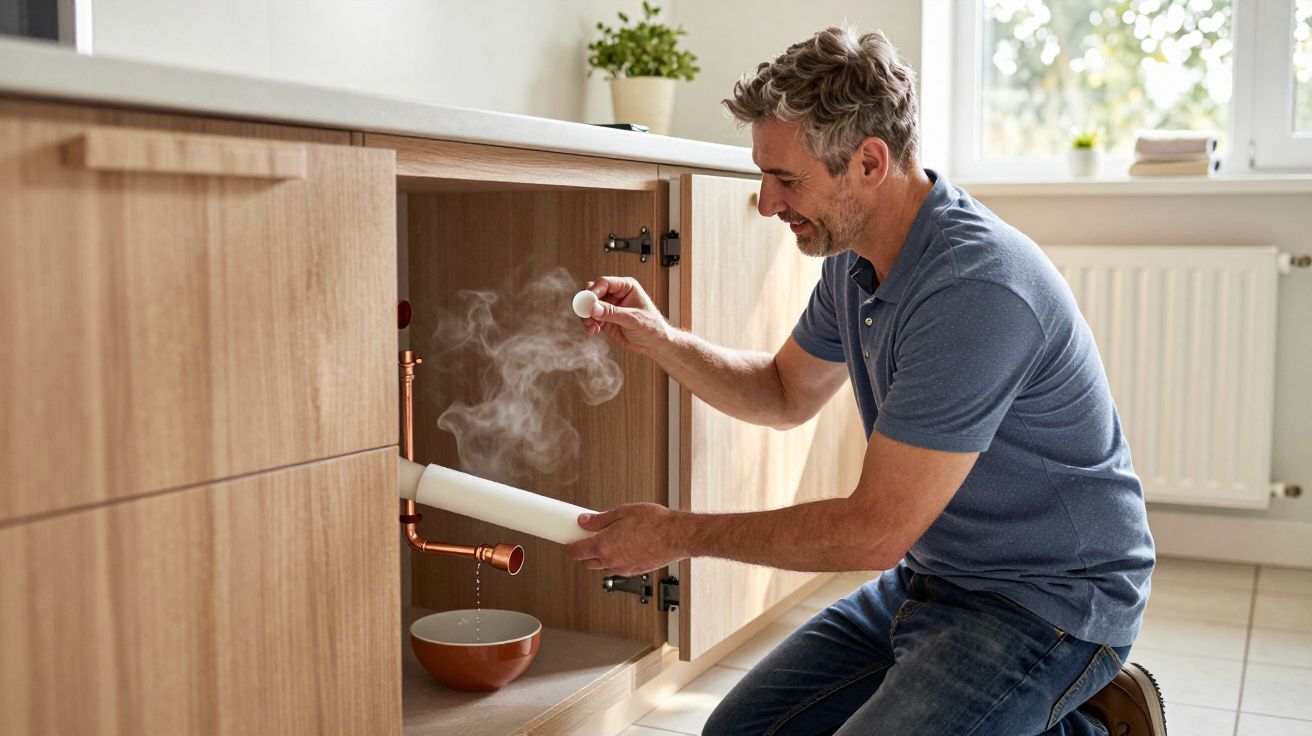
- Open cupboard doors on outside-wall kitchen/bathroom units during a snap to let warm air circulate.
- Know your stopcock and test it before winter. When a thaw leak starts, minutes matter.
If you’re leaving the house, set the heating to frost protection and consider draining down any vulnerable outbuilding supply.
A small habit that helps more than people expect
Use the “rarely used tap” rule. Run seldom-used cold taps for 10–20 seconds each evening during a snap (especially in utility rooms, cloakrooms, and guest bathrooms). Moving water resists freezing better than stagnant water, and it refreshes slightly warmer water into the run.
It’s not magic. It’s just momentum.
When to worry (and when to act immediately)
Treat these as prompts to stop guessing and start checking:
- No water flow from a tap you know should run
- Odd bulging on visible pipework or lagging that looks “puffed”
- A new metallic creak or ticking from a boxed-in run when heating turns on
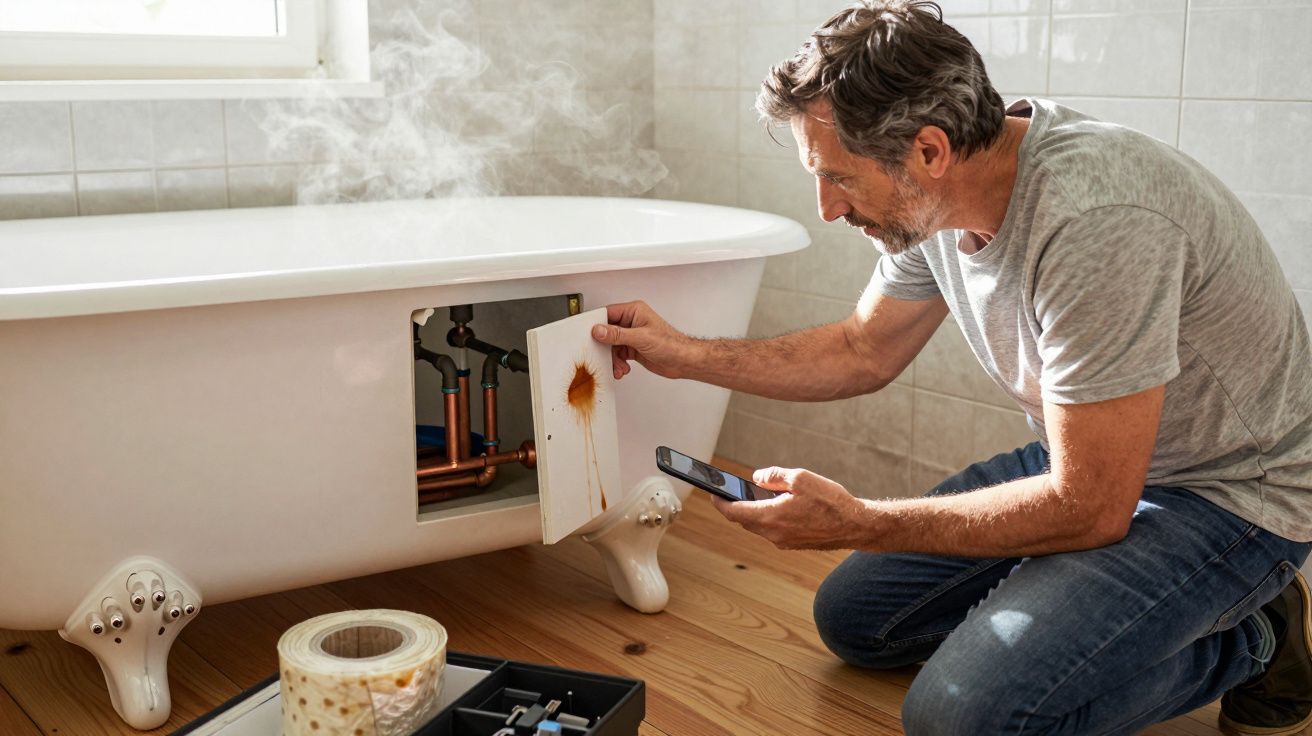
- Damp patches appearing after a thaw, especially ceilings below bathrooms
If you suspect freezing, don’t hit it with boiling water. Warm the area gently (room heat, warm towels, hairdryer on a low setting) and keep an eye on joints as it thaws. The leak often reveals itself at the moment you think the danger has passed.
Temperature stress: the slow damage behind the headline burst
Cold snaps get attention because they’re dramatic. But the quieter story is cumulative: repeated temperature stress can loosen clips, fatigue joints, and make a pipe more likely to fail when pressure spikes.
If a copper pipe has been nudged, overtightened at a compression fitting, or forced into position during a past repair, thermal movement has fewer places to go. In a cold snap, that lack of “give” turns a tough material into a brittle system.
The fix is rarely exotic. It’s usually insulation, airflow control, and giving pipework space to expand and contract without fighting the building.
FAQ:
- Why do copper pipes burst more than you’d expect in a cold snap? Rapid temperature drops create local freezing points, ice plugs, and pressure spikes; copper doesn’t stretch much, so weak points can fail suddenly.
- Can pipes burst when the heating is on? Yes. The house can be warm while pipework in lofts, voids, and outside-wall cupboards stays near freezing, especially in wind and draughts.
- Why do leaks often appear after the thaw? Ice can temporarily block the split. When it melts, mains pressure returns and water escapes through the damaged section.
- Is a dripping tap worth doing? Sometimes, but targeted action is better: insulate vulnerable runs and keep background heat steady. If you do drip, choose the most exposed pipe run and avoid wasting hot water.
- What’s the quickest preventative job? Lagging exposed copper pipework in lofts/garages and sealing obvious draughts near pipe runs-small work, big reduction in freeze risk.




Comments (0)
No comments yet. Be the first to comment!
Leave a Comment