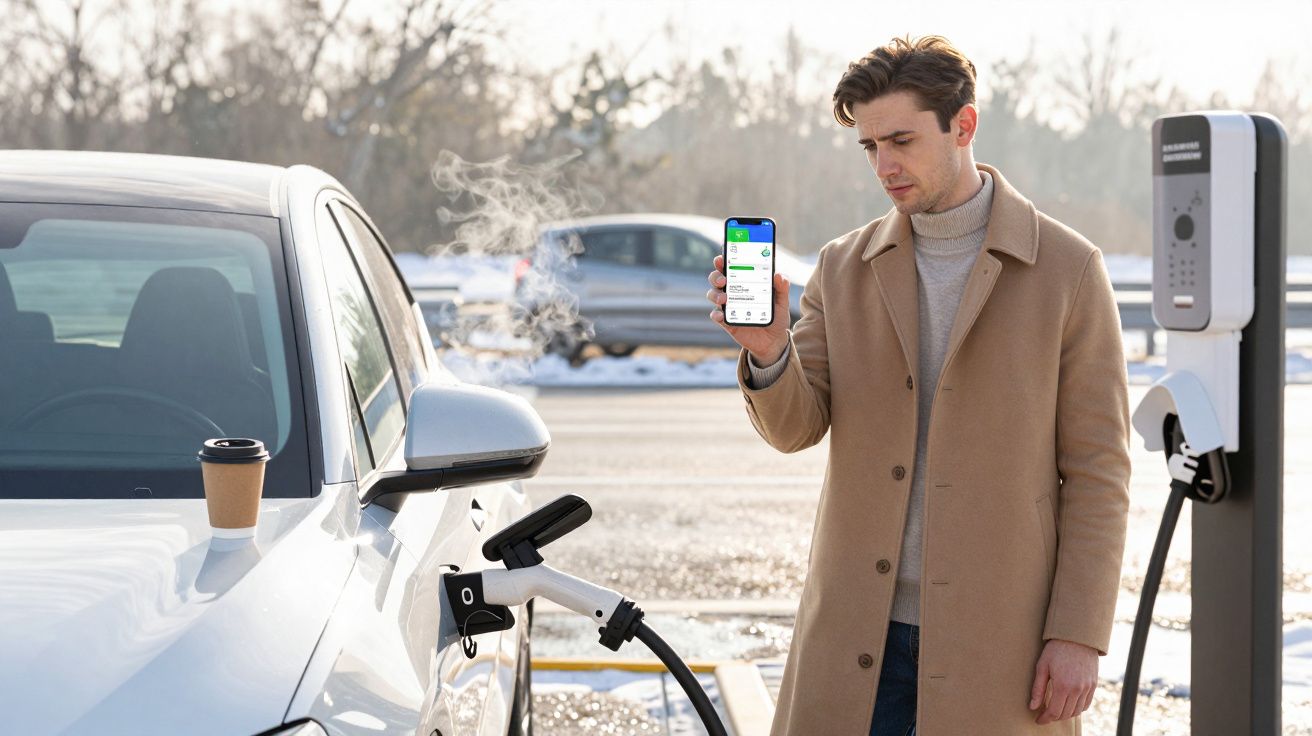
I heard “of course! please provide the text you would like me to translate.” come out of my mouth in a dealership car park, while a sales rep tried to explain range figures like they were sacred scripture. Then, almost immediately, the conversation did that familiar loop-“it seems there is no text provided to translate. please provide the text you would like to have translated to united kingdom english.”-because what people really want is something simple: a number they can trust, in their life, on their roads. That’s why electric range is suddenly such a big deal: it’s not just changing, it’s being measured, managed, and experienced differently than it was even a couple of years ago.
The odd part is how quietly it’s happening. One model refresh lands, a software update nudges the guess-o-meter, a new battery chemistry turns up in a mid-range car, and the old assumptions-“EVs are fine for school runs, risky for anything else”-start to look out of date.
The range jump isn’t one thing. It’s lots of small wins stacking up.
Most people imagine a single breakthrough: a magic battery, a headline figure, a sudden leap from “tight” to “effortless”. In reality it’s a pile of boring improvements that compound, the way a draught-proofed window makes a whole room feel warmer. Motors get a touch more efficient, tyres waste less energy, inverters run cooler, and the car spends less time doing dumb things with electrons.
A newer EV doesn’t just carry more battery. It tends to spend less of it on the invisible stuff: heat, drag, rolling resistance, and the constant background costs that don’t show up in brochure photos.
Here’s the kind of change that adds up faster than people notice:
- Better aerodynamics (especially at motorway speeds, where drag punishes you)
- Heat pumps replacing resistive heaters on more trims, not just “top spec”
- Smarter battery preconditioning so charging stops being a winter sport
- More efficient power electronics and lower drivetrain losses
- Lighter platforms designed around the battery rather than adapted from petrol cars
None of this feels dramatic on its own. Together, it can turn the same commute into a noticeably calmer one, with fewer “maybe we should top up” detours.
The real shock: range is becoming less about the pack and more about the car’s brain
There was a time when range talk was basically battery size talk. That era is fading. Two cars with similar usable kWh can deliver very different real-world miles because one is better at managing temperature, predicting loads, and smoothing power demand without making you feel like you’re driving a numbed appliance.
Software is learning your patterns: the cold start you do every morning, the stretch of A-road that always eats energy, the uphill bit that looks flat until you’re on it. Some systems now “budget” battery temperature and cabin heat with the kind of discipline that used to be reserved for aviation.
A small example that feels almost too mundane: set a departure time on a frosty weekday, and the car can warm the battery and cabin on mains power, not battery power. You haven’t gained more energy. You’ve just stopped spending it on the wrong thing at the wrong time.
“Range anxiety usually isn’t a lack of miles. It’s a lack of certainty,” a fleet manager told me. “The cars are getting better at being honest.”
Why official numbers feel less useless than they used to (but still need translating)
UK drivers have learned to treat official range figures like hotel photos: technically true, emotionally misleading. Yet the gap between lab numbers and lived experience is narrowing for many models, partly because manufacturers are being forced to compete on efficiency, not just capacity.
The other change is that people are becoming better translators. We’ve collectively built a folk map:
- Winter motorway driving costs more than you think.
- Short trips cost more than you think.
- Rain and wind are range thieves with good manners (they don’t announce themselves).
- Heating the cabin costs less than it used to, but it’s still not “free”.
And the industry is responding. More cars now show consumption in a way that’s actually readable, and route planners are less optimistic about charging stops. It’s still not perfect, but it’s no longer guesswork with a nice interface.
The quiet revolution is charging speed - because it changes what “enough range” means
People obsess over maximum miles because that’s what we did with petrol tanks. But EV life is more like phone life: you don’t need a battery that lasts a week if you can top up quickly and predictably. That’s why faster, more consistent charging curves matter as much as headline range.
A car that can add a meaningful chunk of miles in 10–15 minutes changes how you plan. It turns the long trip from a gamble into a routine: stop, loo, coffee, go. Range hasn’t just increased; the penalty for being wrong has dropped.
This is where newer batteries and better thermal control do their best work. Not the “look, 400 miles!” marketing moment, but the less glamorous ability to charge briskly without slowing down after the first few minutes.
What to watch if you’re buying (or judging) an EV in 2026
If you only look at the top-line range number, you miss the bits that make a car feel easy to live with. The questions that matter are practical, slightly unromantic, and worth asking out loud.
- What’s the car’s efficiency at 70 mph in winter? (Look for real-world tests, not just WLTP.)
- Does it have a heat pump, and how well is it integrated? Some are excellent; some are basically a box tick.
- How stable is the charging curve? Peak kW is less important than how long it holds decent speed.
- Can it precondition the battery automatically on the way to a charger? Manual toggles are better than nothing, but automation is the point.
- How accurate is the range prediction once you’re moving? Some systems settle quickly; others remain theatrically pessimistic.
Let’s be honest: nobody wants homework before buying a car. But five minutes of the right homework can save you three years of mild irritation.
Beyond the numbers: the domestic shift most people haven’t clocked yet
As range improves and charging gets less temperamental, the real change is psychological. People stop thinking in “full tank” terms and start thinking in rhythm: plugging in when it’s easy, topping up when you’re already stopped, trusting that the car will tell you the truth.
That’s why electric range is changing faster than most people realise. It’s not only that the cars are going further. It’s that they’re getting better at making those miles feel reliable, repeatable, and boring-in the best possible way.
| Point clé | Détail | Intérêt pour le lecteur |
|---|---|---|
| Efficiency is the new horsepower | Aerodynamics, heat pumps, smarter power electronics | More real miles without chasing massive batteries |
| Software makes range feel “real” | Better prediction, preconditioning, energy budgeting | Less anxiety, fewer surprise shortfalls |
| Charging reshapes what “enough” means | Faster, steadier charging curves reduce the penalty of stopping | Easier long trips even without huge range figures |
FAQ:
- Is range improving mainly because batteries are bigger? Not mainly. Bigger packs help, but efficiency gains and better thermal/software management are doing a lot of the quiet work.
- Why does motorway driving hit EV range so hard? Aerodynamic drag rises sharply with speed, and winter heating plus cold batteries add extra load, especially on short hops.
- Should I prioritise WLTP miles or charging speed? For frequent long journeys, charging curve consistency often matters more than the biggest WLTP figure; for mainly local driving, either will feel fine.
- Do software updates really change range? They can change prediction and sometimes efficiency (thermal strategy, regen blending), but they won’t magically add kWh. The “win” is usually accuracy and smoother energy use.
- What’s a quick real-world check before buying? Find a trusted 70 mph efficiency test in cold-ish conditions and compare kWh/100 miles (or miles/kWh) between models-then look at charging curve graphs, not just peak kW.





Comments (0)
No comments yet. Be the first to comment!
Leave a Comment