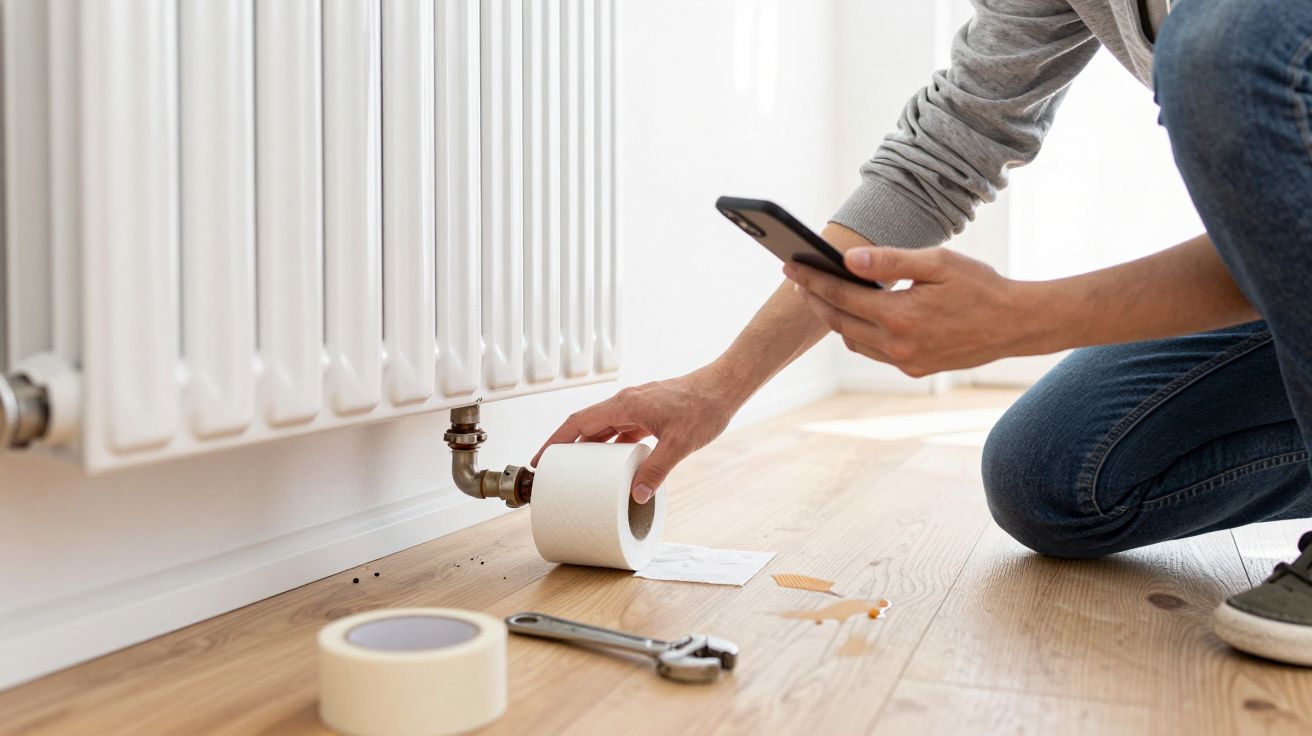
You notice a stain under the radiator, then a little bead at a pipe joint, then-relief-nothing. Water leaks have a way of going quiet just when you’re ready to believe them, and false fixes are the stories we tell ourselves to get on with the day. The danger is that buildings don’t stay in one mood: temperature, pressure, and use change, and a “sorted” leak can become a soggy surprise.
I’ve heard it in kitchens, lofts, plant rooms, even from careful people with a roll of tape in one hand and a phone in the other: “It stopped dripping.” It sounds like a conclusion. It’s often just an intermission.
The drip that stopped is not the leak that ended
A drip is a symptom, not a diagnosis. It’s the visible bit of a bigger system-pipework expanding, seals ageing, joints working loose, and water taking the path of least resistance through materials designed to hide it.
When conditions shift, the same weak point behaves differently. Heating comes on and the copper grows; the joint flexes. Someone runs a bath and the pressure spikes; the crack opens. A cold snap turns a slow seep into a split you can hear.
The quietest leaks are the ones that wick. Instead of dropping into a bucket, they creep along timber, soak insulation, and finally announce themselves as a brown tide mark weeks later, long after the “fix” felt successful.
Why conditions change - and why that matters to water
It helps to think of your plumbing like a moving instrument rather than a static object. Pipes aren’t frozen in place; they breathe with heat and vibration. Even “mains pressure” isn’t one number-usage in the house and on the street nudges it up and down all day.
Common change-makers that turn a pause into a problem:
- Heating cycles: hot water and radiators expand pipework and can open micro-gaps.
- Seasonal temperature swings: cold makes materials contract; frost can create new cracks.
- Pressure events: stop taps opened/closed quickly, appliance valves snapping shut, or a boiler topping up can jolt weak fittings.
- Movement and load: floorboards flex, washing machines shake, loft tanks slosh.
- Humidity and drying: a damp patch can “dry out” on the surface while staying wet behind.
This is why a leak can “stop” after you’ve wrapped it, tightened it, or simply wiped it. You’ve altered the surface conditions, not necessarily the failure mode.
The comfort of a temporary fix (and the cost of believing it)
False fixes tend to feel reassuring because they produce immediate evidence: no drip, no puddle, no drama. But water is patient, and buildings are good at hiding it until they can’t.
Take the classic: a compression joint that’s been nipped up one extra quarter-turn. Sometimes it buys time. Sometimes it distorts an olive or damages a washer, and the next heat cycle finishes the job you started.
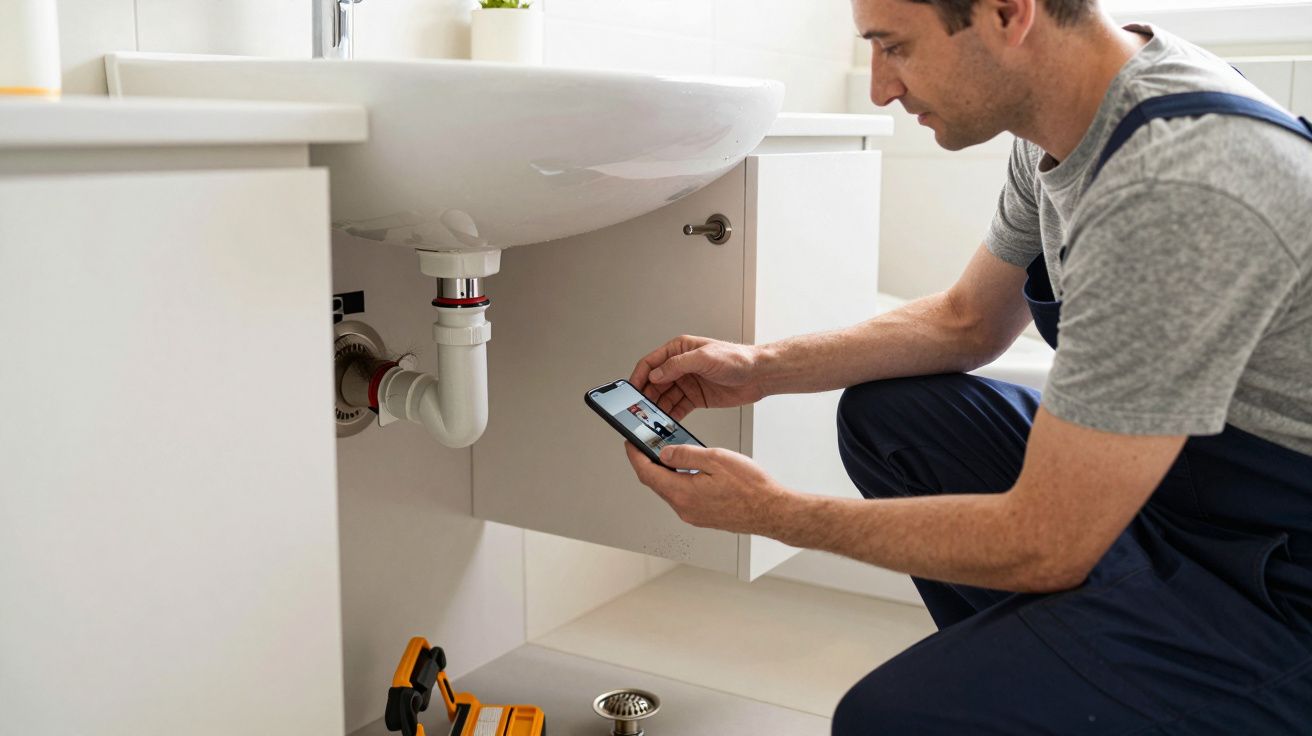
Or the bath that only leaks when someone stands in it. Resealing the edge might stop the visible line of water, but if the waste connection underneath is cracked, the real leak is still there-just waiting for weight, warm water, and a long soak.
A useful rule is emotional as much as practical: if your relief arrives faster than your understanding, you’re probably in false-fix territory.
A simple way to test whether it’s actually gone
You don’t need to become a plumber overnight, but you do need to stop trusting silence. Treat it like you’d treat a smoke alarm that stopped beeping: investigate the cause, don’t celebrate the quiet.
A quick, household-friendly check:
- Dry everything properly. Wipe, then give it time so you can spot fresh moisture.
- Create the conditions that used to trigger it. Run hot, then cold. Turn heating on. Flush, fill, drain-whatever matches the leak’s “personality”.
- Use tissue or kitchen roll on joints. It shows fresh beads early, before drops form.
- Check surrounding materials, not just the fitting. Skirting, floor edges, ceiling below, insulation in the loft-water travels.
- Measure, don’t guess. Take photos, mark the edge of a stain lightly in pencil, and re-check in 24–48 hours.
If you can’t reproduce the leak, that’s not proof it’s gone. It may simply be waiting for a different set of triggers.
“A leak that stops dripping has usually changed routes, not changed its mind.”
The usual suspects: what “worked” but didn’t fix it
Some temporary measures are sensible as emergency containment. The trouble starts when they become a verdict.
- Tape on a pipe: can reduce spray, rarely seals under pressure for long.
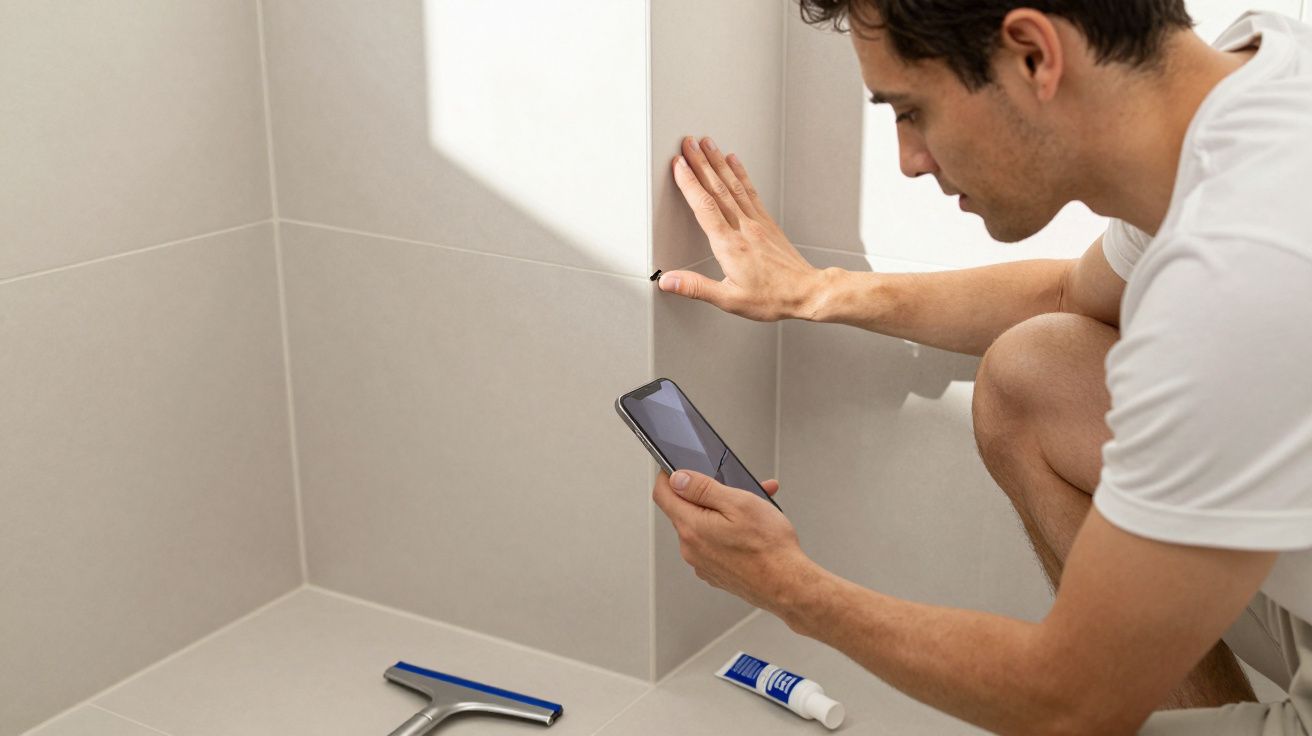
- Silicone over movement: works until the surface flexes or water gets behind it.
- Over-tightening a fitting: can crack plastic, deform washers, or create a new leak path.
- Paint over a stain: hides evidence while moisture continues to feed mould and rot.
- “It only happens sometimes”: intermittent leaks are often pressure/temperature dependent-exactly the kind that come back worse.
None of these make you foolish. They make you human: you solved the immediate problem you could see.
When “stopped” becomes dangerous: hidden damage and delayed failures
The risks aren’t just a future puddle. Persistent damp can:
- rot joists and chipboard floors, reducing structural integrity over time;
- damage electrics (especially in ceilings below bathrooms and kitchens);
- trigger mould growth, which is a health issue as much as a smell issue;
- invalidate insurance claims if it’s classed as gradual damage you didn’t address;
- raise bills when hot water leaks into voids you’re heating for no reason.
The most expensive leaks are often the ones that were “fine” for months.
What to do instead: treat it like a diagnosis, not a moment
If you see any of these, move from monitoring to proper repair:
- a stain that grows, even slowly;
- recurring damp after baths, showers, or heating cycles;
- visible corrosion on copper, verdigris on brass, or crusty limescale at a joint;
- a musty smell near a boxed-in pipe or behind a vanity unit;
- unexplained drops in boiler pressure.
Practical next steps that stay calm and specific:
- Isolate and label the relevant valve if you can (and check it actually works).
- Get access-remove the boxing, open the panel, lift the inspection hatch. A hidden leak stays a powerful one.
- Call a professional when the location is uncertain or the leak involves electrics, ceilings, or pressurised heating systems.
- Ask for the “why”, not just the patch. What failed: washer, pipe, fitting, sealant, movement, pressure?
You’re not being dramatic by refusing to accept “it stopped”. You’re being realistic about how water behaves in a building.
| Signal | What it often means | What to do next |
|---|---|---|
| Leak is intermittent | Triggered by heat/pressure/movement | Recreate conditions; inspect joints and wastes |
| Stain dries then returns | Ongoing leak into a void | Open access; check above and adjacent routes |
| Limescale or green marks | Long-term weep at a fitting | Replace/repair fitting, not just tighten |
FAQ:
- Can a leak really stop on its own? Sometimes a tiny weep can slow if debris blocks it, but that’s not a reliable seal. Treat it as a warning that the system is vulnerable.
- Is it safe to just watch a small damp patch? Only if you’ve identified the source and confirmed it stays dry under the same conditions that used to cause it. Otherwise you’re gambling on hidden damage.
- What’s the quickest way to tell if it’s fresh water? Dry the area completely and press tissue onto joints and seams after running water/heating. Fresh moisture will show quickly, even before dripping starts.
- When should I call someone immediately? If there’s water near electrics, a ceiling bulge, a fast pressure drop in the boiler, or active dripping you can’t isolate. Those are escalation signs, not “keep an eye on it” moments.



Comments (0)
No comments yet. Be the first to comment!
Leave a Comment