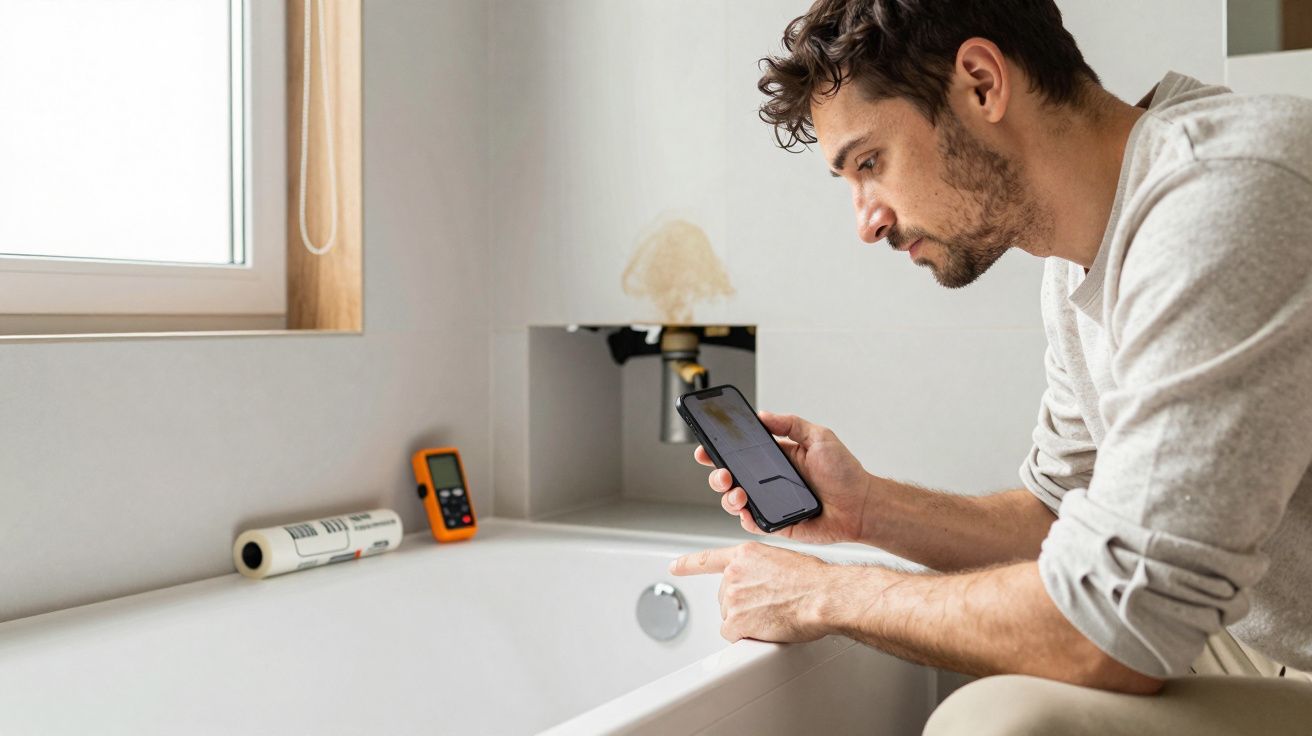
You watch a ceiling stain dry out, you sign off the invoice, and you tell yourself it’s done. Then two weeks later the mark blooms again-same corner, same smell, same slow drip-and suddenly leak detection feels less like a one-off visit and more like a recurring subscription you never wanted. Most of the time the villain isn’t bad luck; it’s incomplete diagnosis, where the visible symptom gets fixed but the actual water pathway stays alive behind the plaster.
It’s maddening because the repair often looks thorough. New sealant, new fittings, maybe even a patch of fresh paint that screams “sorted”. Yet water is patient, and it only needs one remaining route to make you feel like you’ve been fooled.
The part everyone forgets: water doesn’t leak “from” where it shows up
A leak is rarely a straight line. Water travels along joists, pipe chases, mortar joints, insulation, even the back of tiles, then finally appears where gravity and gaps allow it. That’s why the damp patch above a skirting board might have started at a shower valve two rooms away, or why a ceiling stain can be a roof issue or a pipe sweating in the loft.
So when someone repairs “the bit that’s wet”, they may be treating the exit point, not the source. The room dries, the stain fades, and everyone relaxes-until the same pathway recharges the next time it rains or the shower runs for 12 minutes instead of 5.
The trap is psychological too. Once you’ve seen one obvious culprit, you stop looking for the second, quieter one.
Why “full repairs” fail in the real world
Most repeat leaks fall into a few boring categories. Not dramatic. Not mysterious. Just easy to miss when you’re under time pressure.
1) The repair targets the symptom, not the mechanism
Resealing around a bath can temporarily reduce water entry, but if the tray flexes, the waste connection is loose, or the wall is wicking moisture from behind, the sealant is basically a plaster on a moving joint. It will let go again.
Same with roofs: replacing one slipped tile doesn’t help if the underlay is torn, the flashing is fatigued, or the gutter is overflowing only during heavy bursts.
2) Intermittent leaks hide during the visit
Some leaks only happen when conditions line up:
- wind-driven rain from one direction
- the central heating up to temperature (pipe expansion)
- a toilet refilling after a flush (not while it’s sitting still)
- a shower used by a teenager, not an adult (longer, hotter, more steam)
If the inspection happens at 11am on a dry day, the building can behave perfectly. Everyone leaves with a “couldn’t replicate” shrug, and the problem waits for its next cue.
3) Two leaks overlap, and you fix only one
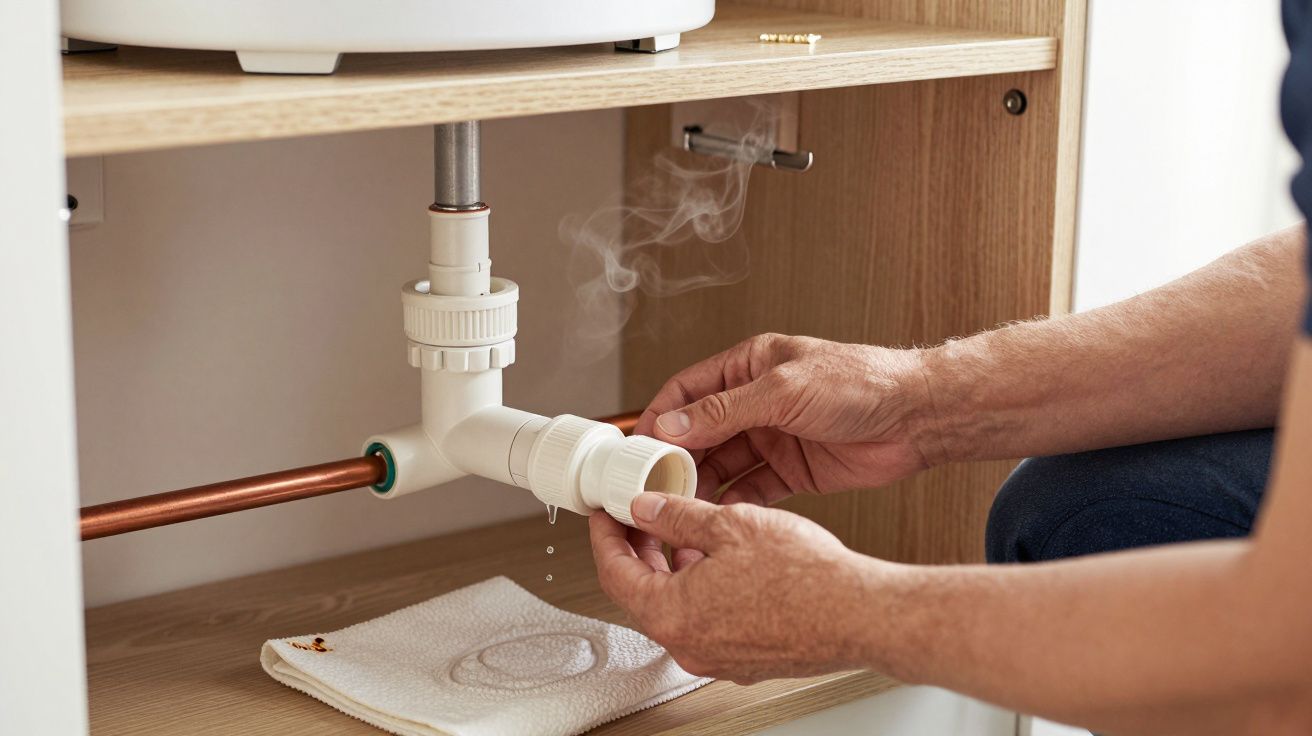
This is the classic “we fixed it, but it’s still wet” scenario. A dripping compression joint might be real, but so is a hairline crack in the grout behind the shower. Fix the joint and the dampness reduces, but doesn’t disappear-so it looks like a failed repair when it’s actually a partial win.
Water doesn’t mind working in teams.
4) Drying and staining lag behind the leak
Plaster and timber act like sponges. Even after a leak is truly resolved, moisture can keep migrating and discolouration can keep developing for days or weeks, especially if the cavity is cold or ventilation is poor.
This is where people panic, call it “back again”, and start ripping out the wrong thing. Sometimes it is back. Sometimes the building is just catching up.
What good leak detection looks like (and why it prevents repeat callouts)
The difference between “we repaired it” and “it won’t return” is usually method, not effort. Proper leak detection is less about one clever gadget and more about building a chain of evidence.
A decent process typically includes:
- Moisture mapping: taking multiple readings to see gradients (where it’s wetter, where it’s drying).
- Tracing likely pathways: how water would travel in this house-joists, stud walls, cavity barriers, tile backer boards.
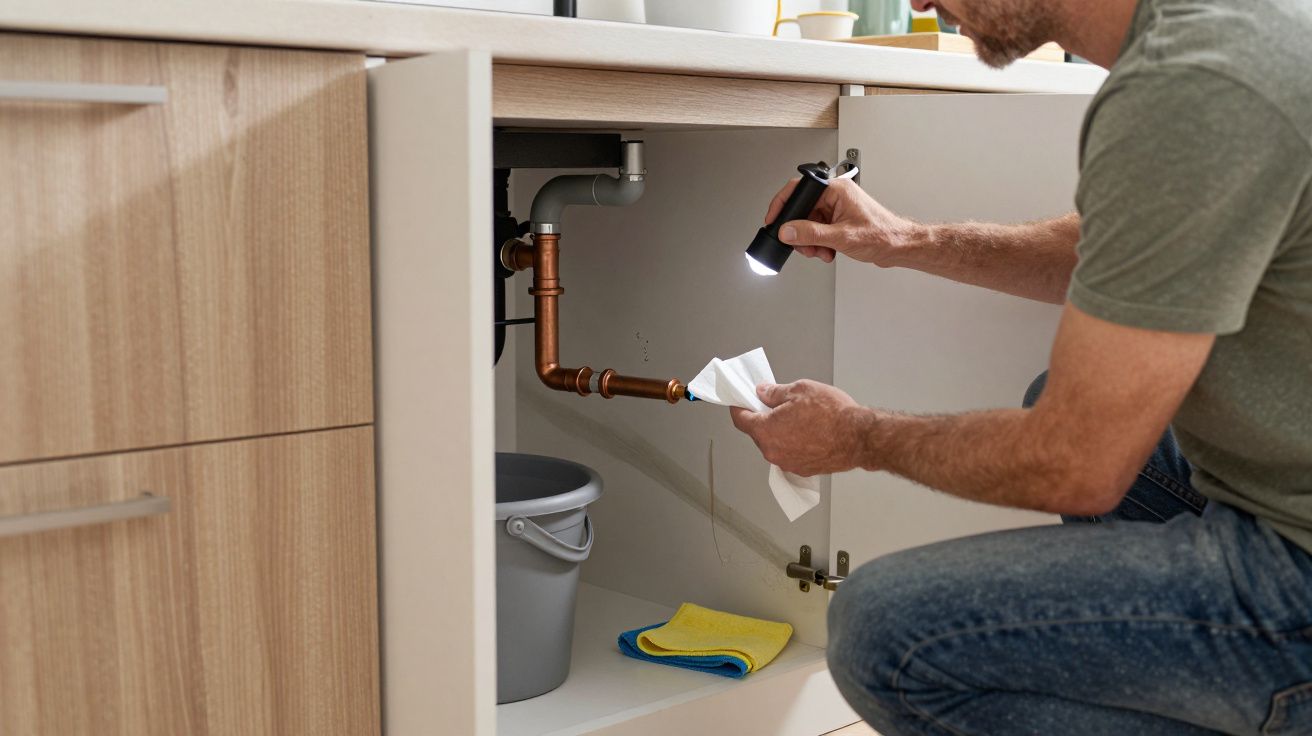
- Testing under realistic conditions: running the shower, flushing, heating on/off, hose testing specific roof sections, not just “having a look”.
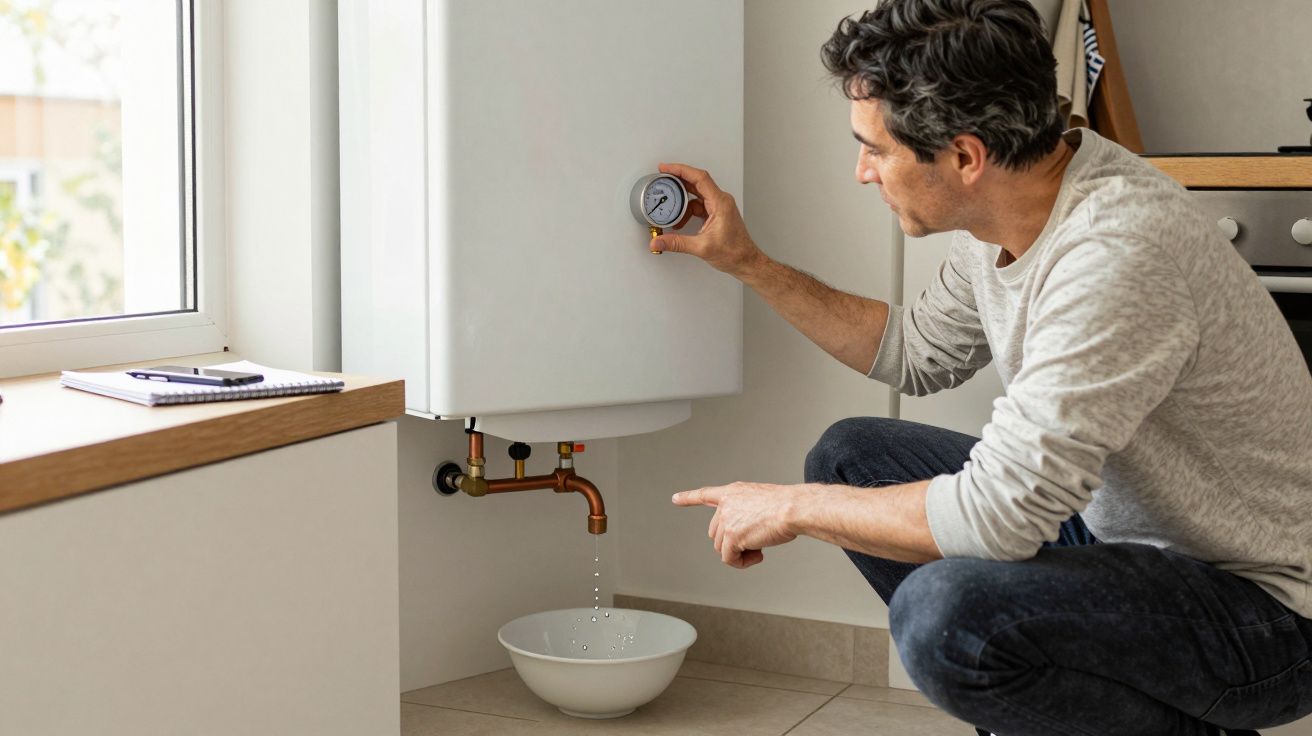
- Isolation: turning off circuits (hot vs cold supply, heating loop vs mains) to see what changes.
If that sounds slower, it is. But it’s also the thing that stops you paying twice.
“If we haven’t explained why the water is appearing there, we haven’t finished,” a leak investigator once told me. “A repair without a pathway is a guess with a receipt.”
The incomplete diagnosis checklist (so you can spot it before the stain returns)
When someone says “all sorted”, ask for the boring details. The answers tell you whether you’re looking at a complete diagnosis or a hopeful patch.
- What was the confirmed source? Not “probably the shower” - what specifically failed?
- How was it proven? Visual confirmation, pressure test, dye test, thermal imaging, moisture profile?
- What was the pathway? How did water get from source to stain?
- What conditions trigger it? Rain direction, shower duration, heating cycles, overflows?
- What’s the follow-up plan? Re-check moisture after X days, photos, access panel left in place, or at least a clear “if it returns, we test Y next”.
If nobody can answer those, the job may have been a repair attempt rather than a diagnosis-led fix.
A simple way to stop the “repair, return, repeat” loop
Treat it like a small investigation, not a single repair.
- Document the leak like it’s evidence: dates, weather, which taps were used, photos of the stain’s edge (it matters).
- Push for replication: “Can we run the shower for 15 minutes while you watch the meter?” is more useful than another bead of silicone.
- Separate drying from leaking: get a moisture reading now, then again in a week. If it’s dropping steadily, you may be seeing lag. If it spikes after specific use, you’ve found a trigger.
- Don’t redecorate too soon: paint can hide active moisture and slow drying, making the next diagnosis harder.
It’s not about being difficult. It’s about refusing to pay for certainty-shaped language when the work was actually a guess.
| Point clé | Détail | Intérêt pour le lecteur |
|---|---|---|
| La tache n’est pas la source | L’eau voyage avant d’apparaître | Évite de “réparer au mauvais endroit” |
| Fuites intermittentes | Ne se déclenchent que sous certaines conditions | Explique pourquoi tout semble sec pendant la visite |
| Diagnostic complet | Source + preuve + chemin + test | Réduit fortement les récidives |
FAQ:
- Why does the same leak come back after new sealant? Sealant can mask the exit point while the underlying movement, poor falls, loose wastes, or water behind tiles continues. It often fails when the joint flexes or when water finds a new gap.
- How long should a damp patch take to dry after a real fix? It varies, but plaster can take weeks, especially in winter or in sealed cavities. What matters is the trend: moisture readings should fall steadily rather than jump after water use or rain.
- Is leak detection worth it if I “already know it’s the bathroom”? Often yes. “Bathroom” is a location, not a cause. Proper testing can identify whether it’s supply pipework, waste, shower enclosure, waterproofing failure, or even something unrelated travelling into the same area.
- What’s the biggest sign of incomplete diagnosis? No explanation of the pathway-how water moved from the supposed source to the visible damage-and no attempt to reproduce the leak under realistic conditions.
- Can there be more than one leak at once? Yes, and it’s common in older properties. Fixing one can reduce the symptoms, making the remaining leak look like a “failed repair” when it’s actually a second issue.



Comments (0)
No comments yet. Be the first to comment!
Leave a Comment