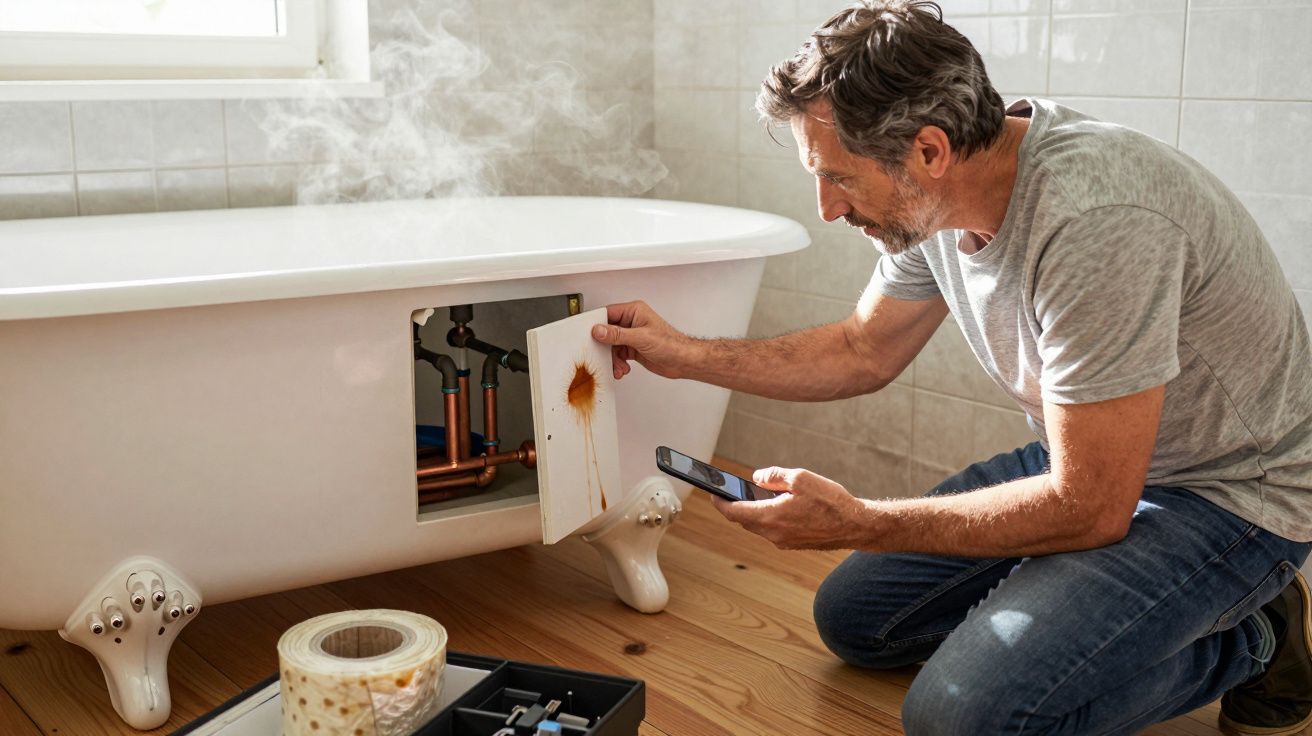
The call-out is usually something small: a damp patch that won’t dry, a boiler that keeps losing pressure, a tap that suddenly coughs out brown water. In older properties, that “little” problem often points to ageing pipework that’s been quietly coping for decades. It matters because plumbing damage in a lived-in house doesn’t just ruin plaster and floors - it can turn into rot, mould, and expensive disruption faster than most people expect.
Installers will tell you the same thing in different accents: it’s rarely one dramatic failure. It’s a system that’s been nudged, patched, frozen, heated, and asked to do modern workloads it was never designed for.
The moment a small leak becomes a big building problem
Newer homes tend to fail loudly: a cracked fitting, a burst flexi, an obvious flood. Older homes fail softly. Water tracks along joists, hides behind lath-and-plaster, and shows up three rooms away like a magic trick you didn’t ask for.
And because older properties often “breathe” differently - suspended timber floors, open chimneys once, solid walls - moisture doesn’t behave in a neat, predictable way. A minor seep under a bath can feed decay in the subfloor for months before anyone sees a single blister in the paint.
The frustrating part is that the first visible sign is often the last stage of the problem.
Why older homes take more punishment from everyday use
Materials that were fine… until they weren’t
A lot of ageing pipework is still doing its job. The issue is that some materials age in specific, predictable ways, and the house has already lived through every stressor: hard water, winter freezes, DIY “improvements”, and decades of thermal expansion.
Common culprits installers clock immediately:
- Galvanised steel that narrows internally with corrosion, lowering pressure and shedding debris.
- Old copper with thin spots (pitting) and weeping joints where flux and heat history matters.
- Lead supply pipes on older streets, which are soft, easily disturbed, and often coupled to newer materials badly.
- Early plastics (and mixed-era repairs) where fittings and pipe types weren’t meant to marry up.
In many older properties, the plumbing isn’t one system. It’s a timeline.
Heat, movement, and “house settling” isn’t just a phrase
Old houses move. Not dramatically, not like a film, but enough that a rigid pipe run that was fine in 1978 starts rubbing on a joist, or a tiny joint is put under a constant twist.
Then add modern living: combi boilers, higher hot water demand, power showers, washing machines, dishwashers, outside taps. The pipes didn’t get younger; the workload got heavier.
Stopcocks that haven’t been touched since the last owner’s last owner
If the main stopcock is seized, that’s not a quirky period feature. It’s a risk multiplier. When something fails, the difference between “messy” and “catastrophic” is often whether the water can be isolated in seconds.
Installers will check it early because they don’t want to discover it’s dead when a pipe is actively leaking.
What installers look for immediately (before they start “fixing”)
1) Signs of historic patchwork
A neat run of pipework tells one story. A run that changes material three times in two metres tells another.
They’ll look for:
- Compression fittings dotted everywhere (not automatically wrong, but often a sign of repeated emergency repairs)
- Odd reducers and “temporary” bypasses that became permanent
- Unsupported pipe runs that sag, rattle, or knock
- Pipes boxed in with no access panels (the classic: “it’s fine until it isn’t”)
A house can look pristine and still have plumbing that reads like a diary of rushed Saturdays.
2) Water pressure, flow rate, and what the taps “say”
Installers don’t just turn a tap on. They listen. They watch how quickly hot arrives. They note if pressure drops when another tap runs.
Quick tell-tales include:
- Pulsing flow (can suggest restrictions, failing valves, or debris)
- Slow hot water (pipe routing, insulation issues, or a system mismatch)
- Cloudy or brown water after disturbance (sediment, corrosion, or old mains)
It’s not about judgement. It’s about pattern recognition.
3) Underfloor and under-bath “microclimates”
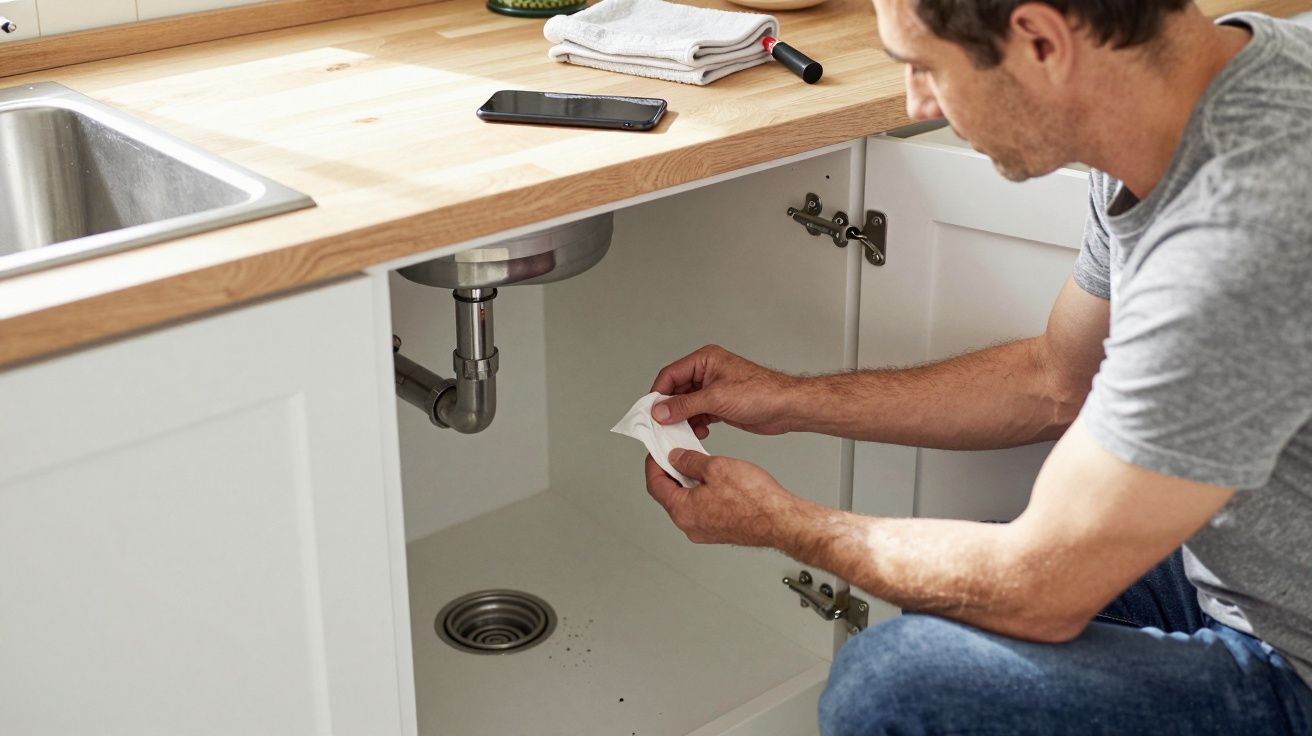
Older properties love to create hidden weather: cold voids, warm cupboards, condensation pockets. Installers will check under baths, around cylinders, and beneath sinks for staining, mould, salt marks, and timber softness.
They’re not being dramatic when they poke a floor edge. They’re trying to find out whether this is a plumbing job or a building-fabric job as well.
4) The boiler pressure story (and who’s been topping it up)
If a combi keeps losing pressure, the installer wants to know how often it happens and whether anyone has been “just topping it up”. Regular top-ups can mask a small leak long enough to soak a ceiling.
They’ll often inspect:
- Pressure relief discharge routes (and whether they’ve been dripping outside unnoticed)
- Filling loop condition and isolation
- Radiator valves and tails for minute weeps
- Any sign the system has been running dirty (sludge staining, noisy pump, inconsistent heat)
The boiler is rarely the only character in the plot.
The hidden triggers that make old pipework fail
Freezing isn’t just about outside taps
A lot of older properties have pipe runs in places that seemed sensible at the time: along outside walls, in uninsulated voids, above bay windows, behind thin boxing. A single cold snap can split a pipe that then thaws and leaks slowly for days.
Hard water quietly does its worst
Limescale narrows passages, stresses valves, and shortens the life of anything with a moving part - taps, shower cartridges, PRVs, heat exchangers. In an older system, scale combines with corrosion products, creating blockages that behave like random faults.
Dissimilar metals and “helpful” DIY
Mixing copper, steel, and certain fittings without proper consideration can accelerate corrosion. It’s not always obvious, and it’s often done with good intentions: “I just replaced that section.”
Installers aren’t allergic to DIY. They’re wary of DIY that created a weak point in a system already near its limits.
What you can do now (without ripping the house apart)
You don’t need to live in fear of your own plumbing. You do need a plan that suits older properties: reduce risk, improve access, and stop small issues becoming structural ones.
A practical short list:
- Find and test the main stopcock (and any internal isolation valves). If it won’t turn, get it replaced before you need it.
- Ask for materials to be identified during any visit (even a small repair). Knowing what you have changes the decisions you make later.
- Insulate vulnerable pipe runs, especially in voids, garages, and against external walls.
- Don’t ignore “minor” stains: photograph them monthly. If they grow or darken, act early.
- Request an access panel when something is boxed in again. Future you will be grateful.
You’re not trying to make an old house behave like a new one. You’re trying to make its quirks visible and manageable.
| What they spot fast | What it can mean | Why it matters |
|---|---|---|
| Seized stopcock | No isolation in an emergency | Leaks escalate quickly |
| Mixed materials & many fittings | Patchwork history | More weak points, harder diagnosis |
| Staining/soft timber near bathrooms | Long-term seepage | Rot and costly fabric repair |
The calm truth about older homes and plumbing
Older properties aren’t “bad houses”. They’re just honest ones: they show you, sooner or later, what’s been neglected. The smartest installers don’t start by tearing out pipework - they start by reading the house, finding the highest-risk points, and making sure the next failure won’t be the expensive kind.
And if you only take one thing from this: when the first sign appears, treat it as information, not inconvenience.
FAQ:
- Why do older homes get more hidden leaks? Older properties often have voids, solid walls, and layered refurbishments that let water travel and hide before it becomes visible.
- Is ageing pipework always dangerous? Not always. Many older systems run for years, but the risk rises when materials are near end-of-life, poorly supported, or repeatedly patched.
- What’s the first thing I should check if I suspect a leak? Check whether you can shut off the water at the stopcock and whether your boiler pressure (if you have a combi) is dropping over time.
- Does low water pressure always mean old pipes? No. It can be a valve, a blockage, a mains issue, or a pressure-reducing valve. In older homes, internal corrosion and scale are common causes.
- Should I replace everything at once during a renovation? Not necessarily. A good installer will prioritise high-risk sections, improve access, and phase replacements to avoid unnecessary disruption.





Comments (0)
No comments yet. Be the first to comment!
Leave a Comment