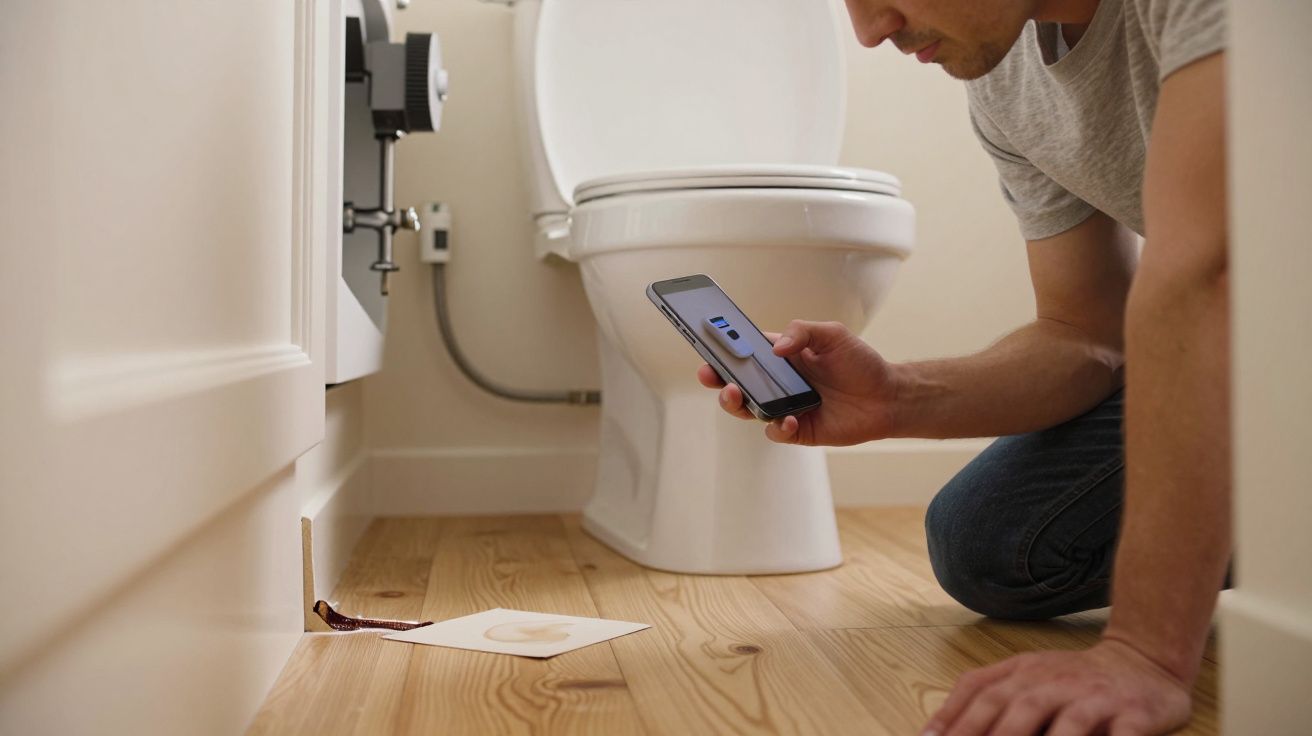
Plumbing diagnostics is the quiet craft plumbers use in kitchens, lofts and under-floor voids to work out what a house is about to do next, not just what it’s doing today. It relies on pattern recognition: the way certain noises, smells, stains and pressure quirks tend to travel together before a failure shows up in full. For homeowners, it matters because the expensive leaks rarely start as “a flood” - they start as small, dismissible signals you can live with until you can’t.
I’ve watched it happen in real time: a boiler cupboard that smells faintly metallic, a toilet that refills with a soft hiss at 3am, a patch of paint that never quite dries on the ceiling below the bathroom. Most people clock these as separate annoyances. A plumber hears them as a sentence.
The difference isn’t tools - it’s how they read the story
Homeowners usually look for a single obvious cause: “the tap is dripping, so the tap needs a washer”. Plumbers zoom out. They ask what changed, how long it’s been happening, and what else in the system is behaving oddly, even if it seems unrelated.
That’s not mysticism; it’s repetition. They’ve seen the same failures across hundreds of houses with similar layouts, similar fittings, and similar “it’s probably nothing” timelines. The job becomes less about guesswork and more about recognising a familiar chain of events.
“Most leaks announce themselves early,” one plumber told me. “They just don’t announce themselves loudly.”
The early-warning signs people step over
A lot of “mystery” plumbing failures are predictable because they leave consistent clues. The problem is that the clues are boring, intermittent, or easy to blame on weather and age.
Here are the tells plumbers take seriously:
- Intermittent pressure drops at one outlet, especially after someone uses another tap or flushes.
- New noises: water hammer, ticking pipes as they warm, or a cistern that randomly refills.
- A persistent damp smell with no visible puddle (often under baths, behind kitchen units, or by the stopcock).
- Staining that grows slowly: a halo on plasterboard, skirting that darkens at one end, grout that stays darker.
- “Limescale that appeared overnight” around a fitting - usually it didn’t; it just reached the point you noticed.
- Hot water that runs out faster than usual, which can hint at a cylinder issue, mixing valve problems, or sediment.
The point isn’t to panic at every creak. It’s to notice when small changes cluster together, because clusters are where failures hide.
Why plumbers can predict the next failure (and you’re not meant to)
Most homeowners see plumbing as separate fixtures: sink, loo, shower, boiler. Plumbers see a network: pressure, flow, temperature, materials, and the way your house “behaves” through a day.
That network thinking is why they’ll ask questions that feel oddly specific:
- Did the problem start after a new appliance was fitted?
- Do neighbours have similar pressure issues?
- Is it worse first thing in the morning or after school-run time?
- Have you had any building work, even “just drilling a shelf”?
It’s also why they can look at a perfectly normal radiator bleed and say, quietly, “your system is ingesting air from somewhere”. To you it’s a one-off chore. To them it’s a pattern with a usual ending.
The patterns behind the most common hidden failures
Not every issue is diagnosable without opening things up, but many failures follow the same routes. These are the ones plumbers mentally file away.
1) The “tiny leak that becomes a ceiling repair”
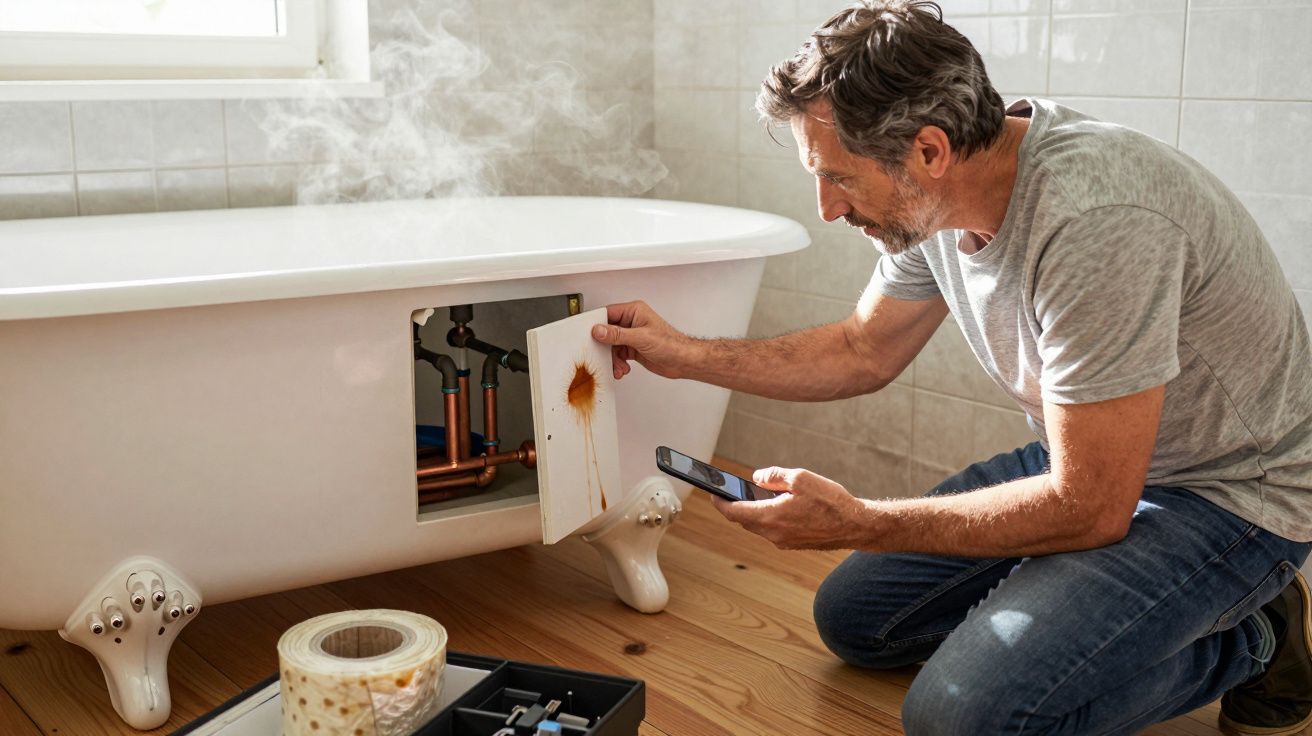
A slow weep under a bath waste or shower trap often starts as mild, occasional dampness. It worsens with use, then suddenly presents as a stained ceiling below - usually after a longer shower, a guest staying over, or a colder snap.
Plumbers look for water marks on pipe runs, swollen chipboard, and the direction staining “pulls” along joists. Homeowners tend to focus on the first visible patch and miss the actual origin.
2) The “toilet that never quite stops”
A running cistern is not just a water bill problem. Constant refilling can stress the fill valve, mask a failing flush valve seal, and in some setups contribute to pressure fluctuations you feel elsewhere.
If you’re hearing refill cycles when nobody’s used the loo, a plumber hears a component that’s worn enough to fail fully - often at the worst time.
3) The “pressure dip that points to something upstream”
A shower that goes weak can be a blocked head. It can also be a partially seized stop valve, a failing pressure-reducing valve, a softening filter clogging, or a developing leak that’s stealing flow.
The homeowner fix is usually local and cosmetic. The plumber’s check is systemic: isolate, measure, compare, and look for the simplest explanation that accounts for all symptoms.
4) The “corrosion smell” people normalise
That faint metallic or “wet penny” smell in a cupboard isn’t always dramatic. In some cases it’s just an old stopcock area staying humid. In others, it’s a sign of slow corrosion, especially where dissimilar metals meet or where a joint has been disturbed.
The pattern plumbers watch is smell plus staining plus a fitting that feels slightly damp to the touch - even if it never drips.
A simple homeowner version of plumbing diagnostics (without the guesswork)
You don’t need to become a tradesperson to borrow the useful part: paying attention in a structured way. Ten minutes can turn “vibes” into evidence.
Try this once a quarter, and whenever something feels off:
- Check your water meter: note the reading, avoid using water for 30 minutes, then re-check. Movement can suggest a leak (not always, but it’s a strong prompt).
- Listen at quiet times: stand near the toilet, the boiler cupboard, and the kitchen sink base. Hissing and random refills matter.
- Look for repeat dampness: run a hand along skirting near bathrooms and the kitchen units; check under the sink trap and around appliance valves.
- Note “when” not just “what”: mornings, after showers, after the dishwasher cycle - timing often reveals the culprit.
Keep it calm. Don’t start dismantling things you can’t safely reassemble. Let’s be honest: nobody wants a Saturday spent learning what a compression fitting is.
When to call a plumber sooner than you think
Some problems punish delay because they’re cheap to fix early and expensive later. Consider booking a visit if you notice any of these combinations:
- Staining plus a damp smell, even if there’s no active drip.
- Repeated pressure changes across more than one tap or shower.
- A toilet that refills by itself more than once a day.
- Warm spots on floors with no heating explanation (potential hot pipe leak).
- Mould returning in the same strip or corner despite cleaning.
Good plumbers don’t just repair; they confirm. They’ll isolate, test, and explain what evidence supports the diagnosis - which is exactly what you want when you’re trying to avoid unnecessary work.
| Pattern plumbers spot | What it often points to | Why it gets missed |
|---|---|---|
| Random cistern refills | Worn valve/seal, silent leak to pan | It’s quiet and intermittent |
| Damp smell in a cupboard | Slow weep at joint/valve, trapped humidity | No puddle, so it feels “fine” |
| Pressure drops at peak use | Restriction, valve issue, leak, PRV problem | Blamed on “the area” or the shower head |
FAQ:
- How can I tell if I have a hidden leak? Check the water meter, then avoid using water for 30 minutes. If the reading changes, you may have a leak worth investigating (some systems and appliances can complicate this, so treat it as a prompt, not a verdict).
- Is a noisy pipe always a problem? Not always, but new banging (water hammer) or ticking that coincides with certain uses can signal pressure issues, loose pipework, or failing valves.
- Why do plumbers ask so many questions before they look? Because plumbing diagnostics relies on pattern recognition. Timing, recent changes, and where symptoms appear help narrow the fault without unnecessary disruption.
- Should I use leak sealant products? Temporary sealants can sometimes reduce symptoms while worsening the real fault, and may complicate later repairs. If you’re repeatedly topping up pressure or seeing dampness, it’s usually better to get it properly assessed.
- What’s the most overlooked maintenance task? Knowing where your stopcock is and ensuring it actually turns. In an emergency, that single detail can save thousands in damage.





Comments (0)
No comments yet. Be the first to comment!
Leave a Comment