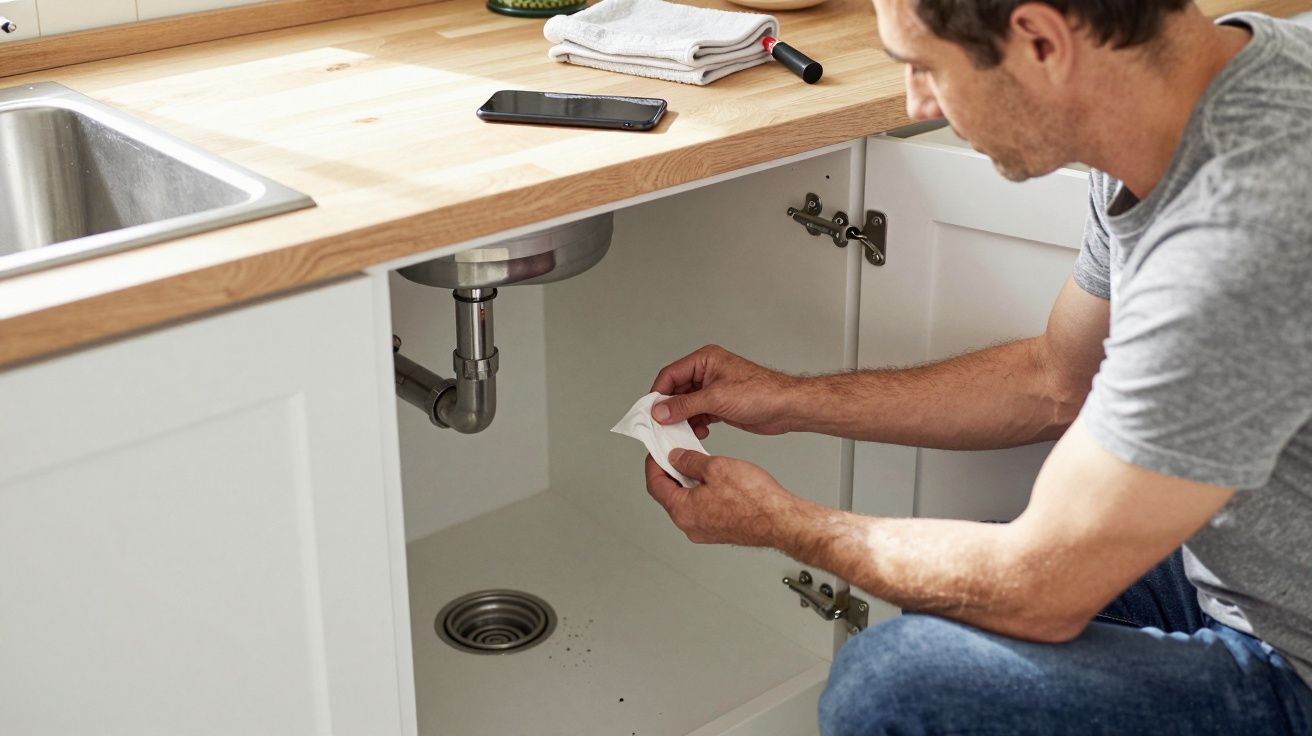
Yesterday it was a steady drip under the sink, today it’s dry as a bone - and that’s exactly when experienced plumbers start asking harder questions. Water leaks don’t always “fix themselves”; sometimes they stop because pressure build-up has shifted somewhere else, quietly loading a joint or pipe run you can’t see. For homeowners and facilities teams, that’s the difference between a minor repair and a ceiling coming down at 2am.
You see it in call-outs all the time: someone towels up the mess, goes to bed relieved, and wakes up to a swollen cupboard base or a stain blooming on the plaster. The absence of water is comforting, but in plumbing it can also mean the system has found a new weak point.
When a leak stops, it often hasn’t ended - it’s moved
A leak usually stops for one of three reasons: the supply has been reduced, the exit path has been blocked, or the pressure and temperature have changed enough to temporarily seal the gap. None of those are the same as “the pipe is fine now”.
Engineers get wary because small leaks are also pressure relief. When they disappear without a repair, it can mean the same water is now pushing behind a fitting, into insulation, under flooring, or along a pipe chase until it finds another route out.
A dry patch can be a warning sign: the water may simply be travelling somewhere you can’t see.
The first checks pros make (before they start ripping out cupboards)
The goal is to confirm whether water is still moving, and if so, where. The best engineers start with evidence you can measure, not guesses.
1) Meter test: is water still being drawn?
If you have a mains water meter, it’s the fastest truth teller.
- Turn off all taps, appliances, irrigation, and anything with an inlet (dishwasher, washing machine, boiler fill loop if applicable).
- Note the meter reading or watch the small flow indicator.
- Wait 10–20 minutes without using water.
- Any movement suggests a continuing leak somewhere on the supply side.
In blocks of flats or older properties, this can be tricky if the meter is shared. That’s where isolating zones (see below) becomes the next step.
2) Isolation-by-sections: find the “leaking leg”
Pros will close isolation valves to narrow the search:
- Shut off the stopcock, confirm the meter stops.
- Turn the stopcock back on and isolate individual branches (kitchen, bathroom, outside tap) if you have valves.
- Watch for meter movement or pressure drop as each section is reintroduced.
This is also where a suddenly-stopped leak can reveal itself. If one zone causes the meter to creep, you’ve found the suspect run even if everything looks dry.
3) Pressure behaviour: does it hold, creep, or fall?
Pressure build-up is a quiet clue. Engineers may fit a pressure gauge to an outside tap or washing machine valve and observe:
- Pressure falls steadily: water is escaping somewhere.
- Pressure creeps up high: potential failed pressure reducing valve (PRV) or thermal expansion, stressing joints.
- Pressure spikes then settles: could indicate an intermittent valve issue or a filling appliance cycling.
In combination boilers and unvented cylinders, thermal expansion can push pressure up when water heats. If there’s no functioning expansion vessel or relief route, weak fittings may weep - then “seal” again as things cool.
4) Check the “hidden wet” places first
When the visible drip stops, the water often takes the easiest concealed path. Plumbers commonly check:
- The back corners of sink units and the underside of worktops (water tracks along screws and brackets).
- Kickboards and flooring edges (capillary action can pull water far from the leak).
- Pipe penetrations through cabinet sides and walls (water follows the hole like a channel).
- Boxing-in around toilets, showers, and baths, especially where waste and supply run together.
- Ceilings below bathrooms and kitchens - not for a bulge, but for a faint tide mark or softening paint.
A torch, dry tissue, and a slow hand along pipework beats a quick glance. If it’s been leaking for days, a moisture meter can confirm damp before it becomes visible.
The common reasons leaks “stop” (and why each one is risky)
A compression joint or olive has shifted… temporarily
A vibration, a door slam, even temperature change can re-seat a slightly misaligned compression fitting. It may hold for hours or weeks, then reopen. Engineers treat this as “not fixed until remade”, because the sealing surfaces may already be compromised.
A pinhole has clogged with debris or limescale
In hard water areas, mineral deposits can partially block a pinhole in copper or steel. That’s not a repair - it’s a plug under pressure. The moment flow changes, the deposit can dislodge.
A flexible hose has ballooned or twisted into a new position
Tap connectors and appliance hoses can seep at the crimp, then stop when the hose relaxes. This is especially common where hoses are kinked behind appliances. A stopped leak here is often a pre-failure sign.
The system pressure changed, masking the issue
Someone might have turned down a stopcock, a PRV might have stuck, or a supply interruption reduced pressure. Lower pressure can stop a visible leak while leaving the fault untouched. When pressure returns (overnight mains pressure can be higher), it starts again - or worse, fails fully.
What to do at home in the next 15 minutes (a calm, practical routine)
You don’t need specialist kit to act sensibly, but you do need to treat “it stopped” as unfinished business.
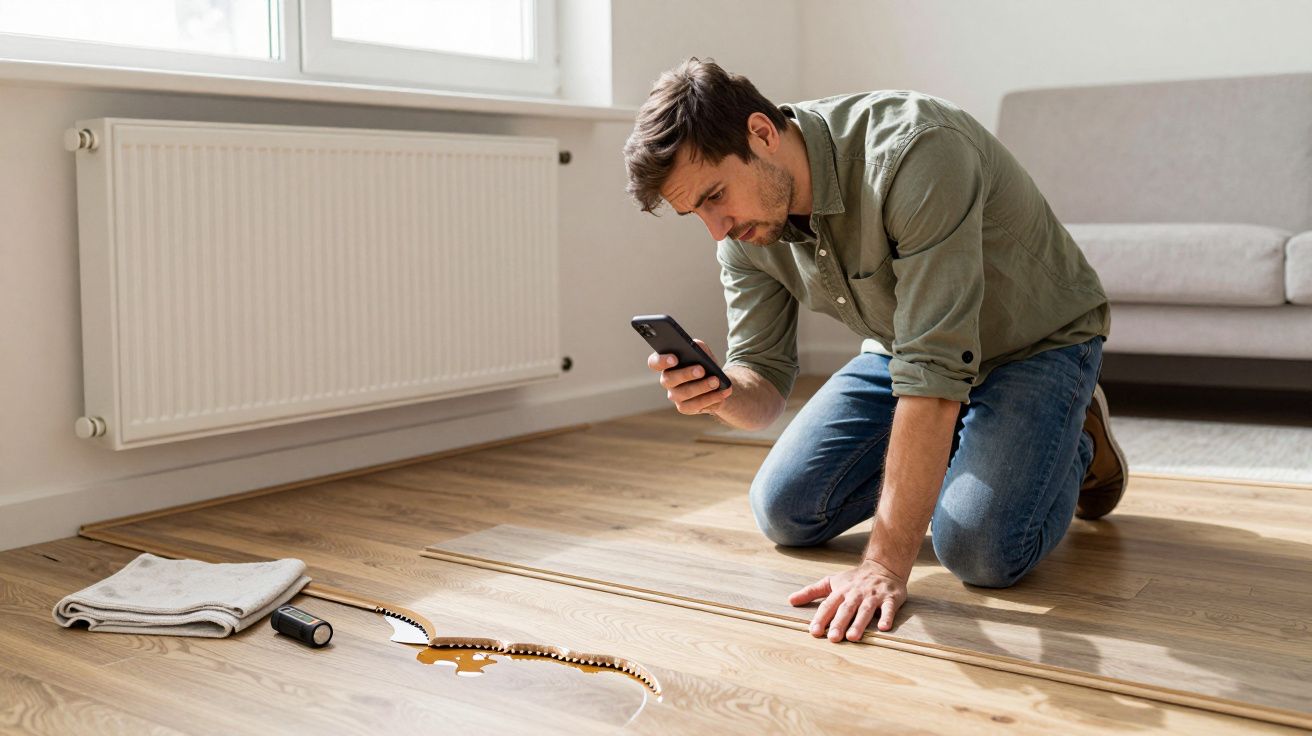
- Photograph the area where you first saw water (including valve positions). It helps if it reappears.
- Check the meter for movement with everything off.
- Feel along accessible pipework with dry tissue, especially at joints and valves.
- Look below and beside the original site, not just directly under it (water travels).
- If you suspect ongoing leakage, isolate at the stopcock and call a plumber.
If the leak was near electrics, sockets, lighting below, or a boiler, don’t wait for “proof”. Water and electrics don’t give second chances.
What experienced engineers check first on the job (and why)
Plumbers have a short list of “high-yield” checks because time matters and damage spreads.
- Stopcock condition and incoming pressure: a worn stopcock can pass water oddly; excessive mains pressure accelerates failures.
- PRV and expansion control (where fitted): pressure build-up points them straight to PRVs, expansion vessels, and check valves.
- Recent changes: new taps, dishwasher install, boiler service, or a moved appliance can introduce a slow leak that later reroutes.
- Waste vs supply confirmation: a “leak” that stops can sometimes be intermittent waste overflow (blocked trap, dishwasher discharge, shower use patterns). The fix is different, so they verify source.
They’re not being dramatic - they’re narrowing down whether you’re dealing with a contained nuisance or an active, concealed escape.
Red flags that mean “don’t wait and see”
Some situations justify isolating water and getting help, even if it’s dry right now:
- Staining, bubbling paint, or a damp smell that wasn’t there yesterday
- Warped flooring, swollen chipboard, or lifting vinyl
- Meter movement with all outlets off
- Boiler pressure dropping repeatedly (could be heating circuit loss) or topping up often
- Drips that return at certain times (overnight, after washing machine use, after showers)
A stopped leak with any of the above is often a leak that has found a quieter route.
A simple rule plumbers live by
If a leak ends because you repaired it, fine. If it ends because it went silent, assume it’s still active until the meter and pressure behaviour prove otherwise. Water is patient, and it doesn’t need much of an opening to do expensive things.
FAQ:
- Is it ever normal for a leak to stop on its own? It can happen if a fitting re-seats, debris blocks a pinhole, or pressure drops, but it’s rarely a true resolution. Treat it as temporary until you’ve checked meter movement and the surrounding structure for damp.
- How can I tell if it was a waste leak rather than a mains/supply leak? Waste leaks usually appear during or shortly after use (sink draining, dishwasher pumping out) and won’t typically move the water meter when everything is off. Supply leaks can occur 24/7 and often show on the meter.
- What’s the quickest non-invasive test? A water meter check with all outlets off is the fastest. If there’s no meter, isolating zones and watching for pressure drop or recurring damp patterns helps.
- Why does pressure build-up matter if I’m not seeing water? Higher pressure stresses joints, hoses, and valves, and can turn a marginal seal into a sudden failure. It can also force water along hidden paths, so the first visible drip disappears while damage continues elsewhere.
- Should I use leak sealant or tape as a precaution? Avoid “miracle” sealants on pressurised plumbing as a substitute for repair; they can complicate proper fixes. Temporary measures are only for making safe until a plumber remakes the joint or replaces the component.




Comments (0)
No comments yet. Be the first to comment!
Leave a Comment