The day most plumbing systems fail is rarely the day they were “fine”. The trouble usually started years earlier, in system design choices nobody sees: pipe sizing, routing, ventilation, access panels, and what was deemed “good enough” behind the plasterboard. That matters because reliability isn’t a heroic emergency call-out; it’s the quiet absence of emergencies in the first place.
You can replace a washer at 11pm, and you should. But if your home keeps springing leaks, gurgling drains, or random pressure drops, you’re not dealing with bad luck. You’re seeing the cost of a system that was repaired repeatedly instead of designed to behave.
The repair myth: why fixes feel satisfying (and keep failing)
A plumbing issue has a clear villain. The tap drips, the toilet runs, the shower goes cold. A quick fix gives you a before-and-after you can hear and feel, which is why households and landlords often default to repairs as the main strategy.
The problem is that many “faults” are actually symptoms of stress. A joint weeps because pressure spikes. A trap siphons because the venting is wrong. A boiler kettles because the system water is filthy. You fix the visible bit, and the hidden cause keeps taking swings.
The most expensive plumbing is the plumbing you keep touching.
What reliability looks like in real homes
Reliable plumbing isn’t glamorous. It’s boring in the best way: steady pressure, quiet drainage, hot water that arrives when it should, and maintenance that feels planned rather than panicked.
In practical terms, reliability usually shows up as:
- Stable flow at multiple taps without the shower turning into a drizzle.
- No “mystery” smells from floor wastes or unused bathrooms.
- Drainage that stays quiet, no glugging after a flush, no slow creep in the kitchen sink.
- Valves you can actually reach when something needs isolating.
- Predictable servicing, where the engineer spends time checking rather than firefighting.
If your home never quite hits that baseline, the system may be working, but it isn’t behaving.
The early “opening moves” of plumbing failure
Most breakdowns start with a small mismatch between demand and layout. It’s the plumbing equivalent of a tiny spill that turns sticky: not dramatic at first, then suddenly everywhere.
1) Undersized or badly routed pipework
Long runs in thin pipe, too many tight elbows, or a maze of tees can turn normal use into pressure loss. You’ll notice it as taps that feel fine alone, but struggle when the washing machine fills or someone flushes upstairs.
Hot water suffers twice: it loses pressure and it loses heat. That’s when households start cranking thermostats or fitting higher-pressure shower heads, which can raise stress elsewhere.
2) Poor venting and trap protection
That gurgle after a flush isn’t just noise. It can be the system stealing water from traps, which is why smells appear “randomly” and disappear when it rains or when windows are open.
A well-designed drain system moves water and air together. A poorly designed one creates suction, back-pressure, and the kind of intermittent nuisance that never quite justifies a full refit-until it does.
3) No isolation, no access, no mercy
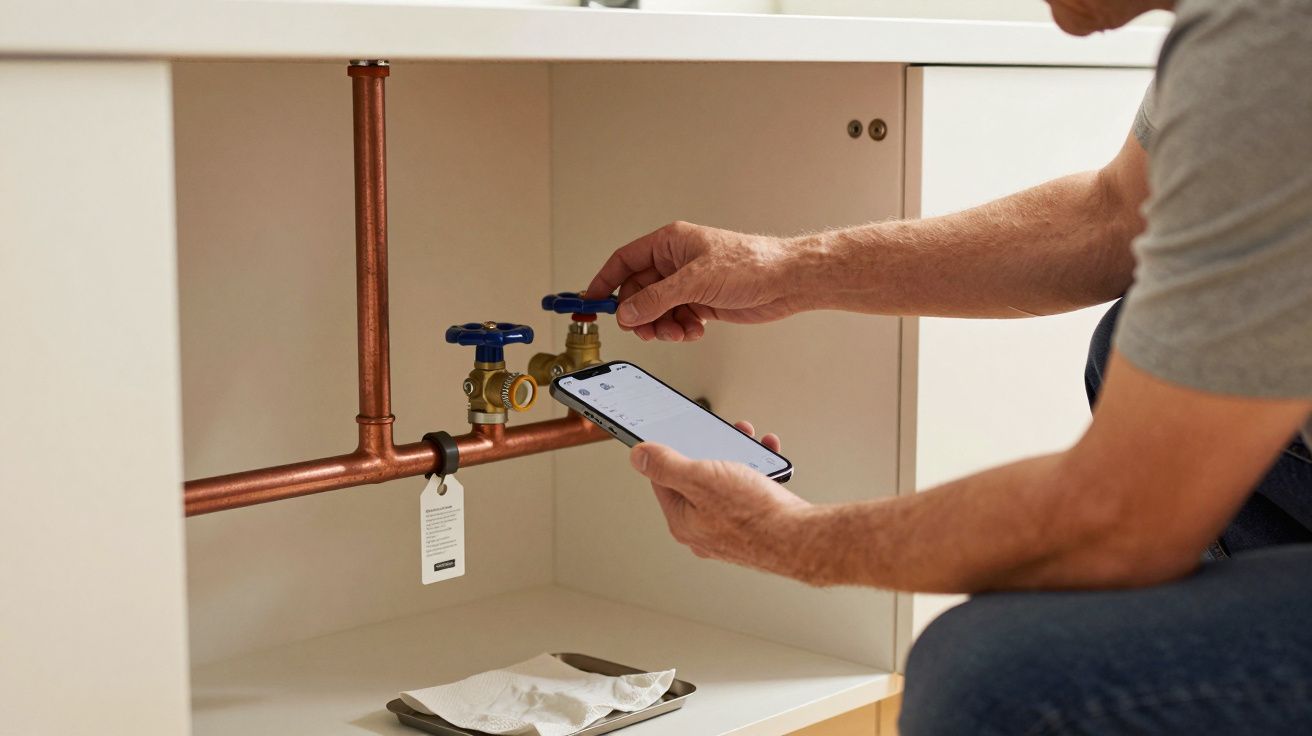
Reliability depends on how quickly a small problem can be contained. If the only stop tap is stiff, half-buried, or in a cupboard that requires emptying first, you’ve built delay into every incident.
The same goes for boxed-in joints and concealed connections. If a 50p seal fails but the only way to reach it is cutting tiles, you don’t have a “small” repair any more. You have damage.
4) Water quality ignored until it becomes a system problem
In many UK homes, the water itself drives wear. Hard water limescales heating surfaces and restricts flow. Dirty system water (magnetite) eats efficiency, ruins pumps, and turns radiators patchy.
People often treat these as appliance faults-“the boiler’s playing up”-when they are network faults. The appliance is just the first component to complain.
Design choices that buy you calm (and what they cost)
This is the part nobody wants to pay for because you can’t show it off. Yet it’s the difference between a home that needs constant little call-outs and one that runs quietly for years.
Here are the high-leverage choices:
- Right-size the pipework for peak demand, not best-case usage.
- Keep runs short and simple, especially on hot water to bathrooms.
- Protect traps and ventilate drains so the system stays sealed and odour-free.
- Fit isolation valves on key branches: kitchen, bathrooms, outside taps, boiler fills.
- Design for access: service hatches, removable panels, reachable valves.
- Treat water quality as infrastructure: inhibitor, filter, flushing, and softening where appropriate.
None of this prevents every leak. It changes what a leak becomes: a contained nuisance instead of a day-ruiner.
A quick “reliability audit” you can do this week
You don’t need to open walls to spot design risk. Walk your home like you’re trying to stop a problem, not just find one.
- Find and test your stop tap. Can you turn it fully off and back on without tools or fear?
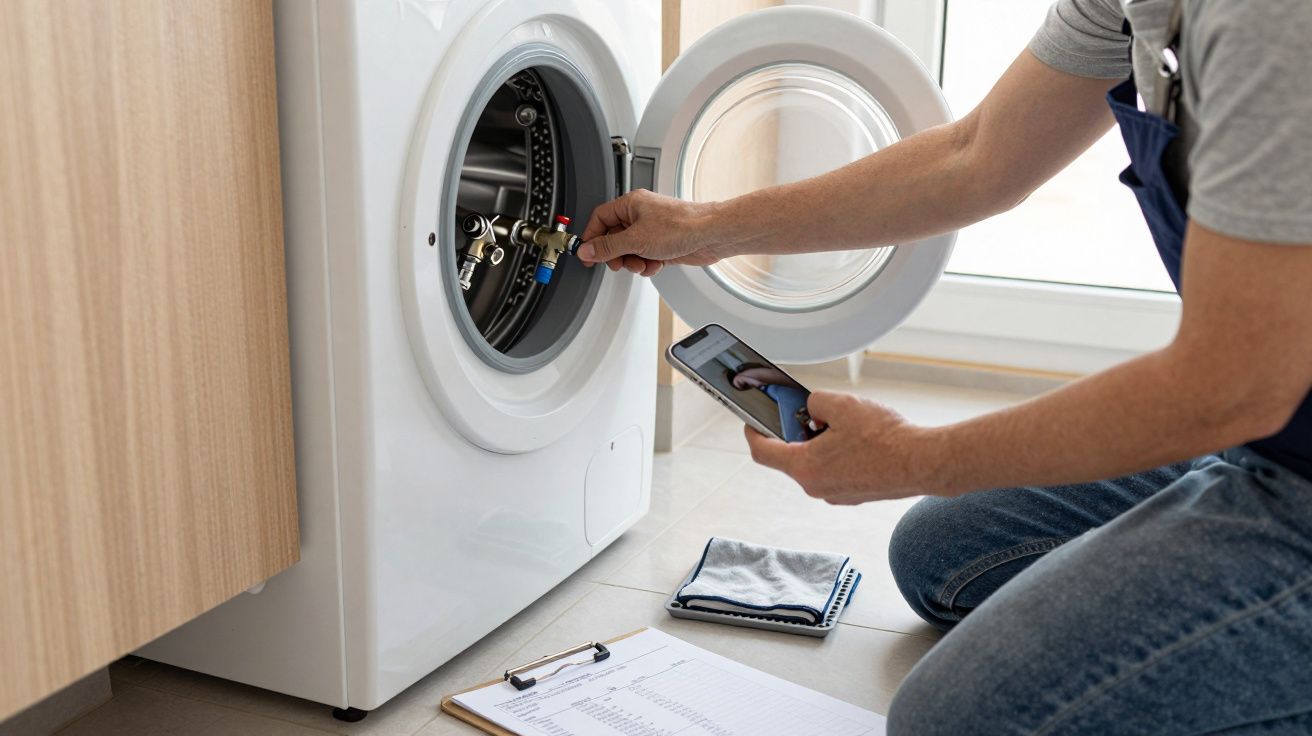
- Locate isolation points. Do the toilet, basin, and washing machine each have local valves?
- Listen after a flush. Any gurgling from nearby basins or shower wastes is a design clue.
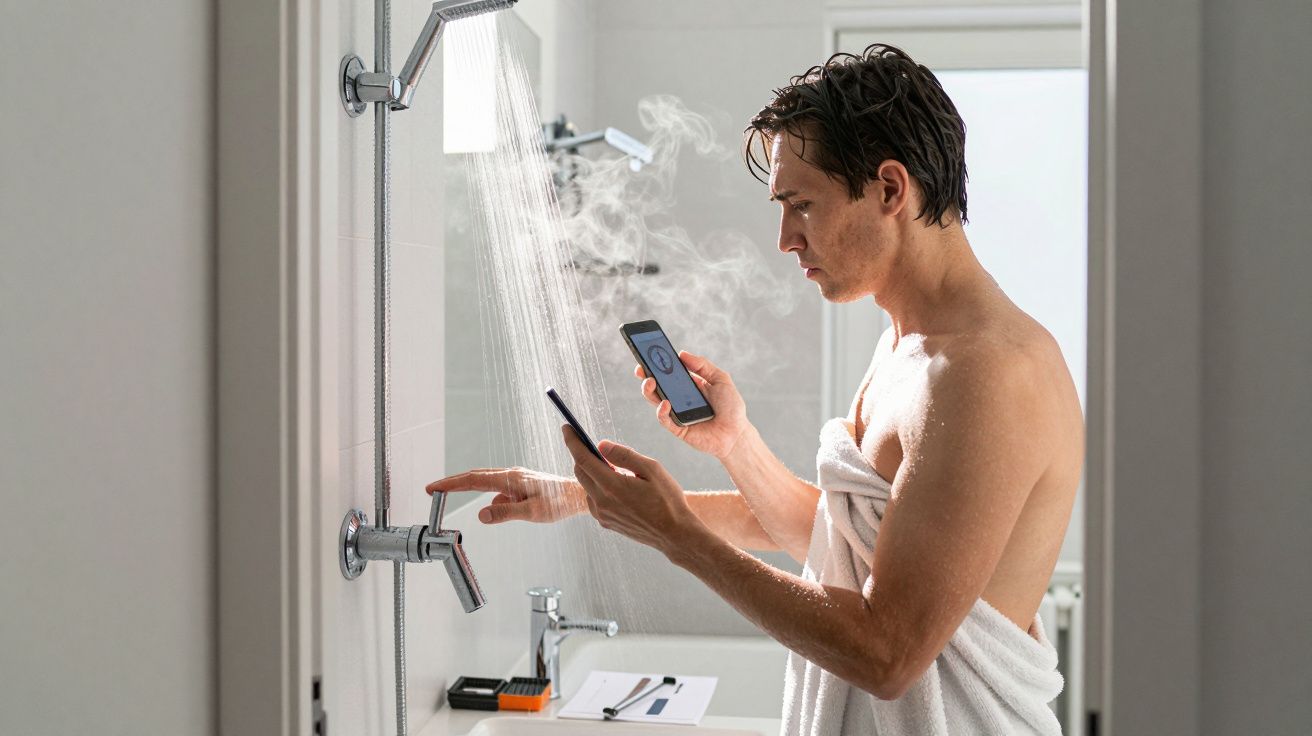
- Time hot water delivery. If it takes ages to arrive, the layout is costing you heat and patience.
- Check pressure behaviour. Run a tap and flush; if flow collapses, your system is operating near its limits.
- Look for “repaired zones”. Multiple fixes in one area usually means the layout is stressing that area.
If you find two or three of these issues, your next spend should lean towards design improvements, not prettier tapware.
The layered approach: repair, then reduce the need to repair
The goal isn’t to stop repairing. It’s to stop being surprised.
A sensible plan looks like this:
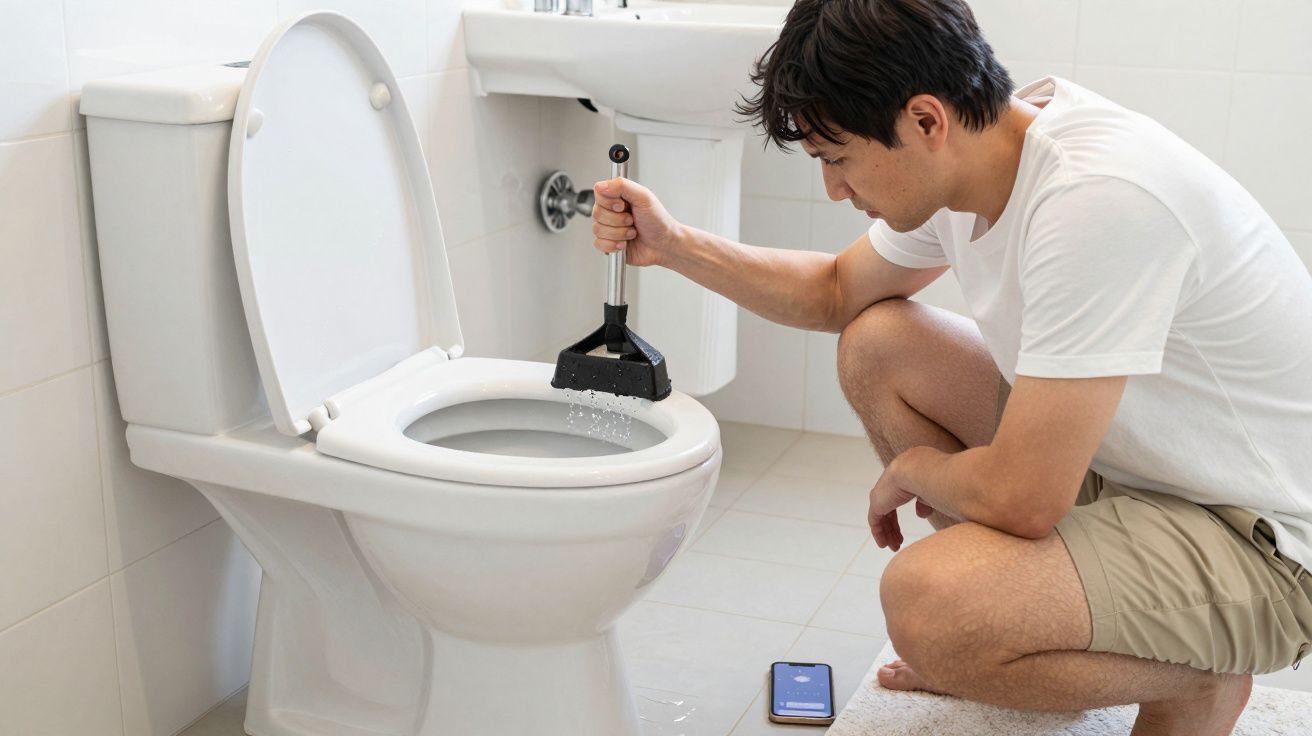
- Immediate repairs: fix active leaks, faulty fill valves, unsafe electrics on pumps, anything that risks damage.
- Containment upgrades: add isolation valves, pressure-reducing valves if needed, and proper access where possible.
- System improvements: address venting, re-route problem sections, right-size supply lines during refurb work.
- Preventive maintenance: water treatment for heating systems, descaling strategy in hard-water areas, periodic checks.
Each layer reduces how often the next layer is needed. That’s what “reliability” really is: fewer opportunities for chaos.
What this means if you’re renovating (or buying)
Renovations are where reliability is either locked in or lost for a decade. The temptation is to spend on the visible bits and assume the pipes will cope. They might. But if you’re moving a bathroom, adding an ensuite, fitting a rain shower, or relocating the kitchen, you’re changing demand and routing-exactly where design matters most.
When viewing a property, ask the boring questions. Where’s the stop tap? Has the heating system been flushed? Are there access panels for concealed valves? Boring answers are a gift.
FAQ:
- Isn’t plumbing reliability mostly about using better parts? Better parts help, but many repeat failures come from stress: pressure issues, poor routing, lack of venting, and no access. Parts don’t fix those.
- When should I stop repairing and consider redesign? When the same area fails repeatedly, when pressure and drainage are inconsistent, or when a “small” issue keeps turning into major disruption because nothing is accessible.
- What’s the single best upgrade for reducing damage risk? Working isolation: a main stop tap you can operate, plus local isolation valves for toilets, appliances, and key branches.
- Does hard water mean my plumbing is doomed? No. It means you need a plan: suitable pipework and fittings, sensible temperatures, and (where it fits) softening or regular descaling. Ignoring it is what makes it expensive.



Comments (0)
No comments yet. Be the first to comment!
Leave a Comment