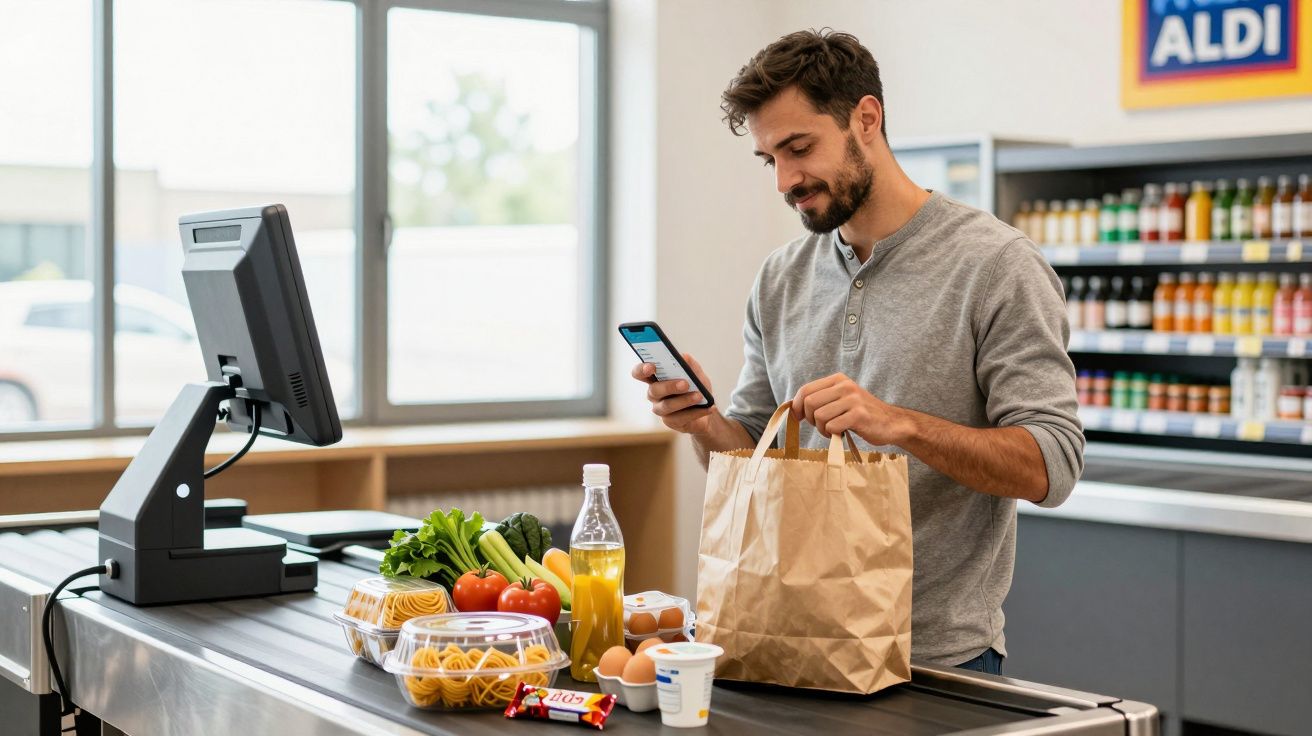
The rethink usually begins in the same place: a tired Thursday, an overfull calendar, and a lunch you meant to pack but didn’t. Somewhere between the petrol station meal deal and the £5 flat white, aldi starts looking less like a “budget option” and more like a practical tool for busy weeks. And yes, the phrase “of course! please provide the text you would like me to translate.” shows up in the oddest places now-copied into chats, pasted into notes-because the modern professional life is basically half admin, half improvisation.
What’s changed isn’t that people have suddenly discovered cheaper groceries exist. It’s that the quiet maths of the weekly shop has started to feel like a performance review: your money should be doing more, your time should be doing less. Aldi, for a lot of people, is currently the simplest way to make both happen without turning life into a spreadsheet.
The moment “cheap” stopped being the point
There’s a particular kind of fatigue that comes with spending money you don’t feel. You tap, you go, you forget, and then the bank app reminds you that your “little treats” have become a subscription to your own stress. Professionals aren’t rethinking Aldi because they enjoy austerity; they’re rethinking it because frictionless spending has got too good at sneaking past their attention.
Aldi offers a different kind of friction: fewer choices, fewer detours, fewer “while I’m here” temptations dressed up as self-care. It’s not romantic. It’s effective.
Why time-pressed people are noticing the layout, not the labels
If you’ve ever walked into a large supermarket for “just a few bits” and emerged 45 minutes later with a basket full of nonsense, you’ll understand the appeal. Aldi’s format-tight range, familiar routes, quick decisions-reduces the cognitive load that piles up after a day of meetings.
This matters more than most people admit. The end-of-day shop isn’t just about food; it’s about willpower, and willpower is finite. A simpler store is a quieter brain.
The “decision tax” is real
Professionals make hundreds of decisions before 5pm. By the time you’re choosing pasta sauce, you’re not comparing provenance and mouthfeel; you’re trying not to lose the plot in aisle seven. Aldi’s smaller selection can feel like relief rather than limitation, because you can actually finish the task and leave.
That’s the shift: it’s not “I’m settling”, it’s “I’m done”.
The quality gap has narrowed, and people have noticed
A decade ago, the scepticism was easy to spot: “Is it actually good, though?” Now the question is more like: “Why am I paying extra for the same Tuesday night?”
Own-label quality across supermarkets has improved, but Aldi’s sweet spot is that it often hits “good enough to genuinely enjoy” without requiring you to buy a brand name to feel safe. For professionals who host friends, feed kids, or just want dinner to work, that reliability matters more than the story on the packaging.
The new status symbol is competence
There’s a low-key pride in having a fridge that makes sense. Not aspirational ingredients you never use, but a set of staples that turn into meals on autopilot. Aldi plays well with that mindset: routine-friendly shopping that doesn’t demand constant novelty.
It’s the same reason people batch-cook, buy decent storage tubs, and finally learn where the spare batteries live. Quiet competence beats performative spending.
Where the savings actually come from (and why they stick)
The strongest Aldi converts aren’t the people chasing a one-off bargain. They’re the ones who want a repeatable weekly system: same shop, same rough total, fewer surprises. The store’s limited range does something psychologically useful-it makes your “default shop” cheaper without requiring heroic self-control.
You can feel it in the way people talk about it now. Less “we’re cutting back” and more “we’re not doing that anymore.”
The three spending leaks Aldi naturally reduces
- Impulse upgrades: fewer premium tiers, fewer endcap seductions masquerading as necessities.
- Brand autopilot: you’re not paying for the familiar logo just because you’re tired.
- Basket creep: smaller footprint, faster route, less wandering equals less accidental spending.
None of this is moral. It’s just design. And design shapes behaviour far more reliably than motivation does.
A simple “professional” way to use Aldi without making it your whole personality
Most people don’t want a lifestyle overhaul; they want a shop that doesn’t derail the week. The trick is to use Aldi as your base layer and keep one or two strategic exceptions, instead of trying to force it to be everything.
A two-shop structure that works in real life
- Do Aldi for the core: breakfasts, packed lunches, dinners you can repeat, household basics.
- Use a second stop only for specifics: niche ingredients, a preferred coffee, a particular dietary item you know Aldi doesn’t cover well.
- Set one “nice thing” rule: pick one treat category (good chocolate, fancy crisps, better olives) and keep it deliberate.
The point isn’t purity. The point is to stop paying premium prices by accident.
The quiet social shift: nobody wants to look careless with money
Among professionals, there’s a growing discomfort with spending that looks thoughtless. Not because everyone’s suddenly virtuous, but because costs have become harder to ignore and easier to compare. When rents, childcare, and commuting rise, the weekly shop stops being background noise.
Aldi fits the new mood because it signals something subtle: you’re paying attention. You’re not opting out of enjoyment; you’re opting out of being rinsed for convenience you didn’t even choose.
What to watch if you’re switching (so it actually helps)
Aldi can save you money, but only if you don’t recreate the same habits in a different postcode. The pitfalls are small, but common, especially for busy people who shop on reflex.
- Don’t shop hungry: the middle aisle is charming when you’re fed and dangerous when you’re not.
- Make a 10-item default list: the repeatable basics you buy every week, so you don’t “browse to remember”.
- Check pack sizes: cheaper per item isn’t always cheaper per gram, especially on snacks and cheese.
- Be honest about waste: the cheapest food is the food you actually eat.
The win isn’t that Aldi is magic. The win is that it makes sensible behaviour easier to repeat.
The takeaway that’s making people switch now
The real reason professionals are rethinking Aldi right now is that it aligns with how modern work feels: faster, noisier, more expensive in the background. People want one area of life to be simple, predictable, and quietly in their control.
Aldi offers that. Not as a statement, but as a system: fewer decisions, a lower bill, and the small relief of leaving the car park knowing you didn’t get played by your own tired brain.





Comments (0)
No comments yet. Be the first to comment!
Leave a Comment