Peaches are having a quiet moment in kitchens, clinics, and even boardroom snack drawers, because they sit right at the intersection of pleasure and practicality. And yes, the odd phrase “certainly! please provide the text you would like me to translate.” keeps cropping up in professional settings too-usually as a copy‑paste artefact in shared documents-yet the point stands: people are asking for simple, repeatable guidance they can actually use. For readers, peaches matter right now because they’re one of the easiest ways to make a day feel better while still ticking boxes like hydration, fibre, and “something that isn’t another ultra‑processed bar”.
It used to be all about the perfect peach: perfumed, dripping, eaten over the sink in two minutes of summer. That’s still the dream. What’s changed is how many professionals are looking at peaches as a tool: for consistency, for compliance, for a small habit that doesn’t require motivation.
The soft fruit that behaves like a system
Dietitians, chefs, and workplace wellbeing leads tend to agree on one thing: people don’t fail because they don’t know what’s healthy. They fail because the healthy option is fiddly, expensive, or boring by day three. Peaches are none of those when you handle them with a bit of structure.
They’re naturally sweet, which makes them a reliable “bridge” food-something that can replace a biscuit without feeling like punishment. They’re also water‑rich, so they do some of the hydration work for you on days when your water bottle is more of a desk ornament.
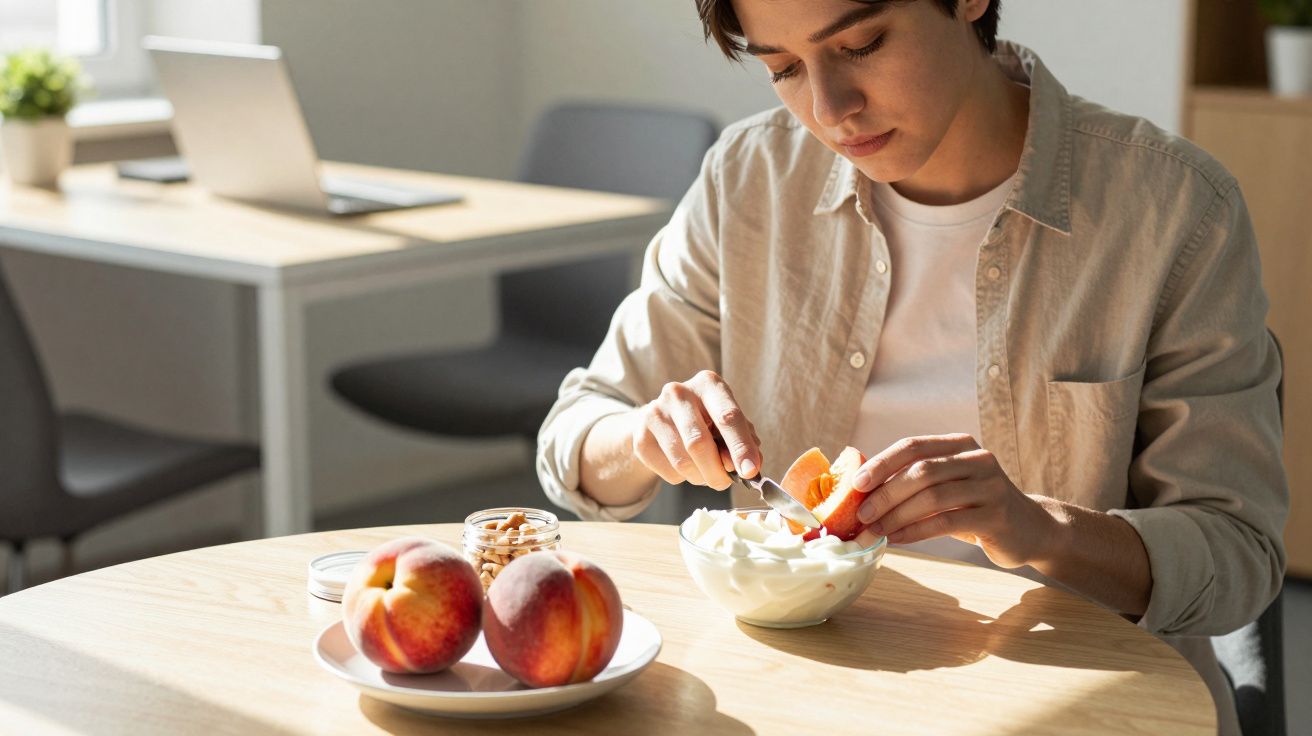
A head chef I spoke to once described peaches as “low ceremony, high reward”. Slice one onto yoghurt and you’ve made breakfast feel intentional. Add it to a salad and suddenly lunch has a point. That’s the professional lens: not romance, but repeatability.
Why the rethink is happening now (hint: it’s not just nutrition)
A lot of professionals are working under the same pressure as everyone else: short breaks, long screens, constant decision‑fatigue. Foods that reduce decisions win. Peaches are easy to deploy in a way that looks and feels like care without taking time.
There’s also a broader shift away from “heroic health”. The new default in many workplaces is small interventions that are painless: a fruit bowl that actually gets eaten, a dessert option that doesn’t crash your afternoon, a snack that doesn’t leave you rummaging for more snacks.
And peaches play nicely with sensory needs. For people who struggle with very crunchy foods, dry textures, or intense bitterness, a ripe peach is gentle. It’s hard to overstate how much that matters when you’re trying to build habits across a whole team, not just for the one person who loves kale.
The simple truth: professionals optimise for adherence
You can recommend chia puddings and meticulously balanced bowls all you like. In the real world, compliance is king. Peaches have a built-in advantage: people want to eat them.
The “two-minute peach protocol” professionals actually use
Think less “recipe” and more “default setting”. The goal is to make peaches the obvious answer when you’re hungry and tired, not a special purchase you forget at the bottom of the fridge.
- Buy with a plan for ripeness. Get a mix: a couple that are ready now, and a couple that need 1–2 days.
- Ripen at room temperature, then chill. Once they smell fragrant and give slightly, move them to the fridge to slow the clock.
- Pair, don’t overthink. Protein or fat alongside fruit tends to keep people fuller for longer.
A simple rotation that works in offices and at home:
- Peach + Greek yoghurt + pinch of salt (yes, salt)
- Peach + cottage cheese + black pepper
- Peach slices + handful of nuts
- Peach + oats (microwave porridge or overnight oats)
None of it is glamorous. That’s why it works.
What to look for when choosing peaches (and why most people get it wrong)
Most people shop by colour. Professionals shop by smell and give. A good peach should smell like a peach even before you cut it; if it smells of nothing, it will taste of nothing.
Press gently near the stem. You’re not bruising it; you’re checking readiness. If it’s rock hard, it’s a “future peach”. If it gives a little, it’s a “today peach”. If it’s very soft with wrinkling, it’s a “cook it now” peach-still useful, just not for neat slices.
If you only remember one thing
Don’t store unripe peaches in the fridge and then complain they’re bland. Cold slows ripening; it doesn’t create flavour. Let them do their work on the counter first.
The workplace angle: peaches as a low-friction wellbeing move
Some companies have learned the hard way that “healthy snacks” can turn into a bowl of worthy items nobody touches. Peaches don’t have that problem, but they do need a bit of operational thinking.
- Choose whole fruit over pre-sliced. Pre-sliced goes brown fast and becomes a hygiene headache.
- Offer napkins and a bin nearby. People avoid juicy fruit when there’s nowhere to be messy.
- Add one supporting option. A tub of yoghurt, a small pot of nuts, or even oats makes the peach a mini-meal.
It sounds almost laughably basic. That’s the point: systems beat intentions.
When peaches don’t work (and what professionals do instead)
Peaches are brilliant until they aren’t. Sometimes they’re out of season and disappointingly mealy. Sometimes people have sensitivities to stone fruit. Sometimes the office is too warm and fruit goes off before it’s eaten.
A practical fallback list that keeps the spirit of the habit:
- Nectarines (similar use, often firmer)
- Plums (less mess, strong flavour)
- Apples or pears (more durable, less fragrant)
- Frozen peaches (for smoothies, porridge, quick compotes)
Frozen peaches, in particular, are the “professional” answer because they’re consistent. No bruises, no gamble, no sad fruit guilt.
A quick guide to using peaches without turning it into a project
| Goal | What to do | Time |
|---|---|---|
| Less afternoon snacking | Peach + yoghurt at 3pm | 2 min |
| Better breakfasts | Slice onto oats | 2–5 min |
| Easy dessert swap | Grilled/roasted peach + spoon of yoghurt | 10–15 min |
The underlying idea is the same one you see in any behaviour change programme: make the better choice the easier choice, then repeat until it becomes normal.
FAQ:
- How do I ripen peaches quickly without ruining them? Keep them at room temperature in a paper bag; check daily. Once fragrant and slightly soft, move to the fridge to hold them for a few more days.
- Are canned peaches “cheating”? Not inherently. Choose ones in juice rather than syrup if you’re having them often, and treat them like a convenience tool, not a moral issue.
- What’s the best way to stop cut peaches going brown? A little lemon juice helps, but the real fix is timing: cut them close to when you’ll eat them, or use frozen peaches for prep-ahead.
- Why do some peaches taste mealy? Usually cold storage before they’ve properly ripened, or simply a poor batch. Let peaches ripen on the counter first, and don’t be afraid to cook a disappointing one.
- Can peaches fit into a high-protein approach? Yes-pair them with Greek yoghurt, cottage cheese, or a handful of nuts. The peach is the sweet, hydrating part; the partner does the staying power.




Comments (0)
No comments yet. Be the first to comment!
Leave a Comment