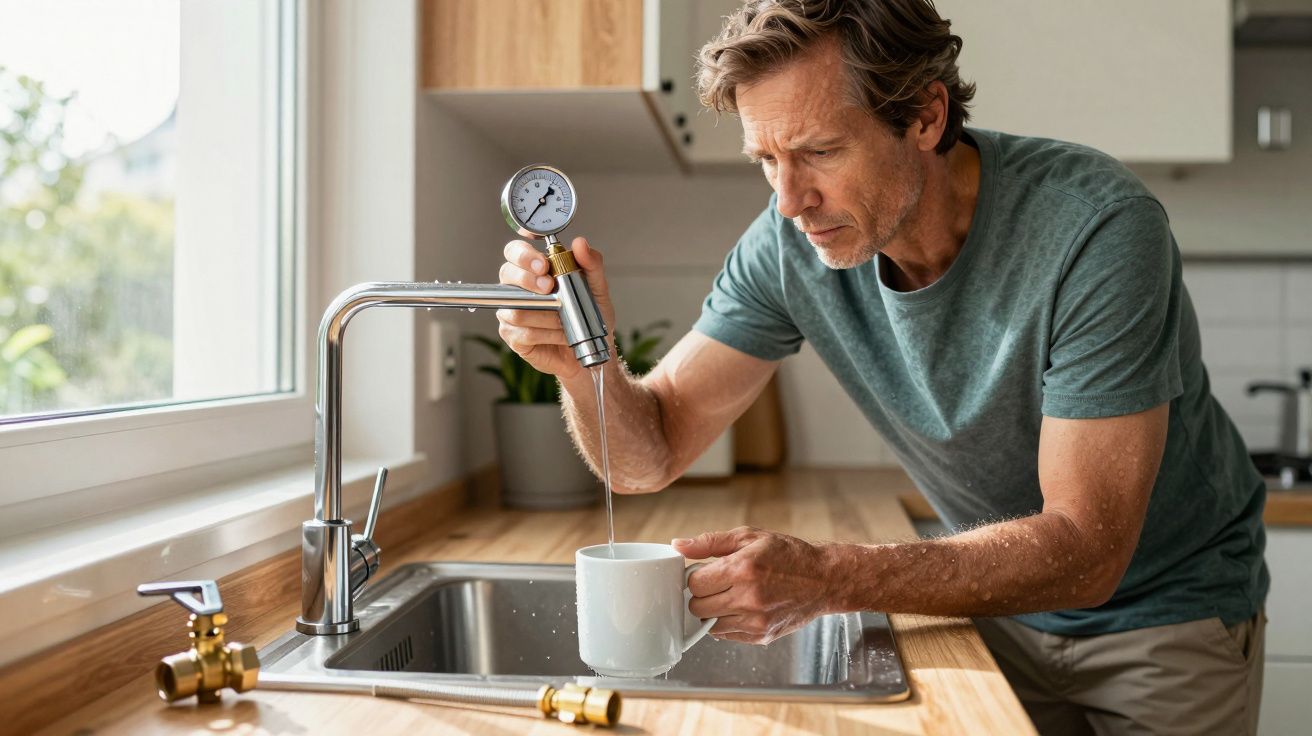
A tap that drips after two years can feel like bad luck. In reality, taps and mixers often wear out quicker in pressurised water systems because higher force and faster flow turn tiny weak points-seals, cartridges, threads-into regular failure sites.
If you live in a flat with boosted pressure, a newer build with a combi boiler, or a house that’s had a pump fitted for “better showers”, you’re also running your fittings harder than they were designed for. The signs usually arrive quietly: a stiff handle, a squeal, a new rattle in the pipework, then the drip you can’t ignore.
Why high pressure changes the game
Water pressure isn’t just about how strong the shower feels. It changes the loads inside a tap every time you open, shut, or leave it half-on while filling a sink.
In simple terms, more pressure means more force pushing against the internal seals. More force means more friction and deformation, and that means faster wear.
A lot of domestic tap components are built to cope with typical UK mains conditions. When a system runs consistently above that “normal” range-especially with pumps or poor regulation-the tap becomes the sacrificial part.
A tap can survive occasional high pressure. It struggles when high pressure is the default, all day, every day.
The failure points that show up first
Most “failed taps” aren’t cracked bodies. They’re small parts inside that can’t hold back the pressure any more, or can’t move smoothly under load.
Common weak points include:
- Cartridges (ceramic discs or valve cartridges) that start to weep, stick, or lose smooth operation
- O-rings and rubber seals that flatten, nick, or harden faster under constant compression
- Flexible tap connectors that fatigue sooner, especially if they’re bent tight or vibrating
- Diverters (on bath/shower mixers) that stop sealing cleanly and send water the wrong way
- Threads and compression joints that begin to seep when pressure pulses hit
You often see the pattern in a kitchen mixer: it starts perfect, then needs a firmer shut-off, then develops a slow drip that reappears after you “fix” it by tightening the handle.
Why mixers suffer more than separate hot and cold taps
Mixers combine two supplies and a more complex valve assembly into one body. That’s convenient, but it gives pressure imbalance more ways to cause trouble.
If the hot side is tank-fed and the cold side is mains-fed, or a pump boosts only one side, the cartridge is constantly fighting uneven forces. Over time, that mismatch can chew up seals and make temperature control erratic.
Pressure spikes: the part nobody sees
Even if your pressure gauge looks acceptable, the harshest damage often comes from spikes rather than steady pressure.
These spikes happen when:
- a washing machine or dishwasher valve snaps shut
- a toilet fill valve stops suddenly
- a fast-closing tap is flicked off
- a pump cycles on and off
That “bang” or “thud” in pipes is water hammer-pressure shock moving through the system. Taps and mixers feel those shocks directly, and the internal components take the hit repeatedly.
The house can feel quiet, but the pipework is still punching the fittings in the background.
Hot water makes it worse (even without a pump)
High pressure combined with heat is a rough mix for polymers and rubbers. Seals soften when hot, then cool and contract, cycling day after day. With extra pressure pushing on them, they lose shape sooner and stop sealing properly.
Hard water accelerates the effect. Limescale builds up around moving parts, increasing friction and forcing you to operate the handle with more torque-another small stress that compounds over time.
What “too much pressure” looks like in real homes
You don’t need a laboratory setup to spot a system that’s hard on fittings. The clues are usually practical:
- taps that shut off with a sharp jolt rather than a smooth stop
- a shower that feels aggressive even at modest settings
- recurring drips despite new washers or cartridges
- noisy pipes, vibrating flexible connectors, or a “machine-gun” sound at certain flow rates
- multiple appliances or valves failing earlier than expected (tap cartridge, then dishwasher inlet, then toilet valve)
If you’re seeing a chain of small failures, it’s worth treating pressure as a root cause rather than blaming each component in isolation.
How to slow the damage (without living with a trickle)
You don’t need to accept weak flow to protect your taps. The goal is controlled pressure, not low pressure.
Practical fixes that tend to help:
- Fit or check a pressure reducing valve (PRV) on the incoming mains, set appropriately
- Add a water hammer arrestor near fast-closing appliances if banging is an issue
- Avoid over-boosting with pumps, and don’t pump a system that shouldn’t be pumped
- Match hot and cold supplies on mixers (balanced pressures reduce cartridge stress)
- Choose taps rated for higher pressure, especially for kitchens and baths in boosted systems
- Service early signs (stiff handles, squeal, slow weep) before the cartridge scores or a seal fails fully
A small adjustment upstream often costs less than repeatedly replacing cartridges, flexis, and the tap itself.
A quick guide to what helps, and what it addresses
| Symptom | Likely cause | Typical fix |
|---|---|---|
| Recurring drips | Seal/cartridge wear under load | PRV + replace cartridge |
| Banging pipes | Pressure spikes (water hammer) | Arrestor + secure pipework |
| Mixer temperature swings | Unbalanced hot/cold pressure | Balance supplies / correct plumbing |
When it’s not pressure (but looks like it)
Pressure is a common culprit, but not the only one. Poor installation can mimic high-pressure failure because it adds strain.
Watch for:
- flexible connectors twisted or kinked
- tap bodies overtightened against uneven surfaces
- unsupported pipework pulling on the tap tails
- cheap cartridges in “designer” bodies that look robust but aren’t
If a brand-new tap starts failing within months, the system conditions and install details deserve as much scrutiny as the tap itself.
The takeaway: protect the system, not just the fitting
High pressure makes everything feel better-until it doesn’t. Taps and mixers fail faster in pressurised water systems because the very thing you’re paying for (stronger flow) increases wear, amplifies spikes, and turns small tolerances into leaks.
If your home has boosted pressure or frequent plumbing noise, the most cost-effective fix is usually control: reduce and stabilise the pressure, then fit taps designed to live with it. The drip is only the symptom; the system behaviour is the cause.
FAQ:
- Is high water pressure always bad for taps? Not always, but consistently high or spiky pressure accelerates wear on cartridges, seals and connectors, so failures tend to arrive sooner.
- How can I tell if I need a pressure reducing valve? If you have very forceful flow, frequent drips, banging pipes, or repeated valve/appliance failures, a PRV is often worth checking or fitting. A plumber can measure static and dynamic pressure to confirm.
- Do ceramic cartridges handle high pressure better than rubber washers? They can be smoother and longer-lasting in normal conditions, but they still rely on seals and tight tolerances; high pressure and limescale can still cause dripping and stiffness.
- Will a new tap solve the problem on its own? It may help briefly, but if pressure is the underlying issue, the new tap often follows the same failure pattern unless the system is regulated.


Comments (0)
No comments yet. Be the first to comment!
Leave a Comment