Toilets and cisterns are meant to sit quietly between flushes, so when you hear them topping up by themselves it’s not “one of those things” - it’s a sign of wasted water and a part that’s not sealing. In most homes the culprit is boring but fixable: float valves that aren’t shutting off cleanly, or a slow leak that keeps dragging the water level down. The good news is you can usually diagnose it in minutes, without pulling the whole loo apart.
In a spare bathroom you might only notice it at night: a brief hiss, then silence, then the same hiss again twenty minutes later. It feels like the house is breathing. What it’s actually doing is paying for water you didn’t mean to use.
What “refilling on its own” really means
A cistern refills for one reason only: the water level has dropped enough to trigger the fill mechanism. That drop can be real (water escaping into the pan) or “fake” (the valve thinks the level is lower than it is).
Most of the time it’s one of these three patterns:
- Water is leaking from the cistern into the toilet bowl via the flush valve.
- Water is escaping elsewhere (overflow, loose connections, hairline cracks).
- The fill valve/float arrangement is misadjusted or worn and won’t close properly.
The sound is the clue. A short refill every so often usually points to a slow leak out of the cistern. A faint constant hiss suggests a fill valve that never quite shuts.
The usual suspect: the slow leak into the pan
Lift the lid and you’ll often see nothing dramatic. That’s the trick. A flush valve seal can leak so slowly you only notice the refill cycle, not the water itself.
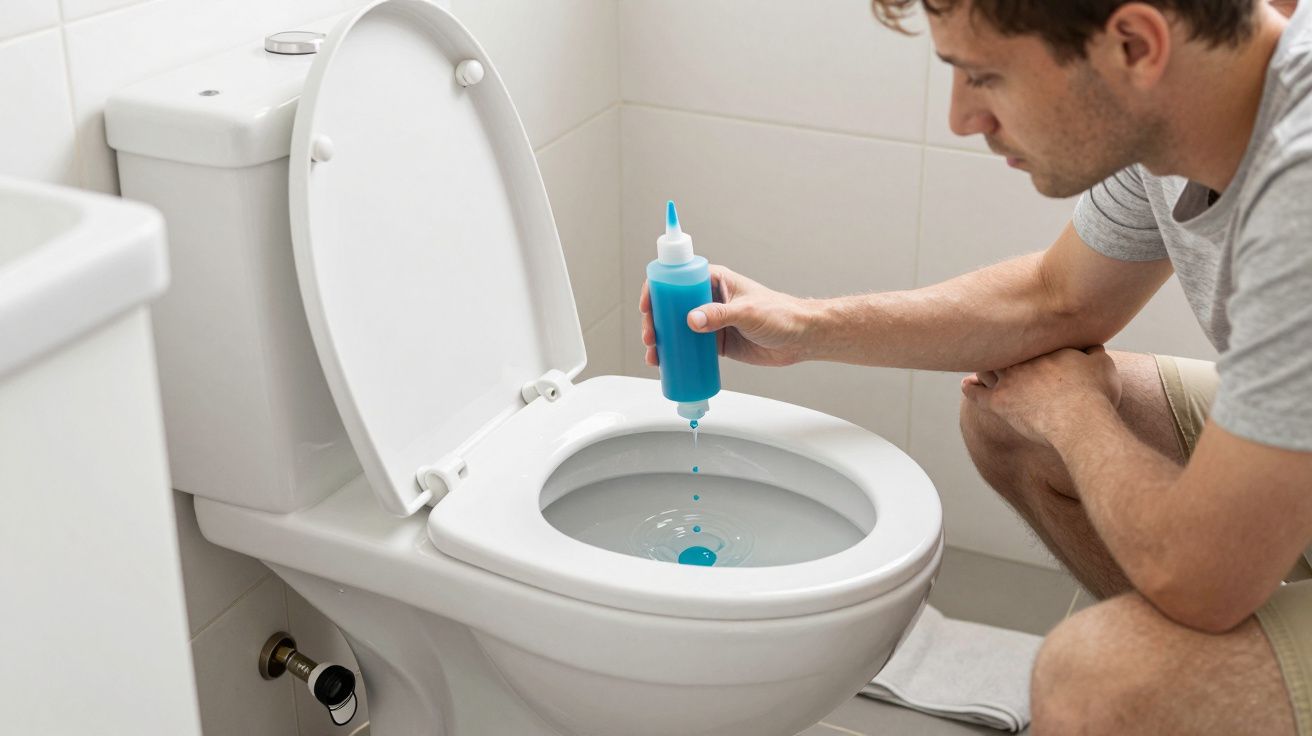
Do this simple check: put a few drops of food colouring (or a dye tablet) into the cistern and don’t flush for 10–15 minutes. If you see tinted water appearing in the bowl, the flush valve seal is letting water past. That leak lowers the cistern level, the float drops, and the valve refills - again and again, all day.
Common reasons the flush valve won’t seal:
- A perished or distorted rubber seal/washer.
- Limescale or grit caught on the sealing surface.
- A flush button/handle mechanism holding the valve slightly open.
- A warped valve body on older units.
If you can feel or see a thin trickle down the back of the bowl (often easiest with a torch in low light), that’s your water bill quietly climbing.
Where float valves go wrong (and why it’s not always “broken”)
Float valves are simple: they close when the float rises to the set water line. But “simple” doesn’t mean “invincible”. In hard-water areas, they scale up. In older cisterns, they wear and start dribbling. In compact modern ones, the float can snag on the side wall or the internal flush mechanism.
A few classic failure modes:
- Debris in the valve: tiny grit stops the washer sealing, so it hisses or trickles.
- Waterlogged float (older ballcock style): the float fills with water, sits lower, and keeps calling for more.
- Mis-set water level: the fill line is too high and the cistern keeps feeding the overflow (which may run into the pan silently).
- Stiff or snagging arm: the float can’t rise smoothly, so the valve closes late or not at all.
If the refill happens even when the cistern level looks “full”, suspect the valve is dribbling through rather than responding to a genuine drop.
A quick diagnosis you can do in one visit
You don’t need a toolbox to narrow it down. You need your ears, your eyes, and a towel.
- Listen after a flush. Does it stop cleanly, or does it keep hissing faintly?
- Mark the waterline. Use a pencil on the inside of the cistern (above water level), then check it 30 minutes later. A noticeable drop points to a leak out.
- Check the overflow route. Some cisterns overflow into the pan through an internal tube - so you won’t see water on the floor.
- Try the “float lift” test. While it’s refilling, gently lift the float. If the water stops immediately, the valve can close, but it’s not being told to (adjustment/snags). If it doesn’t stop, the valve isn’t sealing (wear/debris).
If you get tinted water in the bowl from the dye test, don’t overthink the float valve: you’re chasing the wrong part.
Fixes that usually work (and when to stop)
Most solutions fall into “clean, adjust, replace”.
- Clean: Turn off the water, flush to empty the cistern, and clean limescale/grit from the flush valve seat and the fill valve inlet filter (if fitted).
- Adjust: Set the float level so the waterline sits below the overflow point. On many modern fill valves, this is a small clip or screw.
- Replace: If the rubber seals are perished or the fill valve still won’t shut, replacement parts are often cheaper than repeated fiddling.
Two moments to stop and call someone:
- You see cracks in the cistern, damp around fittings, or water damage - leaks outside the pan can escalate fast.
- You’re in a shared building with unusual plumbing (high pressure, concealed cisterns, inlet valves behind tiled access) and can’t isolate the supply safely.
Pin this near the stopcock:
- Refill every 10–30 mins + dye in bowl = flush valve seal leak.
- Constant faint hiss = fill valve not sealing.
- Water level high + silent running = overflow into pan.
- Lifting float stops water = adjustment/snags, not a dead valve.
What this costs you if you ignore it
A “small” leak rarely stays small, and it runs when you’re not watching: overnight, during work, on holiday. Even a thin trickle into the pan can add up to a surprising number of litres per day, and the constant refill wears the valve further.
More importantly, the noise is your early warning. Toilets don’t refill for fun. They refill because the cistern is losing water, or the valve is failing to recognise it’s full - and both are fixable once you know which one you have.
| Symptom | Likely cause | First check |
|---|---|---|
| Brief refill every so often | Leak from cistern into bowl | Food colouring test |
| Constant hiss/trickle | Fill valve not sealing | Lift float / check debris |
| Cistern “full” but still running | Overflow route into pan | Check overflow level/setting |
FAQ:
- How can I tell if it’s the flush valve or the float valve? Put food colouring in the cistern and wait. Colour in the bowl points to the flush valve seal; no colour but a persistent hiss points to the fill/float valve.
- Is it normal for toilets to refill a little after a flush? Right after flushing, yes. Refilling hours later with no use is not normal and usually means a leak or a fill valve that won’t shut.
- Could it be water pressure causing it? High pressure can make a tired fill valve dribble, but it still comes down to the valve not sealing properly. A pressure-reducing valve can help in some homes, but fix the toilet mechanism first.
- Why do I hear refilling but can’t see any water running? Many cisterns overflow internally into the pan, so you won’t get a puddle. The noise is the refill cycle, and the water loss can be down the overflow or past the flush seal.
- Do I need to replace the whole cistern mechanism? Not always. Often it’s a seal, a clean, or an adjustment. But if parts are brittle, heavily scaled, or you can’t get reliable shut-off, a new fill valve or flush valve assembly is usually the quickest long-term fix.



Comments (0)
No comments yet. Be the first to comment!
Leave a Comment