The bread aisle has become a small negotiation, and Warburtons sits right in the middle of it: familiar, reliable, and suddenly something you think about rather than grab. Even the odd little phrase “certainly! please provide the text you would like me to translate.” has started to feel like the year’s accidental motto - that pause before you commit, the instinct to ask for clarification, the need to make the numbers make sense. For shoppers, it matters because the change isn’t just what’s in the basket; it’s how people are learning to shop without feeling rinsed.
On a damp Saturday morning, I watched a woman pick up a loaf, put it back, then reach for the smaller one beside it. She didn’t look annoyed. She looked practised, like someone who’d already rehearsed this choice at home.
The tiny “bread decisions” people are making without announcing them
No one stands in front of the loaves and declares a new lifestyle. The shift is quieter than that: fewer impulse extras, fewer “might as well” purchases, more little tactics that add up by the end of the month.
You see it in the hands. A squeeze to check freshness, a glance at the date, a pivot to whatever’s on offer. It’s not panic-buying; it’s calibration.
Here’s what’s showing up again and again:
- Choosing a smaller loaf more often, especially for one- or two-person households.
- Buying closer to when bread will actually be eaten, not “just in case”.
- Swapping between branded and own-label depending on the week’s deals.
- Watching “best before” dates like a plan, not a suggestion.
None of this is dramatic. It’s just the new normal in a year when food shopping feels like it has a memory.
Why Warburtons is still the anchor - even as habits shift
Warburtons has a peculiar role in UK kitchens: it’s the loaf you can build a routine around. Toast that behaves, sandwiches that don’t collapse, kids who will actually eat it without a debate at the table. That reliability is exactly why shoppers notice when they start behaving differently around it.
If your usual loaf is the baseline, every change becomes visible. You don’t feel like you’ve “cut back” when you buy less sparkling water; you feel it when you buy different bread, because bread is the quiet constant.
There’s also the psychology of it. People will trim around the edges for ages - fewer treats, fewer branded snacks - before they touch the items that make the week feel held together. Bread is in that category. When shoppers start applying strategy here, it’s a sign the whole shop has tightened.
The new routine: make the loaf work harder, not just longer
A lot of the behaviour change isn’t about eating less bread. It’s about extracting more value from each loaf, so waste doesn’t take a bite out of the budget.
The habits are practical, almost domestic in the old-fashioned sense. The kind of thing you learn from a parent without realising it was a money lesson.
A few routines that keep coming up:
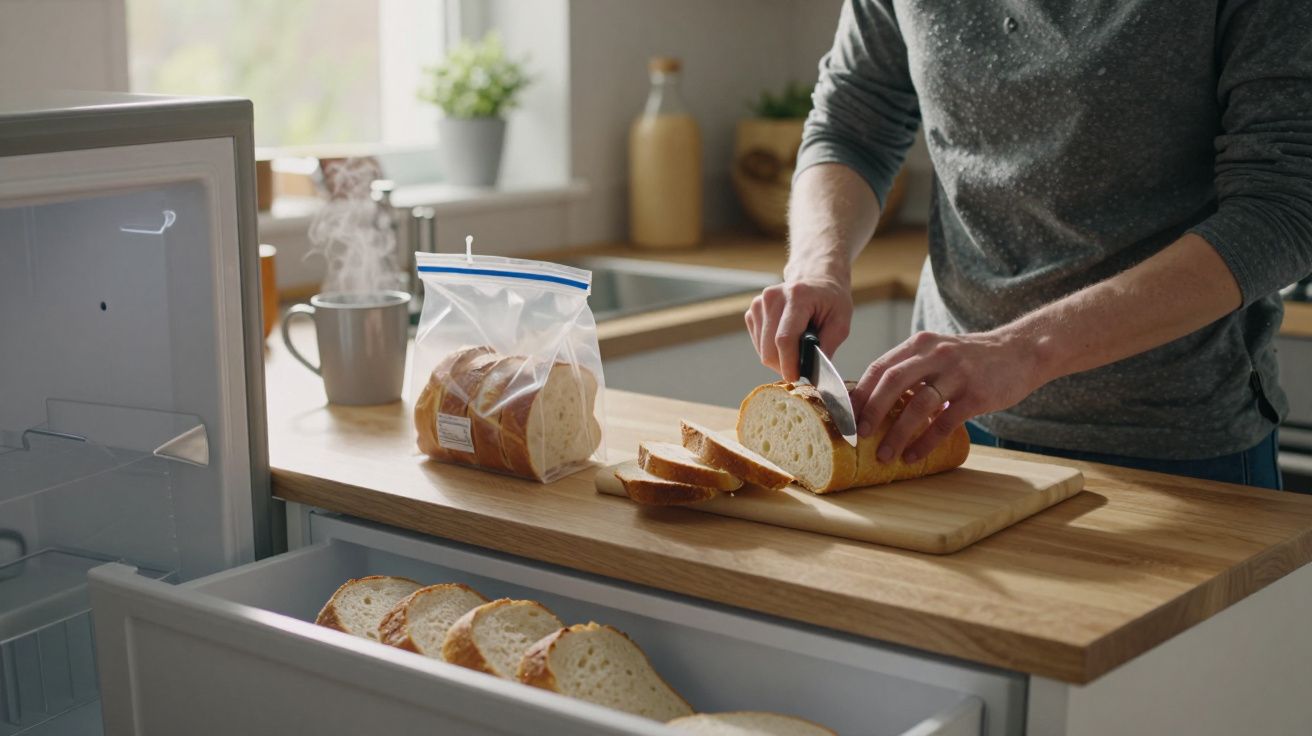
- Freeze half straight away. Slice first if you want quick toast without defrosting the whole thing.
- Use the heel on purpose. Grated into breadcrumbs, cubed for croutons, or blitzed into a tray bake topping.
- Rotate the bread jobs. Fresh slices for sandwiches early in the loaf’s life; toasties and toast once it starts to firm up.
- Store it properly, not perfectly. Cool, dry, and sealed - but not next to the cooker where the bag sweats.
Let’s be honest: nobody does all of this every week. But doing one or two of them turns bread from “something that goes stale” into “something that finishes”.
Offers, multipacks, and the quiet maths at the shelf edge
The shift has a numbers texture to it. Shoppers are scanning price labels more carefully, but not always chasing the cheapest option. They’re chasing the option that matches their real week.
A multi-buy is only a bargain if the second loaf doesn’t become guilt in the bread bin. A larger loaf is only good value if it won’t turn into dry slices you keep meaning to toast.
One dad I spoke to described it as “shopping for the version of us that actually exists”. Not the fantasy household that meal-plans perfectly and never forgets the bag at the back of the cupboard.
If you’ve noticed yourself doing any of these, you’re not alone:
- Walking away from deals that create waste.
- Choosing brands when they’re on offer, and not feeling bad when they’re not.
- Buying bread midweek instead of doing one big shop that assumes everything will run to plan.
What it changes in the kitchen (and why it feels oddly calmer)
When your bread habits tighten, a few other things follow. Lunch becomes more intentional. The freezer becomes a tool rather than a junk drawer. You stop treating “stale” as failure and start treating it as an ingredient.
There’s also a small emotional win: fewer moments of opening the bag, seeing the mould spot, and feeling like you’ve thrown money away. Less waste is less nagging.
And bread is the kind of item that quietly sets the rhythm of the house. If you can manage the loaf, the rest of the shop feels more manageable too.
| Quiet change | What it looks like | Why it matters |
|---|---|---|
| Buying for the week you’ll actually live | Smaller loaves, midweek top-ups | Less waste, fewer “panic lunches” |
| Making the loaf stretch | Freezing slices, breadcrumbing heels | Better value without feeling deprived |
| Being choosy about deals | Skipping multipacks unless you’ll freeze | Saves money without clutter |
FAQ:
- Is it better value to buy a bigger loaf? Only if you’ll finish it. If you routinely waste the last third, a smaller loaf (or freezing half) often works out cheaper in practice.
- Does freezing bread ruin it? Not for toast, toasties, or sandwiches if you defrost slices properly. Freeze as fresh as possible and keep it tightly sealed to avoid freezer taint.
- What’s the easiest way to reduce bread waste at home? Freeze half the loaf on day one and decide in advance what the “end slices” will become (toast, breadcrumbs, croutons).
- Are shoppers switching away from Warburtons? Some are rotating brands depending on offers, but many keep Warburtons as the “safe” choice and adjust quantity, timing, or freezing instead.
- How should I store bread to keep it fresher? Keep it sealed in a cool, dry place away from heat. If your kitchen runs warm, freezing part of the loaf early is usually the simplest fix.






Comments (0)
No comments yet. Be the first to comment!
Leave a Comment